
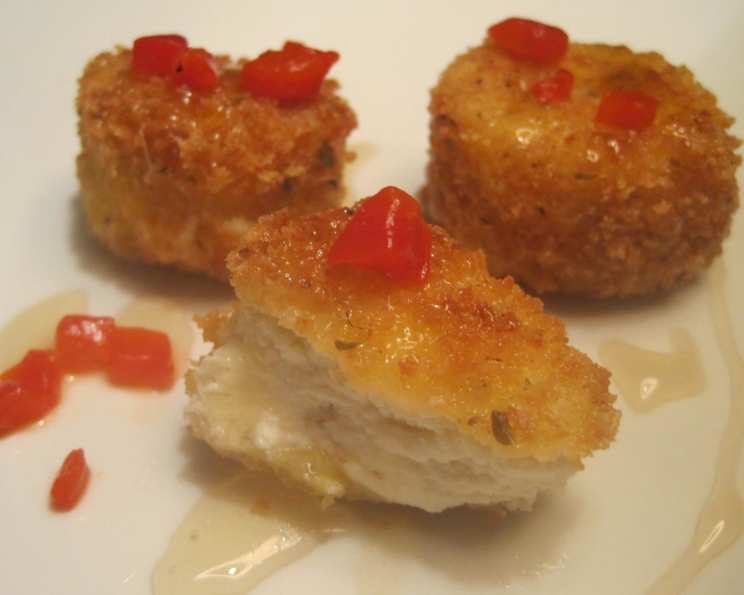
Golden Orbs of Delight: Mastering the Art of Fried Goat Cheese
I remember the first time I encountered fried goat cheese. It was at a bustling farmers’ market in Provence, a place where the air hummed with the scent of lavender and thyme, and every stall was a vibrant tapestry of local produce and artisanal creations. A vendor, her hands dusted with flour, offered me a small, golden medallion, still warm from the fryer. The exterior was impossibly crisp, yielding with a satisfying crunch to reveal a molten, creamy interior. Drizzled with a hint of local honey, it was a revelation – a perfect balance of sweet, savory, and tangy. It wasn’t just an appetizer; it was an experience, a fleeting moment of pure culinary bliss that I’ve been chasing ever since.
Recipe Snapshot
Here’s a quick look at what you’ll need to bring this delightful appetizer to life:
- Prep Time: 15 minutes
- Cook Time: 10 minutes
- Total Time: 25 minutes
- Servings: 4
- Yields: 6-8 Medallions
- Dietary Type: Vegetarian
The Stars of the Show: Ingredients
To craft these irresistible fried goat cheese delights, you’ll need:
- 6 ounces chevre cheese or goat cheese log
- 3/4 cup panko breadcrumbs
- 1/2 teaspoon dried oregano
- 1/3 teaspoon dried thyme
- 1/4 teaspoon garlic powder
- 1/8 teaspoon cayenne pepper (optional, for a touch of warmth)
- 1 pinch salt and pepper
- 1 egg, beaten with a little water
- 1/3 cup all-purpose flour
- 1 1/2 cups olive oil, for frying
- 1/3 cup honey, for drizzling
- 2 roasted red peppers, minced, for garnish
- 12 slices baguette, for serving
Essential Tools for Success
A few key pieces of equipment will make this recipe a breeze:
- Sharp knife or dental floss (for precise slicing)
- Three shallow bowls or plates (for breading)
- A shallow sauté pan or deep skillet
- A slotted spoon or spider strainer
- Paper towels (for draining)
- Serving platter or wooden board
Crafting Golden Perfection: The Method
Let’s dive into the step-by-step process to create these irresistible fried goat cheese medallions.
-
Prepare the Goat Cheese: Begin by slicing the goat cheese log into 1/2-inch to 3/4-inch thick medallions. To ensure clean, sharp slices, it’s best to work with well-chilled cheese. If your cheese log is a bit soft, pop it into the freezer for about 10 minutes before slicing. For an extra-professional touch and incredibly clean cuts, try using unflavored dental floss. Thread it under the log, cross the ends over the top, and pull gently to slice through the cheese.
-
Create the Aromatic Coating: In a medium bowl, combine the panko breadcrumbs, dried oregano, dried thyme, garlic powder, cayenne pepper (if using), and a pinch of salt and pepper. Stir everything together until well mixed. This seasoned panko will give our goat cheese a wonderfully crisp and flavorful crust.
-
Set Up the Breading Station: Now, let’s set up our breading station. In a second shallow bowl, lightly beat the egg with a tablespoon or two of water. This will create a sticky base for our breadcrumbs to adhere to. In a third shallow bowl, place the all-purpose flour. You should now have three stations: flour, egg wash, and seasoned panko.
-
Heat the Olive Oil: Place the olive oil in your shallow sauté pan or skillet. You’ll want about 1/2 inch of oil. Heat the oil over medium-high heat. You’re looking for the oil to be hot enough to sizzle when a small piece of breadcrumb is dropped in, but not so hot that it begins to smoke. This usually takes a few minutes.
-
The Breading Process: This is where the magic happens! Take each goat cheese medallion and first dredge it gently in the flour, ensuring it’s evenly coated. Shake off any excess. Next, dip the floured medallion into the beaten egg, allowing any excess to drip back into the bowl. Finally, carefully place the egg-coated medallion into the panko mixture, pressing gently to ensure the breadcrumbs adhere all over. Repeat this breading process for all your cheese medallions.
-
Fry to Golden Perfection: Once your medallions are breaded, carefully place them into the preheated olive oil in the sauté pan. Be sure not to overcrowd the pan; fry in batches if necessary to maintain the oil’s temperature and ensure even cooking. Fry the medallions for about 1 1/2 to 2 minutes per side, or until they are a beautiful, deep golden brown and the cheese inside is just starting to soften.
-
Drain and Rest: Using a slotted spoon or spider strainer, carefully remove the fried goat cheese medallions from the hot oil. Place them on a plate lined with paper towels to absorb any excess oil. This step is crucial for achieving that perfect crispness.
-
Assemble and Serve: Arrange the warm, golden fried goat cheese medallions on your chosen serving platter, a rustic wooden board, or individual plates. Drizzle each medallion generously with honey. Scatter the minced roasted red peppers over the top as a vibrant garnish. Serve immediately with the baguette slices alongside for scooping up every last delicious bite. These little beauties would also be absolutely sensational served atop a bed of fresh, crisp greens for a more substantial salad.
Chef’s Secrets for Superior Fried Goat Cheese
- Chill is Key: I can’t stress enough how important it is to keep your goat cheese chilled before slicing. It makes the entire process so much cleaner and results in neater medallions.
- Panko Power: Panko breadcrumbs are a game-changer for fried foods. Their larger, flaky texture creates an unparalleled crispiness compared to standard breadcrumbs.
- Temperature Vigilance: Keep a close eye on your olive oil temperature. If it’s too cool, the cheese will absorb too much oil and become greasy. If it’s too hot, the coating will brown too quickly before the cheese has a chance to warm through. A medium-high heat is generally your sweet spot.
- Don’t Overcrowd: Giving the medallions space in the hot oil allows them to fry evenly and crisp up beautifully. Overcrowding will lower the oil temperature and lead to soggy results.
Serving and Storage Savvy
These fried goat cheese medallions are at their absolute peak when served immediately after frying. The contrast between the warm, molten interior and the crisp, golden exterior is best enjoyed straight from the pan.
If you happen to have any leftovers (which is rare!), they can be stored in an airtight container in the refrigerator for up to 2 days. However, they won’t retain their crispness. To reheat, a quick pass in a hot oven (around 350°F / 175°C) for a few minutes can help revive some of their former glory, but they are truly best enjoyed fresh.
Nutritional Insights (Approximate per Serving)
Here’s a general look at the nutritional breakdown. Please note that these are estimates and can vary based on specific ingredient brands and portion sizes.
| Nutrient | Amount per Serving | % Daily Value |
|---|---|---|
| Calories | 350 kcal | 18% |
| Total Fat | 15g | 23% |
| Saturated Fat | 5g | 25% |
| Cholesterol | 20mg | 7% |
| Sodium | 250mg | 11% |
| Total Carbohydrate | 20g | 7% |
| Dietary Fiber | 1g | 4% |
| Sugars | 10g | 20% |
| Protein | 8g | 16% |
Values are approximate and can vary. The Daily Value percentages are based on a 2,000-calorie diet.
Variations and Substitutions
While this classic recipe is a winner, feel free to experiment!
- Gluten-Free Delight: For a gluten-free version, simply swap the all-purpose flour for a gluten-free all-purpose flour blend and use gluten-free panko breadcrumbs.
- Herbaceous Twists: Beyond oregano and thyme, consider adding other dried herbs like rosemary or marjoram to your panko mixture for a different aromatic profile.
- Spicy Kick: If you love a bit more heat, increase the cayenne pepper or add a pinch of red pepper flakes to the breading.
- Sweet & Savory Dips: While honey is divine, other accompaniments work wonderfully. A balsamic glaze, fig jam, or a spicy fruit chutney can offer delightful flavor contrasts.
Frequently Asked Questions
Q: Can I prepare the goat cheese medallions ahead of time?
A: Yes, you can bread the goat cheese medallions a few hours in advance and refrigerate them on a baking sheet lined with parchment paper. Fry them just before serving for the best texture.
Q: My goat cheese is melting too quickly when frying. What should I do?
A: Ensure your olive oil is at the correct temperature (medium-high heat). If it’s too low, the cheese will melt before the crust browns. Also, avoid overcrowding the pan, as this can lower the oil temperature.
Q: Can I bake these instead of frying them?
A: While frying yields the crispiest results, you can bake them. Place the breaded medallions on a parchment-lined baking sheet and bake in a preheated oven at 400°F (200°C) for about 10-12 minutes, flipping halfway through, until golden brown. They won’t be quite as crispy as fried, but still delicious.
Q: What kind of goat cheese is best for this recipe?
A: A firm goat cheese log (chevre) is ideal as it holds its shape well. Creamier, spreadable goat cheese will likely melt and spread too much during frying.
Q: How do I know when the olive oil is hot enough?
A: A simple test is to drop a tiny piece of breadcrumb into the oil. If it sizzles immediately and floats to the surface, the oil is ready. If it sinks and then slowly bubbles, the oil is too cool. If it smokes, it’s too hot.
A Taste of Pure Bliss
Fried goat cheese is more than just an appetizer; it’s a delightful testament to how simple ingredients, treated with a little care, can transform into something truly extraordinary. The interplay of textures – the shattering crispness of the panko crust giving way to the warm, creamy, slightly tangy goat cheese – is utterly addictive. Paired with the sweetness of honey and the bright notes of roasted red peppers, it’s a dish that sings on the palate. Whether you’re hosting a gathering or simply treating yourself, I encourage you to give this recipe a try. It’s a guaranteed crowd-pleaser and a wonderful way to elevate any occasion. Enjoy!