
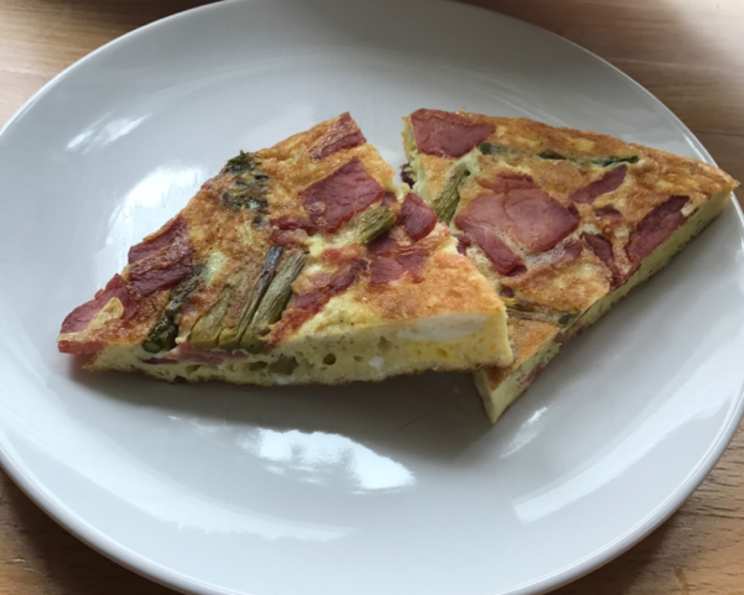
A Sunrise Symphony: Frittata with Asparagus, Canadian Bacon, and Parmesan
There are mornings, especially those crisp, bright ones that signal the start of a new season, when a simple breakfast just won’t do. It’s on these days that my mind drifts back to a particular brunch gathering years ago. The air was alive with conversation and the gentle clinking of silverware, but what truly anchored the memory was the sight of a golden-hued frittata, studded with vibrant green asparagus and savory morsels of Canadian bacon, crowned with a whisper of Parmesan. It was a dish that felt both comforting and elegant, a testament to how a few quality ingredients, treated with care, can create something truly memorable. This frittata, with its perfectly set eggs and balanced flavors, quickly became my go-to for special breakfasts and casual entertaining, a reliable star that never fails to impress.
Recipe Overview
- Prep Time: 15 minutes
- Cook Time: 30 minutes
- Total Time: 45 minutes
- Servings: 2
- Yield: 1 pie
- Dietary Type: Contains Eggs, Dairy
Ingredients
This frittata relies on a few high-quality components that come together harmoniously. Feel free to adjust the seasoning to your personal preference, but remember that Canadian bacon brings its own subtle saltiness.
- 1 1⁄4 cups egg substitute or 5 large eggs
- 4 tablespoons freshly grated Parmesan cheese, divided
- 2 tablespoons skim milk
- 1⁄4 teaspoon freshly grated lemon zest
- 1⁄2 teaspoon kosher salt (or to taste)
- Freshly ground black pepper
- 1 tablespoon extra virgin olive oil
- 4 ounces medium asparagus spears, woody stems trimmed, cut into 1⁄2-inch pieces (about 8 spears)
- 4 slices Canadian bacon, coarsely chopped (about 2 ounces)
Equipment Needed
- 8-inch nonstick skillet with an oven-safe handle
- Bowl
- Whisk
- Cutting board
- Chef’s knife
- Measuring cups and spoons
- Oven with broiler functionality
Instructions
Crafting this frittata is a straightforward process, a delightful dance between the stovetop and the broiler that results in a beautifully golden and satisfying dish. The key is to work with moderate heat and pay attention to the subtle cues the frittata provides as it cooks.
-
Prepare the Oven: Begin by positioning an oven rack in the upper part of the oven. Then, preheat the broiler. This step is crucial for achieving that lovely, slightly browned finish on top of your frittata.
-
Whisk the Egg Mixture: In a medium-sized bowl, whisk together the egg substitute (or large eggs), 3 tablespoons of the Parmesan cheese, the skim milk, freshly grated lemon zest, kosher salt, and freshly ground black pepper to taste. Ensure everything is well combined for an even texture.
-
Sauté the Fillings: Heat the extra virgin olive oil in your 8-inch nonstick skillet over medium heat. Once shimmering, add the asparagus pieces and the coarsely chopped Canadian bacon. Cook, stirring occasionally, until the asparagus is crisp-tender, which should take approximately 4 minutes. You want it to retain a slight bite.
-
Incorporate the Egg Mixture: Reduce the heat to low. Carefully pour the whisked egg mixture into the skillet, over the asparagus and bacon. Use a gentle stirring motion with a spoon or spatula to distribute the fillings evenly throughout the egg mixture.
-
Cook the Bottom: Cover the skillet and cook until the bottom of the frittata sets. It’s important to watch this closely; you want the bottom to be firm but not overly browned. This stage typically takes about 9 minutes.
-
Finish Under the Broiler: Remove the cover from the skillet. Scatter the remaining 1 tablespoon of Parmesan cheese evenly over the surface of the frittata. Carefully run the frittata under the preheated broiler. Keep a close eye on it, as it will only take about 1 minute for the top to set and gain a slight golden-brown hue.
-
Rest and Unmold: Once the frittata is perfectly set and lightly browned, set the skillet aside for about 5 minutes. This resting period allows the frittata to firm up further, making it easier to unmold without breaking.
-
Serve: After resting, carefully slip the frittata out of the pan onto a clean cutting board. Cut it into wedges and serve immediately while warm, or allow it to come to room temperature for a delightful slightly chilled option.
Expert Tips & Tricks
To elevate your frittata experience, consider these professional insights:
- Don’t Overcook: The most common frittata pitfall is overcooking, which can lead to a rubbery texture. The residual heat will continue to cook the frittata after it’s removed from the heat, so err on the side of slightly underdone when removing it from the stovetop.
- Skillet Choice Matters: An 8-inch nonstick skillet with an oven-safe handle is ideal. This size ensures a good thickness for the frittata, and the nonstick surface prevents sticking. The oven-safe handle is essential for its time under the broiler. If your skillet handle isn’t oven-safe, you can transfer the frittata to a baking dish after the stovetop cooking phase before broiling.
- Asparagus Prep: For quicker and more even cooking of the asparagus, ensure your pieces are consistently sized, around 1/2 inch. If your asparagus spears are particularly thick, you might want to blanch them briefly in boiling water for a minute before adding them to the skillet.
- Canadian Bacon Variation: If you can’t find Canadian bacon, thick-cut bacon or even diced ham can be substituted. Be mindful of the salt content in other cured meats and adjust your seasoning accordingly.
Serving & Storage Suggestions
This frittata is wonderfully versatile. Serve it as a star of a weekend brunch, perhaps alongside a fresh green salad, some toasted sourdough, or a bowl of fresh fruit. For a lighter lunch or a delightful supper, pair it with a simple vinaigrette and a glass of crisp white wine.
Leftovers can be stored in an airtight container in the refrigerator for up to 3 days. To reheat, gently warm individual portions in a nonstick skillet over low heat or in a moderate oven (around 325°F / 160°C) until heated through. While it can be enjoyed cold, a gentle reheating truly brings out its best flavors and textures. Freezing frittatas is not generally recommended, as the texture of the eggs can become watery upon thawing.
Nutritional Information
This estimated nutritional information is for one serving of the frittata.
| Nutrient | Amount per Serving | % Daily Value |
|---|---|---|
| Calories | 342.7 kcal | |
| Calories from Fat | ||
| Total Fat | 18.9 g | 29% |
| Saturated Fat | 5 g | 25% |
| Cholesterol | 39.2 mg | 13% |
| Sodium | 1686.5 mg | 70% |
| Total Carbohydrate | 5.6 g | 1% |
| Dietary Fiber | 1.2 g | 4% |
| Sugars | 1.8 g | 7% |
| Protein | 36.4 g | 72% |
Note: Nutritional values are estimates and can vary based on specific ingredients used.
Variations & Substitutions
The beauty of a frittata lies in its adaptability. Feel free to experiment with the following:
- Vegetable Swap: If asparagus isn’t in season, or if you simply prefer other vegetables, consider finely chopped bell peppers, sautéed spinach, mushrooms, or caramelized onions. Ensure any watery vegetables like spinach are well-drained before adding them to the egg mixture.
- Cheese Exploration: While Parmesan offers a delightful salty bite, other cheeses like Gruyère, sharp cheddar, or even a crumbled goat cheese would be wonderful additions.
- Herbaceous Notes: A tablespoon or two of finely chopped fresh herbs, such as chives, parsley, or dill, can add another layer of fresh flavor. Stir them into the egg mixture before cooking.
FAQs
Q: Can I make this frittata ahead of time?
A: Yes, you can prepare the frittata a day in advance and reheat it gently. It’s best enjoyed fresh, but leftovers are still quite delicious.
Q: What’s the best way to check if the frittata is cooked through?
A: The center should be set and no longer jiggly. You can also insert a thin knife or a toothpick into the center; it should come out clean.
Q: Why is my frittata rubbery?
A: This is usually due to overcooking. Eggs become tough when cooked for too long. Ensure you’re using moderate heat and keeping a close eye on it, especially under the broiler.
Q: Can I use regular bacon instead of Canadian bacon?
A: Absolutely. If using regular bacon, you may want to cook it a bit longer until crisp before draining excess fat and adding the asparagus. Adjust salt accordingly, as regular bacon is saltier.
Q: How do I prevent the bottom of the frittata from burning?
A: Ensure your heat is reduced to low before pouring in the egg mixture, and keep the lid on during the initial stovetop cooking phase. This traps steam and cooks the eggs gently from the bottom up.
Final Thoughts
This Frittata with Asparagus, Canadian Bacon, and Parmesan is more than just a breakfast dish; it’s an invitation to savor the simple elegance of well-prepared food. It’s a recipe that’s as rewarding to make as it is to eat, perfect for those moments when you want something wholesome and satisfying without a fuss. I encourage you to give it a try, to experiment with your favorite seasonal vegetables, and to share this delicious creation with loved ones. May each bite bring you as much joy as it does me.