
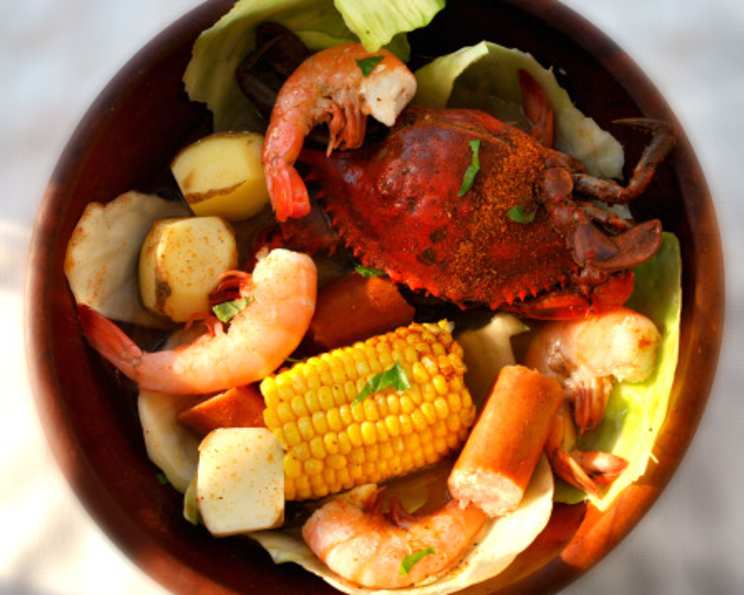
Frogmore Stew – A Low-Carb Celebration of the Lowcountry
As a chef and writer, I’ve had the immense pleasure of experiencing food cultures across the globe, but some dishes hold a special place in my heart, deeply tied to memory and place. Frogmore Stew, or Lowcountry Boil as it’s often known, is one such dish. I vividly recall my first encounter with it on a crisp October evening in the South Carolina lowcountry. The air was thick with the briny scent of the nearby marsh, and the entire community seemed to gather around a colossal pot, its contents bubbling with an irresistible aroma. The magic wasn’t just in the succulent shrimp and sweet corn, but in the communal spirit it embodied, a shared experience of simple, honest, and incredibly flavorful food that felt as natural as the tides.
Recipe Overview
- Prep Time: 20 minutes
- Cook Time: 25 minutes
- Total Time: 45 minutes
- Servings: 5
- Yield: 1 Large Pot
- Dietary Type: Low Carb
Ingredients
The beauty of Frogmore Stew lies in its simplicity, allowing the natural flavors of fresh seafood and produce to shine. For this low-carb iteration, we’re focusing on the core elements that make it so beloved, while gently nudging it towards a more carb-conscious plate.
- 2 lbs kielbasa, cut into one-inch sections
- 1 lb small red potatoes, scrubbed
- 4 ears fresh corn, cut into fourths (for a low-carb option, you can omit the corn or use just two ears for a hint of sweetness)
- 1/4 bushel live blue crab, cleaned
- 3 lbs fresh shrimp, headed
- 0.25 (6 ounce) can Old Bay Seasoning
Equipment Needed
For this quintessential Lowcountry feast, a few key pieces of equipment will ensure success:
- A very large, heavy-bottomed pot, ideally 20-gallon capacity, for boiling.
- A slotted spoon or spider strainer for carefully adding and removing ingredients.
- Serving platters or a large table covered with newspaper for a traditional, rustic presentation.
Instructions
The magic of Frogmore Stew unfolds in a series of carefully timed additions to a boiling pot, coaxing out the most incredible flavors. The principle is to add ingredients based on their cooking times, ensuring everything is perfectly tender and infused with seasoning.
- Begin by filling your large, 20-gallon pot with water, reaching about halfway full. This generous amount of water is crucial for maintaining a rolling boil even when you add the ingredients.
- Place the pot over high heat and bring the water to a rolling boil. A vigorous boil is essential for even cooking and proper infusion of the Old Bay seasoning.
- Once the water is at a rolling boil, carefully add the kielbasa, cut into one-inch sections, and the small red potatoes, scrubbed clean. Also, add the Old Bay Seasoning at this stage.
- Allow the sausage and potatoes to boil for approximately 10 minutes. This initial boiling period starts the cooking process for these denser ingredients, ensuring they become tender without overcooking the seafood later on.
- Next, introduce the fresh corn, cut into fourths, to the boiling water.
- Bring the water back to a rolling boil before proceeding to the next step. This ensures the corn begins to cook evenly.
- Now, carefully add the live blue crabs to the pot.
- Bring the water back to a rolling boil once more. This is a critical point as it signals the crab is beginning to cook through.
- Finally, add the fresh shrimp, headed.
- Watch closely, and as soon as the water returns to a boil, and the shrimp have turned pink and opaque (this will only take a few minutes), it’s time to finish.
- Immediately pour off most of the water, leaving just enough to keep the ingredients moist and flavorful.
- Enjoy this delicious, messy feast! The joy of Frogmore Stew is in its communal, hands-on nature.
Expert Tips & Tricks
A truly memorable Frogmore Stew, even in its low-carb adaptation, benefits from a few seasoned insights. The key is to respect the ingredients and the process.
- Don’t Overcrowd the Pot: While the idea is a one-pot wonder, ensuring there’s enough water and space for everything to boil freely is paramount. If your pot isn’t quite 20 gallons, consider making two batches rather than compromising the cooking process.
- Freshness is Key: For seafood, especially crab and shrimp, freshness is non-negotiable. Source the best quality you can find for optimal flavor and texture.
- Embrace the Mess: The traditional way to serve Frogmore Stew is spread across a newspaper-covered table. Provide plenty of napkins, and encourage guests to dig in with their hands. It’s part of the experience!
- Adjusting the Corn: For a truly low-carb experience, you can omit the corn entirely. If you still desire a hint of sweetness and visual appeal, using just two ears and cutting them into fewer pieces can work, though the flavor impact will be less pronounced.
Serving & Storage Suggestions
Frogmore Stew is best served immediately, piping hot, straight from the pot. The traditional and most enjoyable way to present it is by dumping the contents onto a large table covered with newspaper. Set out bowls for the discarded shells and plenty of napkins.
Leftovers can be stored in an airtight container in the refrigerator for up to 2 days. Reheat gently on the stovetop with a little water or broth to loosen the flavors, or microwave carefully. Be aware that shrimp can become tough if overcooked during reheating, so aim for just warm.
Nutritional Information
Here’s an approximate nutritional breakdown for a serving of this low-carb Frogmore Stew, focusing on the core ingredients and omitting the corn for a carb-conscious approach. Please note that exact values can vary based on the specific brands and exact quantities of ingredients used.
| Nutrient | Amount per Serving | % Daily Value |
|---|---|---|
| Calories | 885.5 kcal | |
| Total Fat | 53.1 g | 81% |
| Saturated Fat | 17.2 g | 86% |
| Cholesterol | 463.4 mg | 154% |
| Sodium | 3198.6 mg | 133% |
| Total Carbohydrate | 37.1 g | 12% |
| Dietary Fiber | 3.9 g | 15% |
| Sugars | 5.9 g | 23% |
| Protein | 63.5 g | 126% |
Note: Carbohydrate count will increase significantly if corn is included.
Variations & Substitutions
While this recipe is designed to be a low-carb take on a classic, there’s always room for personalization.
- Seafood Additions: If you enjoy other types of seafood, consider adding mussels or clams during the last few minutes of cooking, along with the shrimp. Ensure they are well-cleaned.
- Spicier Kick: For those who love a little heat, a few bay leaves or a pinch of red pepper flakes can be added to the boiling water along with the Old Bay.
- Vegetable Medley (Low Carb): While corn is traditional, you could experiment with adding low-carb vegetables like broccoli florets or asparagus spears during the last 5 minutes of cooking.
FAQs (Frequently Asked Questions)
Q: Why is Frogmore Stew cooked in such a large pot?
A: The large pot and ample water are crucial for maintaining a rolling boil even when adding ingredients, ensuring even cooking and proper flavor infusion for all components.
Q: How do I know when the shrimp and crab are cooked?
A: Shrimp are cooked when they turn pink and opaque. Crab is cooked when its shell turns bright red and the meat is firm.
Q: Can I use pre-cooked sausage?
A: While pre-cooked sausage can be used, it won’t impart as much flavor to the broth as raw kielbasa. If you do use pre-cooked, add it later in the process, closer to the corn.
Q: Is it essential to use Old Bay Seasoning?
A: Old Bay Seasoning is the signature spice blend for Frogmore Stew, providing its characteristic savory, slightly peppery, and aromatic flavor. It’s highly recommended for authenticity.
Q: How can I make this recipe even lower in carbs?
A: The most significant carb contributor in traditional Frogmore Stew is the corn. For a truly low-carb version, omit the corn entirely.
Final Thoughts
Frogmore Stew, in its low-carb iteration, remains a testament to the power of simple, fresh ingredients coming together in a communal, joyous meal. It’s a dish that bridges generations and celebrates the bounty of the coast. Whether you’re a seasoned lowcountry resident or new to its charms, I encourage you to gather your ingredients, rally your loved ones, and create your own unforgettable culinary memory around this sensational one-pot wonder. Serve it with a crisp, dry white wine or a light lager, and prepare for a feast that’s as rich in flavor as it is in spirit.