
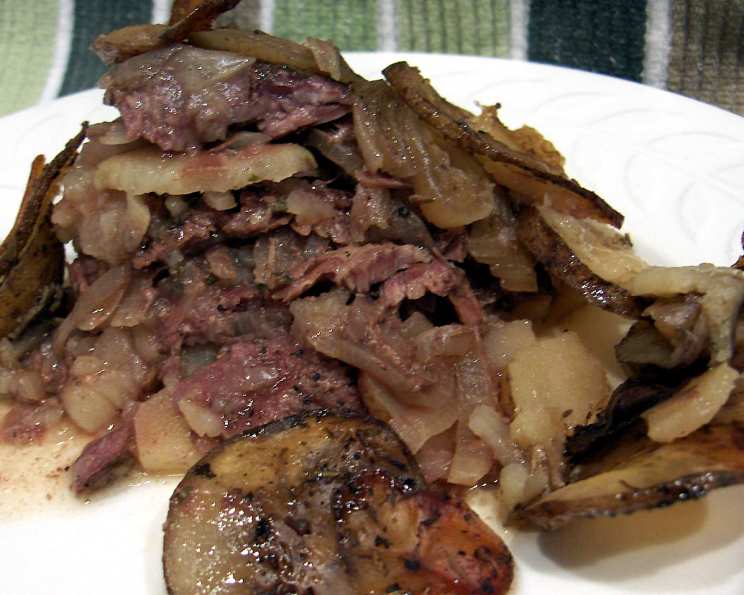
The Heartwarming Embrace of Irish Lamb or Beef Stew
There are dishes that nourish the body, and then there are dishes that nurture the soul. My first encounter with a true Irish stew wasn’t in a bustling pub or a Michelin-starred kitchen, but in a small, peat-warmed cottage nestled amidst rolling green hills in County Clare. The air was thick with the comforting aroma of slow-cooked meat and earthy root vegetables, a scent that has since become synonymous with home and hearth for me. It was a simple preparation, yet profoundly satisfying, a testament to the power of humble ingredients transformed by time and gentle heat. Every spoonful felt like a whispered story of generations past, a culinary hug that chased away the damp chill of an Irish afternoon.
Recipe Overview
- Prep Time: 30 minutes
- Cook Time: 2.5 hours
- Total Time: 3 hours
- Servings: 4-6
- Yield: 1 casserole dish
- Dietary Type: Hearty, Traditional
Ingredients
This is a stew built on the foundation of quality, simple ingredients. The choice between lamb and beef is a matter of personal preference and heritage, though lamb is, of course, the traditional heart of this dish.
- 2 lbs boned lamb (traditional) or 2 lbs boned beef, sliced into ¼-inch slices
- 2 lbs peeled potatoes, thinly sliced (a mandolin slicer is highly recommended for uniform thickness)
- 3 large onions, thinly sliced
- Salt and pepper, to taste, for each layer
- 2 tablespoons fresh parsley, chopped (divided)
- 1 teaspoon chopped fresh thyme or ½ teaspoon dried thyme
- 13 ounces water
Equipment Needed
- Large casserole dish with a tight-fitting lid
- Sharp knife or mandolin slicer
- Measuring spoons and cups
Instructions
The magic of Irish stew lies in its unhurried, layered approach. Patience is key, allowing the flavors to meld and deepen into something truly special.
- Begin by preparing your chosen meat. If using lamb or beef, trim any excess tough sinew, but leave a little of the fat attached. This fat will render down, adding richness and flavor to the stew. Slice the meat into thin, approximately ¼-inch slices.
- Next, prepare your vegetables. Peel the potatoes and slice them thinly. A mandolin slicer is your best friend here, ensuring all the potato slices are of uniform thickness, which is crucial for even cooking. Thinly slice the onions.
- Now, it’s time to build your stew. In your large casserole dish, begin by creating a layer of potatoes.
- Over the potatoes, season generously with salt, pepper, and a portion of the chopped fresh parsley (reserve about half of the parsley for finishing). Add about half of the thyme at this stage.
- Next, layer your prepared meat over the seasoned potatoes. Season the meat layer with salt and pepper.
- Follow with a layer of sliced onions. Season this layer with salt and pepper.
- Add another layer of potatoes on top of the onions. Season this final potato layer with salt and pepper.
- Pour the 13 ounces of water evenly over the entire contents of the casserole dish.
- Cover the casserole dish tightly with its lid. This is essential for trapping the steam and moisture, which will cook the ingredients and create a succulent stew.
- Preheat your oven to 275 degrees Fahrenheit (135 degrees Celsius). This low and slow cooking temperature is vital for tenderizing the meat and allowing the flavors to meld without becoming dry or tough.
- Place the covered casserole dish into the preheated oven. Cook for 2 ½ hours.
- During the cooking process, shake the casserole dish occasionally to prevent anything from sticking to the bottom. You should also check the liquid level now and then. If it appears to be drying out excessively, you may add a very small amount of additional water, but do so sparingly and only if absolutely necessary. The potatoes will naturally thicken the stew as they cook, so it shouldn’t become too runny.
- Once the 2 ½ hours of cooking are complete, remove the lid from the casserole dish.
- Place the casserole dish under a hot broiler in your oven. Broil for a short time until the potatoes on top are nice and brown and crisp. This step adds a delightful textural contrast and a beautiful golden finish. Keep a close eye on it to prevent burning.
- Just before serving, sprinkle with the remaining chopped fresh parsley.
Expert Tips & Tricks
The beauty of this stew is its inherent simplicity, but a few subtle touches can elevate it further. For instance, if you find your meat is on the leaner side, consider adding a small knob of butter or a drizzle of olive oil to the meat layer before seasoning. This can provide a little extra richness. When slicing your potatoes, aim for slices that are no thicker than a coin. If using a mandolin, be extremely careful as they can shave very quickly. Ensure your casserole dish lid fits snugly; if it’s a bit loose, you can fashion a temporary seal with a layer of parchment paper and then the lid.
Serving & Storage Suggestions
This Irish Lamb or Beef Stew is a complete meal in itself, best served piping hot straight from the oven. It’s traditionally accompanied by crusty Irish soda bread, perfect for sopping up every last drop of the rich, savory broth. A simple side of buttered peas or carrots can offer a fresh counterpoint. Leftovers, should you be so fortunate, can be stored in an airtight container in the refrigerator for 3 to 4 days. To reheat, gently warm the stew on the stovetop over low heat, or in a moderate oven. The broth may thicken further upon cooling; add a splash of water or stock if needed to loosen it.
Nutritional Information
| Nutrient | Amount per Serving | % Daily Value |
|---|---|---|
| Calories | 220.7 kcal | 11% |
| Total Fat | 3 g | 4% |
| Saturated Fat | 0.1 g | 1% |
| Cholesterol | 0 mg | 0% |
| Sodium | 22 mg | 1% |
| Total Carbohydrate | 50.3 g | 18% |
| Dietary Fiber | 7 g | 25% |
| Sugars | 6.6 g | 7% |
| Protein | 5.9 g | 12% |
Note: Nutritional values are estimates and can vary based on specific ingredients and portion sizes.
Variations & Substitutions
While the classic recipe is a masterpiece of simplicity, feel free to explore. Some cooks enjoy adding a splash of Guinness to the liquid for an added depth of flavor. For a heartier stew, you could introduce a layer of diced carrots or parsnips alongside the onions. If you prefer a slightly richer broth without beer, a small amount of beef or lamb stock can be used in place of some of the water, but be mindful of salt content.
FAQs (Frequently Asked Questions)
Q: Why is the oven temperature so low?
A: The low temperature of 275°F (135°C) is crucial for gently cooking the ingredients, tenderizing the meat without drying it out, and allowing the flavors to meld beautifully over the extended cooking time.
Q: Can I use a different type of potato?
A: While waxy potatoes hold their shape well, starchy potatoes will break down more and contribute to a thicker stew. Both can work, but consider the desired texture.
Q: What if my stew is too watery?
A: The potatoes are designed to thicken the stew. If it’s still too thin after the initial cooking, you can remove the lid and continue cooking on the stovetop over low heat for a short period, stirring occasionally, or briefly broil the top as instructed to help evaporate some liquid.
Q: Can I make this in a slow cooker?
A: Yes, you can adapt this recipe for a slow cooker. Layer the ingredients as described and cook on low for 8 hours. For the browning step, you’d likely need to transfer it to an oven-safe dish and broil separately.
Q: What’s the best way to cut the meat?
A: Aim for consistent ¼-inch slices. This ensures that all the meat cooks evenly and becomes tender within the same timeframe as the vegetables.
Final Thoughts
This Irish Lamb or Beef Stew is more than just a meal; it’s an experience. It’s a warm invitation to slow down, to savor the simple pleasures, and to connect with the comforting traditions of home cooking. As the aromas fill your kitchen, take a moment to appreciate the transformation of basic ingredients into something so profoundly satisfying. Serve it with pride, share it with loved ones, and let its hearty embrace warm you from the inside out. Enjoy every delightful, soul-soothing spoonful.