
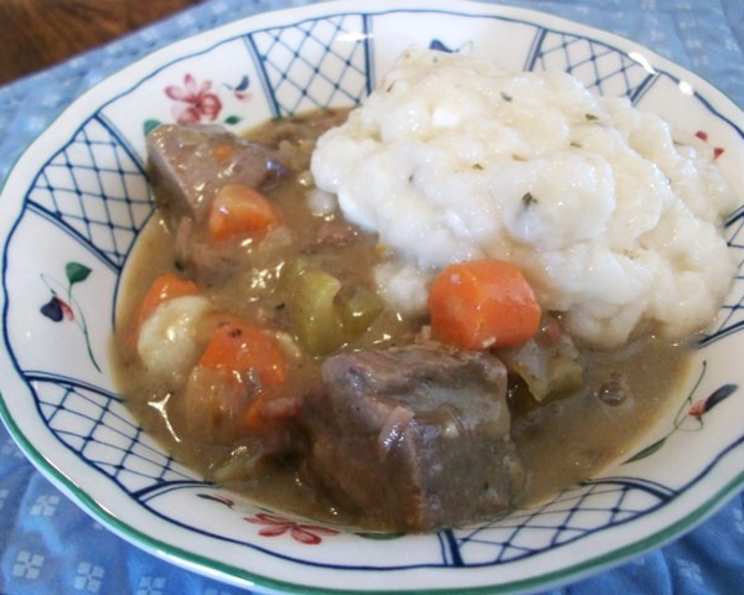
Irish Lamb Stew with Goat Cheese Dumplings: A Hug in a Bowl
There’s a particular kind of magic that happens when the air grows crisp, and the days shorten. It’s a signal for the kitchen to come alive with the aromas of slow-cooked meats and comforting spices. For me, this Irish Lamb Stew with Goat Cheese Dumplings isn’t just a meal; it’s a vivid memory woven from chilly evenings spent in my grandmother’s kitchen. I can still recall the gentle clinking of pots, the rich scent of lamb simmering, and the anticipation of those fluffy, savory dumplings. It’s a dish that warms you from the inside out, a true testament to the power of simple, quality ingredients transformed through patience and love.
Recipe Overview
- Prep Time: 15 minutes
- Cook Time: 3 hours 50 minutes (including overnight refrigeration)
- Total Time: 4 hours 5 minutes + overnight refrigeration
- Servings: 8
- Yield: 1 large stew pot
- Dietary Type: Contains Dairy, Gluten
Ingredients
For the Lamb Roast
- 5 lbs lamb shoulder roast
- 1/2 teaspoon salt
- 1/2 teaspoon black pepper
- 2 tablespoons olive oil
- 10 garlic cloves, peeled
- 1/4 lb bacon, cut into 1-inch pieces
- 1 sprig fresh rosemary
- 1 sprig fresh thyme
- 3 cups beef broth
For the Stew Base
- 4 ounces unsalted butter
- 1/2 cup all-purpose flour
- 2 celery ribs, chopped
- 14 baby carrots, chopped
- 2 onions, chopped
- 3 cups beef broth (reserved from cooking the lamb)
For the Goat Cheese Dumplings
- 2 cups all-purpose flour
- 2 cups Bisquick
- 1 cup 2% low-fat milk
- 4 ounces goat cheese, crumbled
- 2 teaspoons fresh parsley, chopped
- 2 teaspoons dried marjoram
- 2 teaspoons dried thyme
- 1/2 teaspoon black pepper
Equipment Needed
- Large roasting pan
- Large pot or Dutch oven
- Measuring cups and spoons
- Whisk
- Sharp knife
- Cutting board
- Foil
- Plastic wrap
- Sieve or strainer
- 2-quart pot (for cooking dumplings)
- Large bowl (for mixing dumpling dough)
- Serving ladle
Instructions
Slow-Roasting the Lamb
Begin by preheating your oven to 300°F (150°C). Take your lamb shoulder roast and place it in a roasting pan. Season it generously all over with salt and black pepper. Then, rub it all over with the olive oil. To ensure the flavors penetrate deeply, make about 10 small slits all over the surface of the roast. If your roast is tied, it’s best to leave it tied during this process.
Carefully insert the peeled garlic cloves into these slits. Scatter the bacon pieces into the bottom of the roasting pan around the lamb. Gently pour the 3 cups of beef broth over and around the roast. Place the sprigs of fresh rosemary and thyme on top of the lamb. Cover the roasting pan tightly with foil. Slow roast in the preheated oven for 3 hours, or until the lamb is exceptionally tender and easily shreds with a fork.
Preparing the Stew Base and Refrigeration
Once the lamb is cooked to perfection, remove the roasting pan from the oven. Allow the lamb to cool slightly in the pan. Carefully remove the roast from the pan, wrap it tightly in foil, and refrigerate it overnight. The residual heat will continue to gently cook the meat, making it even more succulent.
Next, strain the rich stock from the roasting pan into a Pyrex bowl. Cover the bowl with plastic wrap and refrigerate it overnight as well. This overnight chilling is crucial for separating the fat from the stock, which is a hallmark of a truly well-made stew.
Assembling and Simmering the Stew
The following day, remove the solidified fat from the surface of the chilled stock. You should aim to yield at least 4 cups of beautifully clarified lamb-infused stock. Discard the rendered fat solids and set the precious stock aside. Take the lamb out of its foil wrapping. You will notice it has likely started to fall apart. Cut the tender lamb into 2-inch cubes and set them aside.
In a large pot or Dutch oven, melt the 4 ounces of unsalted butter over medium heat. Once melted, stir in the 1/2 cup of flour, creating a roux. Cook this mixture for 3 minutes, stirring constantly, until it’s lightly golden and fragrant. Add the chopped celery ribs and chopped baby carrots to the pot. Sauté these vegetables for about 5 minutes, allowing them to soften slightly. Now, add the chopped onions and sauté for another 10 minutes, until they are translucent and sweet.
Slowly, and with a whisk in hand, whisk in the reserved lamb stock (the liquid from the original roast, minus the fat). Gradually incorporate the stock, ensuring no lumps form. Once the base is smooth and has thickened slightly, add the cooked lamb cubes back into the pot. Reduce the heat to low, cover the pot, and let the stew simmer gently for 20 to 30 minutes, or until the carrots are tender.
Crafting the Goat Cheese Dumplings
While the stew simmers, it’s time to prepare the dumplings. In a 2-quart pot, heat 3 cups of beef broth (or veal stock, if preferred) to a gentle simmer. Keep this simmering on a low heat. Meanwhile, in a large bowl, combine the remaining dumpling ingredients: 2 cups of all-purpose flour, 2 cups of Bisquick, 1 cup of 2% low-fat milk, 4 ounces of crumbled goat cheese, 2 teaspoons of chopped parsley, 2 teaspoons of dried marjoram, 2 teaspoons of dried thyme, and 1/2 teaspoon of black pepper. Mix these ingredients well until they form a cohesive, slightly sticky dough.
Cooking the Dumplings and Finishing the Stew
Now for the magical part! Drop the dumpling dough by tablespoonfuls (a few at a time, so as not to overcrowd the simmering broth) into the gently simmering broth in the 2-quart pot. They will expand significantly, so give them ample space to puff up. Let them simmer, turning occasionally, for 10 to 15 minutes, or until the dumplings float to the surface and are cooked through. You can test for doneness by gently piercing one with a toothpick; it should come out clean.
As the dumplings finish cooking, remove them from the broth using a slotted spoon and add them directly to the simmering stew. Once the last batch of dumplings is cooked, add them along with any remaining simmering broth from the dumpling pot to the main stew. Stir gently to combine. Allow the stew to simmer for a final few minutes to meld the flavors.
Expert Tips & Tricks
- Overnight Refrigeration is Key: Don’t skip the overnight chilling. It’s essential for both the lamb, allowing it to firm up for easier cubing, and the stock, for effortless fat removal. This step dramatically improves the clarity and richness of your stew.
- Roux Patience: When making the roux for the stew base, cook the flour and butter mixture for the full 3 minutes. This cooks out the raw flour taste and develops a nutty depth that enhances the entire dish.
- Dumpling Texture: For the fluffiest dumplings, avoid overmixing the dough. Just combine until the ingredients are incorporated. Overworking can lead to tough dumplings.
- Broth Level for Dumplings: Ensure the broth you use for cooking the dumplings is at a consistent, gentle simmer. Too high a heat will cause them to break apart, and too low will result in dense dumplings.
Serving & Storage Suggestions
Serve this hearty Irish Lamb Stew piping hot, ladled generously into deep bowls. The tender lamb, rich gravy, and fluffy goat cheese dumplings create a symphony of textures and flavors. A sprinkle of fresh parsley or chives over the top adds a lovely touch of color and freshness. This stew is wonderfully satisfying on its own, but a slice of crusty brown bread or a side of buttered soda bread is an excellent accompaniment for sopping up every last drop of the delicious gravy.
Leftovers can be stored in an airtight container in the refrigerator for up to 3 days. Reheat gently on the stovetop over low heat, stirring occasionally, or in the microwave until heated through. The dumplings may become slightly softer upon reheating, but they will still be delicious. It’s not recommended to freeze this stew once the dumplings have been added, as their texture can be compromised.
Nutritional Information
| Nutrient | Amount per Serving | % Daily Value |
|---|---|---|
| Calories | 993.3 kcal | N/A |
| Total Fat | 59.9 g | 92% |
| Saturated Fat | 26.1 g | 130% |
| Cholesterol | 204.9 mg | 68% |
| Sodium | 1300 mg | 54% |
| Total Carbohydrate | 56.8 g | 18% |
| Dietary Fiber | 2.8 g | 11% |
| Sugars | 7.8 g | 31% |
| Protein | 54.3 g | 108% |
(Note: Nutritional information is an estimate and can vary based on specific ingredients and preparation methods.)
Variations & Substitutions
While this recipe is a classic, feel free to experiment. If lamb shoulder is unavailable, a beef chuck roast can be used, though the cooking time might need slight adjustments. For a different cheese element in the dumplings, a sharp cheddar or even a blend of Gruyère and Parmesan could be interesting. If you prefer a milder dumpling, omitting the goat cheese and increasing the Bisquick slightly will yield a more traditional, plain drop biscuit dumpling. For those sensitive to gluten, you could explore gluten-free flour blends for the dumplings, though the texture may differ.
FAQs
Q: Can I make this stew ahead of time?
A: Yes, the stew base can be made a day or two in advance and refrigerated. Prepare the dumplings just before serving to maintain their best texture.
Q: Why do I need to chill the stock overnight?
A: Chilling the stock allows the fat to solidify on the surface, making it very easy to remove. This results in a cleaner, less greasy stew and a more refined flavor.
Q: My dumplings are sticking to the bottom of the pot. What should I do?
A: Ensure your broth is at a gentle simmer and not boiling rapidly. Also, try not to overcrowd the pot; cook dumplings in batches if necessary.
Q: Can I use a different cut of lamb?
A: Lamb shoulder is ideal for its richness and ability to become tender with slow cooking. While other cuts could work, they might require different cooking times and may not yield the same depth of flavor.
Q: How can I make the dumplings lighter?
A: Avoid overmixing the dumpling dough. Mix just until combined. Gently dropping them into the simmering broth also helps them expand.
Final Thoughts
This Irish Lamb Stew with Goat Cheese Dumplings is more than just a meal; it’s an experience. It’s a dish that speaks of tradition, comfort, and the simple joy of sharing good food. Whether you’re recreating a taste of Ireland or simply looking for a deeply satisfying dish to ward off the chill, I encourage you to bring this stew to your table. Its preparation is a labor of love, and the reward is a bowl of pure, unadulterated comfort. I’d be delighted to hear how it turns out for you and what memories it creates in your own kitchen.