
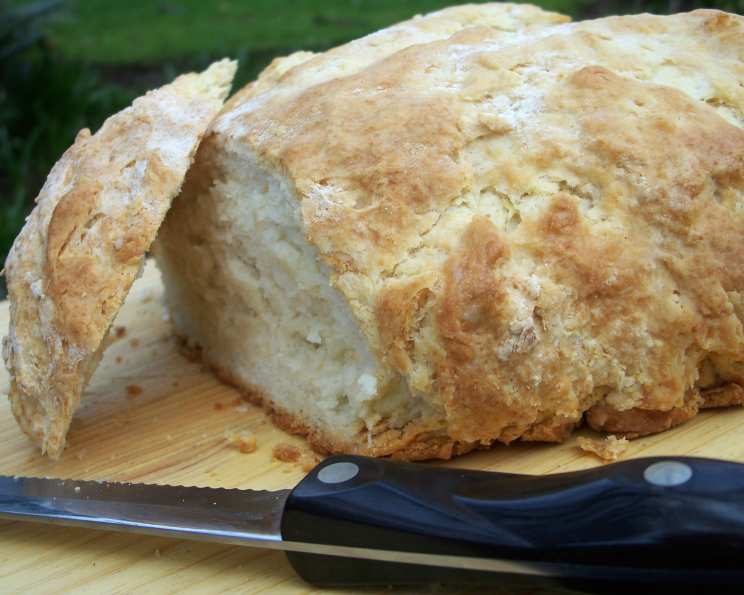
The Rustic Charm of Irish Soda Bread: A Taste of Tradition
There’s something profoundly comforting about a crusty loaf, still warm from the oven, that speaks of simple pleasures and honest ingredients. For me, that’s the magic of Irish Soda Bread. I remember, as a child, watching my grandmother’s hands, dusted with flour, deftly shaping a round loaf. The smell of baking bread, mingled with the faint tang of buttermilk, would fill her tiny kitchen, a promise of good things to come. It wasn’t just food; it was a ritual, a tangible connection to generations past, and a testament to how far a few simple ingredients could go. That same sense of heartfelt warmth and rustic authenticity is what I hope to share with you through this recipe.
Recipe Overview
- Prep Time: 15 minutes
- Cook Time: 1 hour
- Total Time: 1 hour 15 minutes
- Yields: 1 loaf
- Servings: 10
- Dietary Type: Vegetarian
Ingredients
At its heart, Irish Soda Bread is a celebration of simplicity, relying on a handful of pantry staples to create something truly special. Here’s what you’ll need:
- 4 cups all-purpose flour
- 2 tablespoons white sugar
- 1 tablespoon baking powder
- 1 teaspoon baking soda
- 1 teaspoon salt
- 6 tablespoons cold butter or margarine
- 2 cups buttermilk
Optional addition for a sweeter, fruitier loaf:
- 1 cup raisins or currants
Equipment Needed
While this bread is wonderfully unfussy, a few essential tools will make the process smooth:
- Large mixing bowl
- Pastry blender or your fingertips
- Measuring cups and spoons
- Lightly floured surface for kneading
- A greased 9x5x3 inch loaf pan (or a casserole dish, or a baking sheet)
- Wire cooling rack
Instructions
Crafting this iconic loaf is remarkably straightforward, allowing even novice bakers to achieve delightful results. Follow these steps carefully for a perfect bake every time.
- Begin by preheating your oven to 350°F (175°C). This ensures an even baking temperature from the start.
- In a large mixing bowl, combine the all-purpose flour, white sugar, baking powder, baking soda, and salt. Stir these dry ingredients together thoroughly with a whisk or spoon to ensure they are evenly distributed. This is crucial for consistent leavening.
- Next, add the cold butter or margarine to the dry ingredients. Using a pastry blender, your fingertips, or even two knives, cut the butter into the flour mixture until it resembles coarse crumbs. You want pea-sized pieces of butter remaining, as these will create delightful pockets of tenderness in the finished bread.
- Now, it’s time for the liquid. Pour in the buttermilk.
- Stir just enough to moisten all the dry ingredients. Overmixing at this stage can develop the gluten too much, leading to a tough loaf. You’re aiming for a shaggy, slightly sticky dough.
- Turn the dough out onto a lightly floured surface.
- Knead the dough gently for only 8 to 10 times. This is not a traditional yeasted bread dough; you’re just bringing it together, not developing a strong gluten structure. Over-kneading will result in a dense, chewy bread.
- Shape the dough into a rough loaf shape and place it into your greased 9x5x3 inch loaf pan. If you’re using a casserole dish or baking sheet, shape the dough into a round or oval loaf and place it directly onto the prepared surface.
- Bake in the preheated oven for 1 hour, or until the top is beautifully browned and a toothpick inserted into the center comes out clean. The baking time can vary slightly depending on your oven, so keep an eye on it.
- Once baked, carefully remove the loaf from the pan and place it on a wire cooling rack to cool completely before slicing. This allows the steam to escape and prevents a soggy bottom.
Expert Tips & Tricks
Elevating your Irish Soda Bread experience is all about understanding the nuances of this simple bread. Here are a few insider tips from my kitchen to yours:
- The Buttermilk Secret: The acidity in buttermilk is what reacts with the baking soda to create lift. If you don’t have buttermilk, you can easily make a substitute by placing 2 tablespoons of white vinegar or lemon juice in a measuring cup and adding enough regular milk to reach the 2-cup mark. Let it sit for 5-10 minutes until it looks slightly curdled.
- Cold is Key: Ensure your butter is very cold when you cut it into the flour. This helps create those desirable flaky layers.
- Gentle Handling: Remember, this is a quick bread. The less you handle and knead the dough, the more tender your final loaf will be. Aim for just enough to bring it together.
- The Cross Cut: Traditionally, a deep cross is cut into the top of the soda bread before baking. This is said to ward off evil spirits, but it also helps the bread bake more evenly.
- Crusty Perfection: For an even crustier exterior, you can bake the soda bread directly on a baking sheet. You might need to slightly reduce the baking time, so start checking for doneness around the 50-minute mark.
Serving & Storage Suggestions
Irish Soda Bread is at its absolute best when served fresh, ideally within a few hours of baking. Its rustic charm means it doesn’t need much embellishment.
- Serving: Slice the cooled loaf generously and serve it simply. It’s divine with a good slather of Irish butter, a dollop of raspberry jam, or even a smear of cream cheese. It makes a perfect accompaniment to hearty stews, soups, or a traditional Irish breakfast.
- Storage: Once completely cooled, you can store the bread in an airtight container or a bread bag at room temperature for up to 3 days. It will become a little softer over time, but still delicious. For longer storage, you can freeze slices or the whole loaf, wrapped tightly in plastic wrap and then in foil, for up to 3 months. Thaw at room temperature or gently reheat in a low oven.
Nutritional Information
Here is an estimated nutritional breakdown per serving, assuming the loaf is divided into 10 portions. Please note that these values are approximate and can vary based on specific ingredients used.
| Nutrient | Amount per Serving | % Daily Value |
|---|---|---|
| Calories | 273.1 kcal | |
| Calories from Fat | ||
| Total Fat | 7.8 g | 12% |
| Saturated Fat | 4.7 g | 23% |
| Cholesterol | 20.3 mg | 6% |
| Sodium | 580.6 mg | 24% |
| Total Carbohydrate | 43.4 g | 14% |
| Dietary Fiber | 1.4 g | 5% |
| Sugars | 5 g | 20% |
| Protein | 6.9 g | 13% |
Variations & Substitutions
While the classic is undeniably wonderful, the beauty of soda bread lies in its adaptability.
- Fruitful Addition: As mentioned in the ingredients, adding 1 cup of raisins or currants to the dry ingredients before adding the buttermilk is a popular and delicious variation. Gently fold them in after cutting in the butter.
- Herbal Notes: For a savory twist, you can incorporate a tablespoon or two of finely chopped fresh herbs like chives or parsley into the dry ingredients.
- Whole Wheat Upgrade: For a slightly heartier loaf, you can substitute up to half of the all-purpose flour with whole wheat flour. Keep in mind this might result in a slightly denser bread.
FAQs
Q: Why is my soda bread dense and heavy?
A: This is often caused by overmixing or over-kneading the dough. Remember to mix the buttermilk in just until moistened and knead only 8-10 times.
Q: Can I use regular milk instead of buttermilk?
A: Yes, you can create a buttermilk substitute by mixing 2 tablespoons of white vinegar or lemon juice with regular milk to reach the 2-cup mark, and letting it sit for 5-10 minutes.
Q: How do I know when my soda bread is done baking?
A: The bread should be golden brown, and a toothpick inserted into the center should come out clean. You can also tap the bottom of the loaf; it should sound hollow.
Q: Can I make soda bread without a loaf pan?
A: Absolutely! You can shape it into a round or oval loaf and bake it directly on a greased baking sheet or in a greased casserole dish.
Q: Is Irish Soda Bread supposed to be crumbly?
A: A certain amount of crumbly texture is natural, especially when it’s fresh. However, if it’s excessively crumbly, it might be due to insufficient moisture or overworking the dough.
Final Thoughts
There’s a profound satisfaction that comes from baking a loaf of Irish Soda Bread. It’s a connection to culinary history, a simple act of nourishment, and a gesture of warmth. I encourage you to embrace the simplicity of this recipe, to let your hands feel the dough, and to enjoy the comforting aroma that fills your home as it bakes. Serve it with pride, share it with loved ones, and perhaps, over a slice of this rustic bread, create a new tradition of your own. Whether paired with a steaming mug of tea or a hearty bowl of Irish stew, this bread is a testament to the enduring power of honest, humble ingredients.