
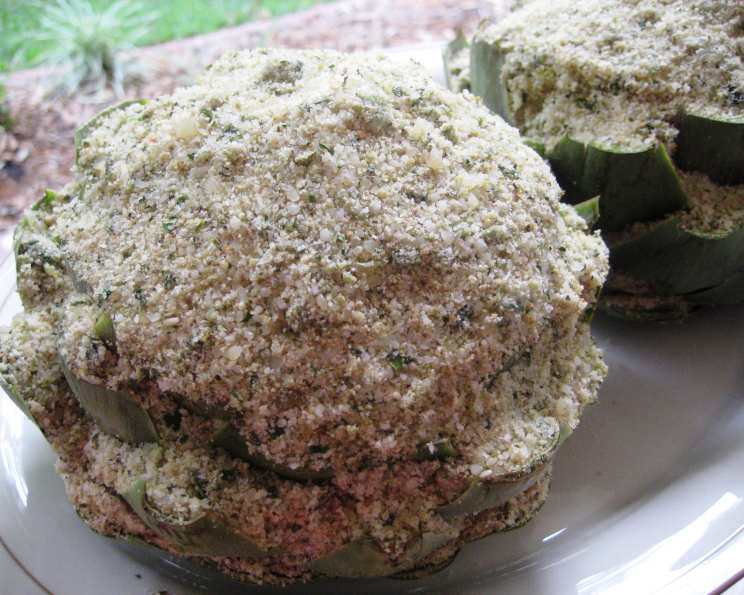
Italian Breadcrumb Artichokes: A Taste of Tradition
My grandmother, Nonna Elena, believed that food was love made visible. Her kitchen, a warm haven filled with the scent of simmering tomatoes and baking bread, was where the magic happened. And among her many culinary treasures, these Italian Breadcrumb Artichokes held a special place. I remember as a child, watching her deft hands meticulously stuff each artichoke, the aroma of garlic and parsley filling the air. It wasn’t just a dish; it was an expression of her soul, a way of bringing us all together around the table. Each tender leaf, each savory bite, was a testament to generations of Italian culinary wisdom, passed down with a wink and a nod.
Recipe Overview
- Prep Time: Approximately 30-40 minutes
- Cook Time: 50-60 minutes
- Total Time: About 1 hour 20 minutes to 1 hour 40 minutes
- Servings: 6
- Yield: 6-8 stuffed artichokes
- Dietary Type: Vegetarian
Ingredients
- 6-8 small to medium size artichokes
- 2 lbs Parmesan cheese, freshly grated (you can also substitute with Asiago or Romano cheese)
- 8 garlic cloves, minced
- 2 cups green onions, tops and bottoms sliced thinly
- 1 (24-ounce) container Italian seasoned breadcrumbs, plus 1 cup for potentially more stuffing
- 3/4 cup minced parsley (loosely packed)
- 1 cup minced celery
- 1 medium green bell pepper, chopped very finely
- 1 tablespoon black pepper
- 1 teaspoon salt (optional, as Parmesan is salty)
- Olive oil
Equipment Needed
- Large pot or Dutch oven with a tight-fitting lid
- A rack for the pot (if available)
- Sharp knife
- Kitchen shears
- Large mixing bowl
- Measuring cups and spoons
Instructions
- Begin by thoroughly washing the artichokes under cool running water. Allow them to dry completely, ideally upside down on a clean kitchen towel to drain any excess moisture.
- Once dry, take a sharp knife and cut off the stems of the artichokes so that they will stand upright steadily.
- Next, remove any tough, discolored outer leaves from the base of each artichoke. Then, using your knife, cut off about 1 inch straight from the top of each artichoke.
- With your kitchen shears, carefully snip off the sharp point from each of the remaining outer leaves. This makes them more pleasant to eat.
- Gently slightly open the center and outer leaves of each artichoke. This creates pockets to hold the delicious stuffing.
- In a large bowl, combine the freshly grated Parmesan cheese and the Italian seasoned breadcrumbs. Mix these thoroughly.
- Now, add all the remaining ingredients to the bowl, except for the olive oil: the minced garlic, sliced green onions, minced parsley, minced celery, finely chopped green bell pepper, black pepper, and the optional salt.
- Thoroughly combine all the ingredients in the bowl. The mixture should be well-integrated, with the breadcrumbs absorbing some of the moisture from the cheese and vegetables.
- Holding one artichoke over the bowl of stuffing, begin to stuff it. Work from the bottom of the artichoke upwards, gently spreading the leaves apart and pushing the stuffing mixture firmly into each pocket. Ensure the stuffing adheres well.
- Once the leaves are sufficiently stuffed, mound any remaining stuffing over the flattened top of the artichoke. Gently push down with the palm of your hand to help the mixture adhere to the top of the artichoke.
- Repeat this stuffing process for all the remaining artichokes.
- Carefully place the stuffed artichokes into a large pot or Dutch oven. If you have a rack, place it in the bottom of the pot to keep the artichokes slightly elevated.
- Carefully add enough water to the pot to cover the bottom of the pot to about 1/2 inch. It is crucial that the water level does not touch the bottom leaves of the artichokes.
- Cover the pot tightly with its lid. Steam the artichokes on low heat. Monitor the water level regularly and refill as needed, being careful not to touch the leaves of the artichokes when adding water.
- After the artichokes have been steaming for 20 minutes, open the lid and liberally drizzle olive oil over the top of each stuffed artichoke.
- Replace the lid and continue steaming. Frequently check the water level, and steam for an additional 50 to 60 minutes, or until the leaves pull out easily. This is your indicator that the artichokes are tender and cooked through.
- Once tender, carefully remove the cooked artichokes from the pot.
- Allow the artichokes to cool slightly before serving.
Expert Tips & Tricks
For a smoother stuffing, especially if you don’t have a food processor handy, you can finely mince the garlic, parsley, celery, and bell pepper by hand. The key is to get them as small as possible so they integrate well with the cheese and breadcrumbs. If you find your stuffing mixture is a bit too dry, you can add a tablespoon or two of olive oil to help it bind. When stuffing, don’t be afraid to really get the stuffing into all the nooks and crannies; it’s where the flavor truly resides. If your artichokes don’t stand upright perfectly after trimming the stems, a small slice off the bottom can create a stable base. Remember, the goal is even cooking, so try to stuff them similarly in terms of volume.
Serving & Storage Suggestions
These Italian Breadcrumb Artichokes are best served warm, allowing the flavors of the cheese and herbs to meld beautifully. They make a fantastic appetizer or a light main course. For a more substantial meal, pair them with a simple grilled fish or a fresh pasta dish.
Leftovers can be stored in an airtight container in the refrigerator for up to 3 days. To reheat, gently warm them in a low oven (around 300°F or 150°C) or briefly in the microwave, being careful not to overcook them and dry out the stuffing. They can also be enjoyed at room temperature, though the texture of the stuffing may change slightly.
Nutritional Information
| Nutrient | Amount per Serving | % Daily Value |
|---|---|---|
| Calories | 1176.9 kcal | |
| Calories from Fat | 449 g | |
| Total Fat | 50 g | 76% |
| Saturated Fat | 27.9 g | 139% |
| Cholesterol | 134.4 mg | 44% |
| Sodium | 4459 mg | 185% |
| Total Carbohydrate | 103.8 g | 34% |
| Dietary Fiber | 14.6 g | 58% |
| Sugars | 10.8 g | 43% |
| Protein | 80 g | 159% |
Note: Nutritional information is an estimate and can vary based on specific ingredients and portion sizes.
Variations & Substitutions
While the classic Parmesan cheese is divine, feel free to experiment with other hard, salty cheeses like Pecorino Romano or a blend of cheeses. For a vegetarian take that’s closer to a traditional Italian preparation, you could omit the breadcrumbs and use finely chopped cooked rice or farro for a different textural component in the stuffing. If you’re looking for a lighter option, you can reduce the amount of cheese and increase the finely chopped vegetables, perhaps adding some toasted pine nuts for richness.
FAQs
Q: Can I prepare these artichokes ahead of time?
A: Yes! You can stuff the artichokes up to a day in advance and refrigerate them. When ready to cook, follow the steaming instructions, and they will likely take a few extra minutes to become tender.
Q: What if I don’t have a Dutch oven?
A: A large pot with a tight-fitting lid will work just as well. The crucial element is the ability to create a steamy environment.
Q: My artichokes are tough, what went wrong?
A: Ensure you are steaming them long enough. The leaves should pull out with very little resistance. Sometimes, slightly larger artichokes may require a bit more steaming time.
Q: Can I bake these instead of steaming?
A: While traditionally steamed, you could try baking them. After stuffing, place them in a baking dish with about an inch of water at the bottom, cover tightly with foil, and bake at 375°F (190°C) until tender, about 45-60 minutes. You would then add olive oil in the last 10-15 minutes uncovered.
Q: How do I know when the artichokes are cooked through?
A: The most reliable test is to gently pull on an outer leaf. If it comes away easily, the artichoke is ready. You can also insert a paring knife into the base; it should go in with minimal resistance.
Final Thoughts
This recipe for Italian Breadcrumb Artichokes is more than just a collection of ingredients and steps; it’s a gateway to tradition, a taste of familial warmth, and a reminder of the simple pleasures found around a well-laden table. It’s a dish that encourages sharing, conversation, and the savoring of each tender, flavorful bite. So, gather your ingredients, embrace the process, and create a dish that will surely become a cherished part of your culinary repertoire. I often find myself pairing these with a crisp white wine, like a Vermentino or a dry Pinot Grigio, to complement their savory richness. Enjoy every moment of its creation and, most importantly, its delicious consumption!