
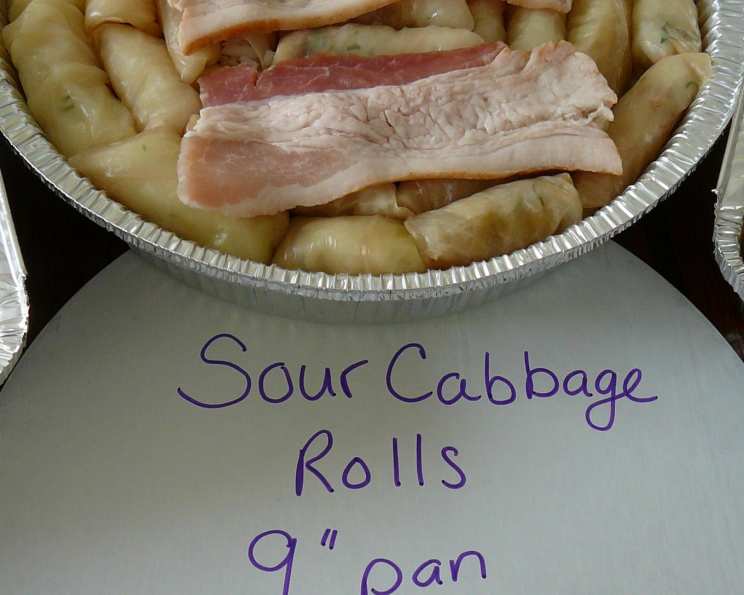
Kachman’s Sour Cabbage Rolls: A Taste of Nostalgia
There are certain aromas that, when they waft through the kitchen, instantly transport me back in time. The sharp, earthy scent of sauerkraut mingling with the savory richness of slow-cooked pork and rice is one of them. It’s the smell of my grandmother Anya’s kitchen, a place where love was always simmering on the stove and every meal was a testament to family heritage. These sour cabbage rolls, or holubtsi as we affectionately call them, are more than just a recipe; they are edible heirlooms, each bite a whispered memory of childhood holidays and bustling family gatherings. Unlike the often-sweetened versions found elsewhere, Kachman’s sour cabbage rolls stand proudly on their own, a bold and comforting embrace of pure, unadulterated flavor that is as easy to assemble as it is to devour.
Recipe Overview
- Prep Time: Approximately 45 minutes
- Cook Time: 2 to 2.5 hours
- Total Time: Approximately 2 hours 45 minutes to 3 hours 15 minutes
- Servings: 8-10
- Yield: Approximately 20-25 rolls
- Dietary Type: Can be adapted for dairy-free and gluten-free by ensuring rice and other ingredients meet those needs.
Ingredients
Gathering the components for Kachman’s Sour Cabbage Rolls is a journey in itself, an assembly of simple, honest ingredients that come together to create something truly extraordinary. The star, of course, is the sour cabbage. I prefer to use a whole head of sour cabbage (about 1 large head), which can often be found in the deli section of well-stocked grocery stores. If you’re feeling adventurous, you can also ferment your own, but for this recipe, store-bought is perfectly acceptable and a great time-saver.
The heart of the filling lies in the comforting embrace of cooked white rice. Using 2 cups of cooked white rice provides a wonderful base. I often make extra rice for supper the night before, a little trick that significantly cuts down on prep time.
For the savory foundation of our filling, we’ll need:
- 10 slices of bacon, finely diced. The salty, smoky crispness of the bacon is essential.
- 1 large onion, chopped. This will add a lovely sweetness and depth.
- 2 tablespoons of oil. This is used to sauté the bacon and onion.
- 1 tablespoon of dried dill. This herb is a classic pairing with cabbage and adds a distinct, fresh aroma.
- 1/2 teaspoon of salt. Adjust to taste, considering the saltiness of the bacon.
To bind everything together and create a flavorful braising liquid, we’ll use:
- 2/3 cup of water
- 1/3 cup of oil
Equipment Needed
While this recipe is surprisingly straightforward, a few key pieces of equipment will ensure a smooth cooking process:
- A large pot or Dutch oven for sautéing.
- A sharp knife and cutting board.
- A large mixing bowl.
- A casserole dish or baking pan (approximately 9×13 inches or similar).
- Aluminum foil or a lid for the casserole dish.
Instructions
The process of assembling these cabbage rolls is almost meditative, a careful layering and rolling that culminates in a dish that is both rustic and elegant.
-
Prepare the Filling Base: In a small pot or skillet, heat 2 tablespoons of oil over medium heat. Add the diced bacon and cook until it begins to render its fat and crisp up. Then, add the chopped onion to the pot. Continue to cook, stirring occasionally, until the onions are opaque and softened, and the bacon is to your desired level of crispness. This usually takes about 5-7 minutes.
-
Flavor the Filling: Stir in the dried dill and salt into the bacon and onion mixture. Cook for another minute until fragrant.
-
Combine Filling Components: Remove the pot from the heat. Add the cooked white rice to the bacon and onion mixture. Stir everything together thoroughly, ensuring the rice is well coated with the savory rendered fat and aromatics. This is your filling.
-
Cool the Filling: Allow the filling to cool for a few minutes. This is important as working with hot filling can make it difficult to handle and roll the cabbage leaves.
-
Prepare the Cabbage: Carefully remove and separate the cabbage leaves from the head of sour cabbage. You’ll want to be gentle to avoid tearing them. The larger leaves can be cut down, and for smaller leaves, you can often get 3-4 usable pieces from each, depending on their size. This part definitely comes with practice and a feel for the leaves. The goal is to have pieces large enough to hold the filling, but manageable to roll. Cut out the hard, central core from each leaf piece to make rolling easier.
-
Assemble the Rolls: Grease your casserole dish with a little oil or cooking spray. Now, take a prepared cabbage leaf piece and place about 1 tablespoon of the filling on the widest end of the leaf. Fold the sides of the leaf in towards the center, then roll up the leaf from the wide end, enclosing the filling. The filling should be snugly contained, with no significant amount hanging out.
-
Layer in the Casserole Dish: Place the rolled cabbage rolls in the prepared casserole dish, creating layers. You can arrange them snugly, as they will shrink slightly during cooking.
-
Prepare the Braising Liquid: In a small bowl or measuring cup, combine 2/3 cup of water with 1/3 cup of oil. This liquid will gently steam and braise the cabbage rolls, keeping them moist and tender.
-
Bake the Rolls: Pour the water and oil mixture evenly over the cabbage rolls in the casserole dish. Cover the dish tightly with a lid or aluminum foil.
-
The Slow Cook: Bake in a preheated oven at 325°F (160°C) for 2 to 2.5 hours. During the baking process, it’s important to keep an eye on them to check that they don’t dry out or turn brown. If you notice them becoming too dry or browning too quickly, you can add a little more water or broth to the dish. The goal is to bake them until they are tender throughout.
Expert Tips & Tricks
- Bacon on Top: A personal favorite touch is to place a couple of slices of raw bacon on the very top of the cabbage rolls before covering and baking. This adds an extra layer of savory richness and a beautiful visual appeal as the bacon crisps during the long braise.
- Freezer Friendly: These rolls freeze beautifully before cooking. You can prepare a large batch and freeze them raw, tightly packed in freezer-safe containers or bags. When you’re ready to cook, simply transfer them directly from the freezer to the casserole dish and bake, adding a little extra cooking time (perhaps an additional 30-45 minutes) to ensure they are cooked through.
- Cabbage Head Management: If you find yourself with leftover cabbage after making a batch of rolls, don’t fret! You can freeze the remaining half of the cabbage head whole. It thaws surprisingly well and can be used for future recipes.
- Doneness Test: To ensure your cabbage rolls are perfectly tender, gently pierce one with a fork. It should yield easily without falling apart completely. The internal temperature should reach at least 165°F (74°C).
Serving & Storage Suggestions
Kachman’s Sour Cabbage Rolls are a hearty and satisfying dish on their own, but they also pair wonderfully with a dollop of sour cream or a side of crusty rye bread for soaking up any delicious juices. They are best served warm, allowing the full depth of flavor to be appreciated.
Leftovers can be stored in an airtight container in the refrigerator for up to 3-4 days. To reheat, you can gently warm them in a covered dish in a low oven (around 300°F/150°C) or microwave them until heated through. The flavor often deepens overnight, making leftovers a real treat! While I haven’t personally frozen cooked leftovers, they should also freeze well, though the texture might be slightly softer upon reheating.
Nutritional Information
(Please note: Nutritional information is an estimate and can vary based on specific ingredients and portion sizes.)
| Nutrient | Amount per Serving | % Daily Value |
|---|---|---|
| Calories | 253.4 kcal | |
| Calories from Fat | ||
| Total Fat | 17.2 g | 26% |
| Saturated Fat | 3.2 g | 15% |
| Cholesterol | 6.8 mg | 2% |
| Sodium | 251.2 mg | 10% |
| Total Carbohydrate | 21.9 g | 7% |
| Dietary Fiber | 3.4 g | 13% |
| Sugars | 4.4 g | 17% |
| Protein | 4 g | 8% |
Variations & Substitutions
While this recipe is a classic for a reason, there’s always room for a little culinary creativity!
- Vegetarian Option: For a vegetarian version, omit the bacon. Sauté the onions in a bit more oil and consider adding some sautéed mushrooms or a pinch of smoked paprika for a smoky depth.
- Different Grains: While white rice is traditional, cooked barley or even quinoa could be used for a slightly different texture and nutritional profile.
- Herb Variations: While dill is traditional, a little bit of fresh parsley or even a touch of caraway seed could be interesting additions to the filling.
- Spicy Kick: For those who enjoy a bit of heat, a pinch of red pepper flakes added to the sautéed onion and bacon mixture would be a welcome addition.
FAQs
Q: Can I use fresh cabbage instead of sour cabbage?
A: Yes, you can use fresh cabbage, but you will need to blanch the leaves to make them pliable and then rely on the braising liquid to impart flavor. However, the distinct tang of sour cabbage is a hallmark of this recipe.
Q: My cabbage leaves are tearing when I try to roll them. What can I do?
A: Ensure your cabbage leaves are sufficiently softened. If they are still too stiff, you can briefly blanch them in boiling water for a minute or two, then immediately plunge them into ice water to stop the cooking. Gently separating them while they are still warm can also help.
Q: How do I prevent the cabbage rolls from drying out during baking?
A: Ensure the casserole dish is well-covered with a tight-fitting lid or aluminum foil. The braising liquid also plays a crucial role. If you notice any dryness, add more water or broth to the dish.
Q: Can I make these rolls ahead of time?
A: Absolutely! The assembled, uncooked cabbage rolls can be refrigerated for up to 24 hours before baking. As mentioned in the tips, they also freeze exceptionally well before cooking.
Q: What is the best way to reheat leftover cabbage rolls?
A: Gently reheating in a covered oven dish at a low temperature (around 300°F/150°C) is ideal to maintain moisture. Microwaving is also an option for quick reheating, but be mindful of potential dryness.
Final Thoughts
Kachman’s Sour Cabbage Rolls are a comforting and deeply flavorful dish that speaks to the heart of home cooking. They are a reminder that sometimes, the simplest ingredients, prepared with care and intention, yield the most profound culinary experiences. I encourage you to gather your loved ones, perhaps share a story or two as you assemble these rolls, and savor the rich history and deliciousness that unfolds with every bite. They are a testament to the enduring power of family recipes to connect us to our past and nourish us in the present. Enjoy!