
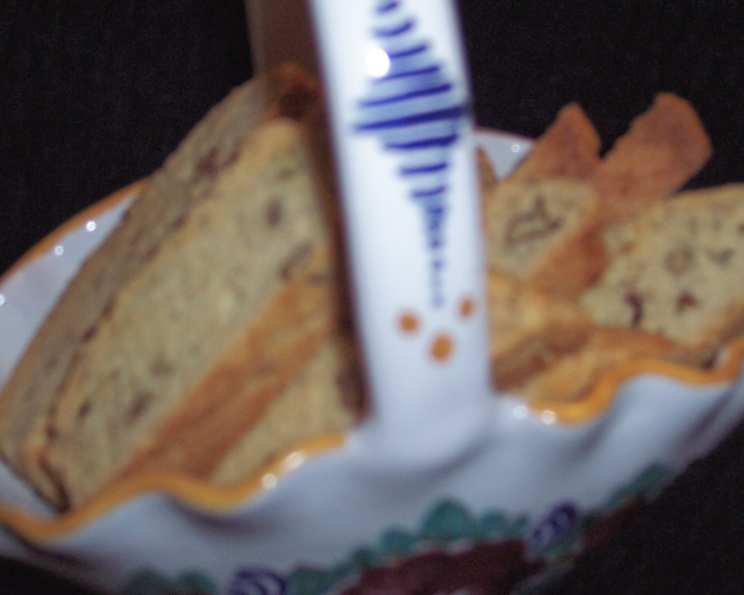
Kamish Bread: A Taste of My Great-Grandmother’s Legacy
There are certain flavors that transport you. For me, the scent of toasted almonds and vanilla wafting from a batch of kamish bread is an instant ticket back to my great-grandmother’s kitchen. I can almost feel the worn, smooth wood of her countertop beneath my fingertips and hear the gentle clinking of her mixing bowls. While I’ve never had the distinct honor of watching her make this family treasure, I’ve certainly reveled in its delightful crunch and subtle sweetness countless times. This recipe, passed down through generations, isn’t just about baking; it’s about connection, about carrying a piece of her love forward with every crisp bite.
Recipe Overview
- Prep Time: 20 minutes
- Cook Time: 45-50 minutes
- Total Time: Approximately 1 hour 10 minutes (plus cooling time)
- Servings: Generous (ideal for sharing)
- Yield: 3 batches
- Dietary Type: Traditional (contains gluten, dairy, eggs)
Ingredients
This recipe yields a substantial amount, perfect for sharing with friends and family, or for stocking your pantry with this delightful treat.
- 1 1/2 cups butter, melted
- 9 cups all-purpose flour
- 12 large eggs
- 1/2 teaspoon salt
- 1/2 tablespoon baking powder
- 3 cups chopped pecans (or almonds, for a slightly different flavor profile)
- 1 tablespoon vanilla extract
- 3 3/4 cups granulated sugar
- Cinnamon sugar (optional, for dusting)
Equipment Needed
A few essential tools will make the process smooth and enjoyable.
- Large mixing bowls (at least two)
- Whisk or electric mixer
- Measuring cups and spoons
- Rubber spatula or sturdy spoon
- Baking sheets
- Parchment paper (optional, but recommended for easier cleanup)
- Sharp knife
- Wire cooling racks
Instructions
Crafting kamish bread is a rewarding process, and the double-baking technique is key to achieving that signature crispness.
-
Begin by preheating your oven to 350°F (175°C). Prepare your baking sheets by lightly oiling them, or by lining them with parchment paper.
-
In a large mixing bowl, combine all of your dry ingredients: the 9 cups of flour, 1/2 teaspoon of salt, and 1/2 tablespoon of baking powder. Whisk them together to ensure they are evenly distributed.
-
Add the 3 cups of chopped pecans (or almonds) to the dry ingredients and stir to coat them evenly.
-
In a separate, even larger mixing bowl, combine the wet ingredients: the 1 1/2 cups of melted butter, 12 large eggs, and 1 tablespoon of vanilla extract. Whisk these together until well combined.
-
Gradually add the dry ingredients mixture to the wet ingredients. Mix thoroughly with a large spoon or a sturdy spatula. As the dough comes together, it will become quite stiff. Don’t be afraid to get your hands in there and knead it a bit, as necessary, to ensure all the flour is incorporated and you have a cohesive dough.
-
Divide the dough into three equal portions. Working with one portion at a time, shape it into small loaves. Aim for loaves that are approximately 1 to 1.5 inches in diameter and about 8-10 inches long. You want them to be substantial enough to slice later.
-
Place the shaped loaves onto your prepared baking sheets, leaving a few inches of space between them to allow for expansion.
-
Bake these initial loaves in the preheated 350°F (175°C) oven for 20 to 25 minutes. The goal here is for them to be set and lightly browned on the bottom, not fully cooked through. They will still be soft in the center.
-
Once the loaves have undergone their first bake, carefully remove the baking sheets from the oven. Immediately, while the loaves are still hot and pliable, transfer them from the baking sheets to a clean surface. Using a sharp knife, slice the loaves to your desired thickness. For traditional kamish, slices are typically around 1/2 inch thick. Work quickly, as the loaves will firm up as they cool, making them harder to slice cleanly.
-
If you desire a touch of sweetness and spice, this is the moment to sprinkle the sliced kamish with cinnamon sugar. You can prepare this by mixing a few tablespoons of granulated sugar with about a teaspoon of ground cinnamon.
-
Arrange the sliced kamish back onto the baking sheets, cut-side down, in a single layer. You may need to use multiple baking sheets for this step.
-
Reduce the oven temperature to 300°F (150°C). Return the baking sheets to the oven and bake for an additional 25 to 30 minutes, or until the kamish is golden brown and dry throughout. This second bake is crucial for developing that satisfying crunch.
-
Once baked to perfection, remove the kamish from the oven and transfer them to wire cooling racks to cool completely.
Expert Tips & Tricks
- Dough Consistency: This dough is meant to be stiff. If it feels too dry to bring together, you can add a tablespoon of water at a time, but be cautious not to make it too wet. Overworking the dough can also make it tough.
- Uniform Slicing: For the most consistent texture, try to slice the loaves as evenly as possible. A serrated knife can be very helpful here.
- Second Bake Vigilance: Keep an eye on the kamish during the second bake. Ovens can vary, and you want them to be a beautiful golden brown, not burnt. If some pieces are browning faster, you can remove them a little earlier.
- Cooling is Key: Allow the kamish to cool completely on the wire racks. This allows steam to escape and ensures maximum crispness. Warm kamish will be softer.
Serving & Storage Suggestions
Kamish bread is wonderfully versatile. It’s a perfect accompaniment to your morning coffee or tea, a delightful addition to a dessert platter, or even enjoyed on its own as a satisfying snack.
- Serving: Serve at room temperature. It’s lovely with a smear of butter, a dollop of jam, or simply as is. It pairs beautifully with strong coffee, a soothing cup of herbal tea, or a glass of milk.
- Storage: Once completely cooled, store kamish bread in an airtight container at room temperature. It will stay wonderfully crisp for up to two weeks. For longer storage, you can freeze the cooled kamish in a single layer in a freezer-safe bag or container for up to three months. Thaw at room temperature.
Nutritional Information
While kamish bread is a treat, understanding its components can be helpful.
| Nutrient | Amount per Serving (approximate) | % Daily Value (approximate) |
|---|---|---|
| Calories | 4199.1 kcal | – |
| Calories from Fat | 1738 kcal | – |
| Total Fat | 193.2 g | 297 % |
| Saturated Fat | 71.9 g | 359 % |
| Cholesterol | 988 mg | 329 % |
| Sodium | 1673.9 mg | 69 % |
| Total Carbohydrate | 553.8 g | 184 % |
| Dietary Fiber | 20.6 g | 82 % |
| Sugars | 256.2 g | 1024 % |
| Protein | 74.8 g | 149 % |
Note: Nutritional information is an estimate and can vary based on specific ingredients and portion sizes.
Variations & Substitutions
While this recipe is a cherished classic, you can certainly put your own spin on it.
- Nut Variations: If pecans aren’t your favorite, feel free to substitute with chopped almonds as suggested, or even walnuts for a richer flavor. For a nut-free version, you could try adding chocolate chips or dried cranberries after step 4.
- Citrus Zest: A teaspoon or two of lemon or orange zest added with the wet ingredients can bring a lovely brightness to the flavor profile.
- Spices: For a warmer, more festive version, consider adding 1/2 teaspoon of ground cinnamon and 1/4 teaspoon of ground nutmeg to the dry ingredients.
FAQs (Frequently Asked Questions)
Q: Why is there so much dough for just a few loaves?
A: This recipe is designed to make a large batch, yielding three distinct batches of kamish, making it ideal for entertaining or for enjoying over an extended period.
Q: My kamish came out a bit soft. What did I do wrong?
A: The most common reason for soft kamish is an insufficient second bake. Ensure you are baking at 300°F (150°C) until the pieces are visibly golden brown and feel dry to the touch. Cooling completely on racks also helps achieve maximum crispness.
Q: Can I make kamish bread ahead of time?
A: Absolutely! Kamish bread is an excellent make-ahead treat and actually improves in texture as it sits for a day or two. Store it in an airtight container at room temperature.
Q: Is it necessary to slice the loaves while they are hot?
A: Yes, slicing the loaves immediately after their first bake is crucial. The dough is most pliable and easiest to slice cleanly when it’s hot. Attempting to slice cooled loaves can lead to crumbling.
Q: Can I use a different type of flour?
A: While all-purpose flour is recommended for its reliable structure, you could experiment with a blend of whole wheat flour for a nuttier flavor, but be aware that this may alter the texture and absorb more liquid.
A Taste of Tradition
There’s a profound satisfaction in baking from a well-loved recipe, one that carries with it the echoes of generations. This kamish bread is more than just a cookie; it’s a testament to family traditions, a delightful crunch that brings people together. I encourage you to try this recipe, to embrace the process, and to share these little treasures with those you hold dear. Gather your ingredients, preheat your oven, and let the comforting aroma of freshly baked kamish fill your home. Enjoy every delicious, crisp bite!