
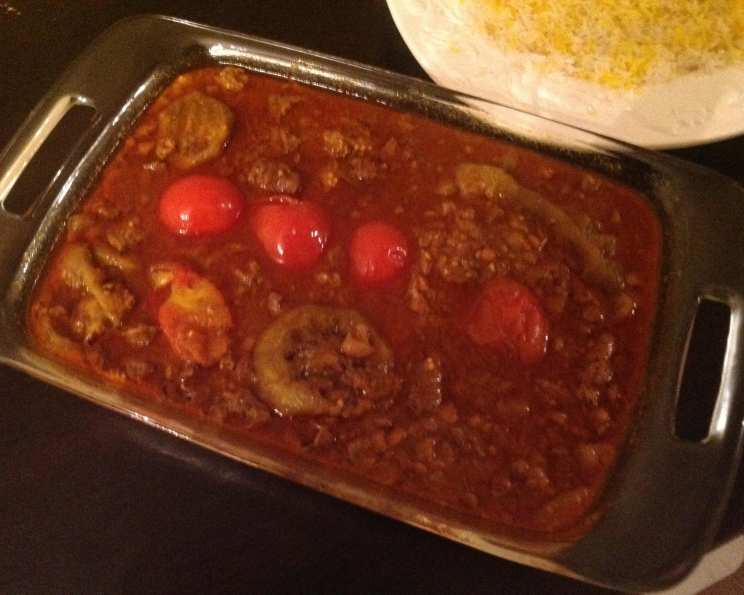
Khoresht-E Bademjan: A Taste of Persian Comfort
There are some dishes that, with a single scent, transport me back to childhood kitchens, to the comforting embrace of family gatherings. Khoresht-e Bademjan is one of those rare culinary treasures for me. I remember my grandmother meticulously peeling eggplants, her hands dusted with flour from a previous endeavor, as she prepared to transform simple ingredients into something magical. The aroma of turmeric and browning meat would slowly fill the house, a prelude to the rich, deeply flavored stew that was always a highlight of our meals. It’s more than just a dish; it’s a warm hug in a bowl, a testament to the power of slow cooking and the incredible depth of Persian cuisine.
Recipe Overview
- Prep Time: 25 minutes
- Cook Time: 2 hours 30 minutes to 3 hours
- Total Time: 3 hours to 3 hours 25 minutes
- Servings: 6-8
- Yield: Approximately 8 cups of stew
- Dietary Type: Dairy-Free (when prepared without added dairy)
Ingredients
To create this comforting Khoresht-e Bademjan, you will need the following:
- 2 lbs stew meat, cut into bite-sized pieces
- 2 large eggplants, peeled and sliced into approximately ½-inch thick rounds or lengthwise pieces
- 1 large white onion, finely chopped
- 4 garlic cloves, minced
- 4 tablespoons lemon juice
- 4 medium tomatoes, cut in half horizontally
- 2 tablespoons tomato paste
- 1 teaspoon turmeric
- ½ teaspoon cinnamon
- ¼ cup yellow split peas (optional, for added texture and richness)
- 1 teaspoon salt, or to taste
- 1 teaspoon pepper, or to taste
- Olive oil, for frying and sautéing
Equipment Needed
- Large, heavy-bottomed pot or Dutch oven
- Large bowl
- Frying pan
- Slotted spoon
- Paper towels
- Cutting board
- Chef’s knife
Instructions
Crafting Khoresht-e Bademjan is a labor of love, but one that rewards you with incredible flavor and a deeply satisfying meal. Follow these steps carefully to achieve authentic results:
-
Begin by preparing the eggplant. Peel the eggplants completely. Slice them into large but not overly thick pieces. In a large bowl, combine water with about ¼ cup of salt. Submerge the eggplant slices in this salty water, placing a heavy object (like a plate or another bowl) on top to ensure they remain fully submerged. Allow them to soak for about 20 minutes; this crucial step helps to draw out any bitterness from the eggplant, ensuring a sweeter, more pleasant flavor in the final stew. After soaking, rinse the eggplant pieces thoroughly to remove the salt and pat them dry.
-
In your large pot or Dutch oven, heat a generous amount of olive oil over medium heat. Add the finely chopped white onion and sauté until it becomes soft and translucent, stirring occasionally. This process will take about 8-10 minutes.
-
Add the stew meat to the pot with the softened onions. Fry the meat over medium heat, stirring frequently, until it is just browned on all sides. This step seals in the juices and builds a foundational flavor for the stew.
-
Once the meat is browned, introduce the spices and seasonings: add the turmeric, minced garlic cloves, cinnamon, lemon juice, tomato paste, salt, pepper, and the optional yellow split peas. Stir everything together well to coat the meat and onions.
-
Pour in about 2 to 3 cups of water. Stir to combine all the ingredients. The liquid will reduce as it cooks, so keep an eye on it and add more water if the stew appears too dry at any point during the simmering process.
-
Bring the contents of the pot to a boil. Once boiling, immediately reduce the heat to medium-low. Cover the pot and let the stew simmer gently. The goal is a slow, tenderizing cook. This stage can take anywhere from 2 ½ to 3 hours, or even longer, until the meat is exceptionally tender and practically falls apart when tested with a fork. Use your best judgment and check for tenderness periodically.
-
While the stew is simmering, prepare the eggplant for frying. In a separate frying pan, add a moderate amount of olive oil, enough to generously coat the bottom of the pan. Take the rinsed and dried eggplant slices from the soaking bowl.
-
Over medium-high heat, fry the eggplant slices in batches until they are golden brown and tender. As you fry them, salt and pepper them to your liking. This frying process not only cooks the eggplant but also gives it a beautiful color and a slightly crispy exterior before it softens in the stew.
-
Once the eggplant pieces are finished frying and are tender, use a slotted spoon to remove them from the pan and place them on a plate lined with paper towels. This will help to drain off any excess olive oil.
-
Gently add the fried eggplant slices to the simmering pot of khoresht. Also, place the halved tomatoes cut-side down amongst the eggplant and meat.
-
Allow the eggplant and tomatoes to cook with the stew for an additional 20 minutes. This short period is essential for the eggplant to absorb the rich flavors of the stew and for the tomatoes to soften and release their juices, further deepening the sauce.
-
Once the cooking time is complete and the eggplant and tomatoes have melded into the stew, your Khoresht-e Bademjan is ready.
Expert Tips & Tricks
- Eggplant Selection: Choose firm, smooth-skinned eggplants for the best results. Avoid any with soft spots or bruises.
- Bitterness Be Gone: Don’t skip the salting and soaking step for the eggplant; it’s the secret to a mild, sweet flavor. Ensure you rinse and dry them thoroughly to prevent excess water from diluting the stew.
- Meat Matters: While any stewing beef will work, cuts like chuck or brisket are excellent choices for their richness and tenderness when slow-cooked.
- Spice Levels: Adjust the cinnamon and pepper to your personal preference. A little goes a long way with cinnamon, adding a subtle warmth without overpowering the dish.
- Make-Ahead Magic: Khoresht-e Bademjan often tastes even better the next day. The flavors have more time to meld and deepen. You can prepare the stew up to the point of adding the eggplant and tomatoes, then refrigerate it. Add the eggplant and tomatoes and finish cooking the next day.
Serving & Storage Suggestions
To serve, ladle the rich, fragrant Khoresht-e Bademjan generously over a bed of fluffy, steamed Basmati rice. The soft eggplant, tender meat, and flavorful sauce create a beautiful harmony of textures and tastes. A sprinkle of fresh parsley or a dollop of plain yogurt can offer a fresh contrast, though the stew is exquisite on its own.
Leftovers can be stored in an airtight container in the refrigerator for up to 3-4 days. The flavors will continue to develop beautifully. To reheat, gently warm the stew on the stovetop over low heat, adding a splash of water if it seems too thick. It can also be reheated in the microwave. For longer storage, Khoresht-e Bademjan freezes exceptionally well for up to 2-3 months.
Nutritional Information
(Note: Nutritional values are approximate and can vary based on specific ingredients and portion sizes.)
| Nutrient | Amount per Serving | % Daily Value |
|---|---|---|
| Calories | 274.5 kcal | N/A |
| Calories from Fat | ~150 kcal | N/A |
| Total Fat | 7.4 g | 11% |
| Saturated Fat | 3.1 g | 15% |
| Cholesterol | 96.8 mg | 32% |
| Sodium | 560.2 mg | 23% |
| Total Carbohydrate | 19.2 g | 6% |
| Dietary Fiber | 8.2 g | 32% |
| Sugars | 8.5 g | 33% |
| Protein | 36.2 g | 72% |
Variations & Substitutions
While this recipe is a classic, it offers room for personal touches:
- Vegetarian/Vegan: For a meat-free version, substitute the stew meat with firm tofu, large chunks of portobello mushrooms, or extra eggplant. Ensure you use vegetable oil for frying and omit any dairy if making it vegan.
- Spice It Up: If you enjoy a bit of heat, add a pinch of red pepper flakes along with the other spices.
- Herbaceous Notes: While not traditional, a sprig of fresh thyme or oregano simmered in the stew can add another layer of aroma.
FAQs
Q: Why do I need to salt and soak the eggplant?
A: Salting and soaking the eggplant draws out excess moisture and a naturally occurring bitter compound, resulting in a sweeter, more tender final product.
Q: Can I skip frying the eggplant?
A: While you could add raw eggplant, frying it first gives it a delightful texture and prevents it from becoming mushy in the stew. It also adds a lovely golden color.
Q: How do I know when the meat is tender enough?
A: The meat should be so tender that it can be easily pulled apart with a fork, almost disintegrating. This indicates it has broken down sufficiently from the slow cooking process.
Q: My stew is too thin. What can I do?
A: If your stew is thinner than you’d like, you can simmer it uncovered for a bit longer to allow some of the liquid to evaporate. Alternatively, you can mash a few pieces of the cooked eggplant into the sauce to help thicken it.
Q: Is it okay to leave the eggplant skin on?
A: While some prefer to leave the skin on for visual appeal, peeling the eggplant is traditional for Khoresht-e Bademjan and contributes to a smoother texture in the final dish.
Final Thoughts
Khoresht-e Bademjan is a testament to the soul-warming power of slow-cooked Persian cuisine. It’s a dish that invites you to gather, to share, and to savor. Each spoonful is a journey through tender meat, velvety eggplant, and a rich, aromatic sauce. I encourage you to bring this comforting stew into your kitchen, to create your own memories around its delicious aroma. Serve it with pride, and don’t forget to share the experience and your feedback – it’s dishes like these that truly connect us through the universal language of food.