
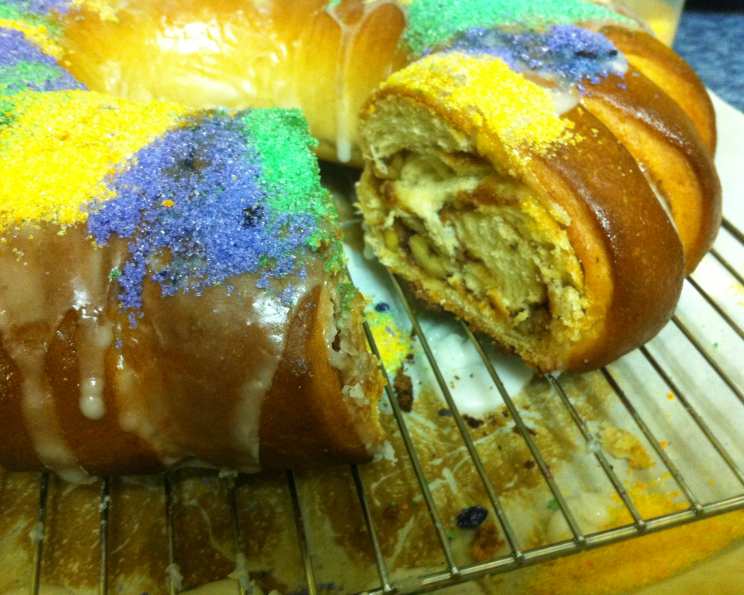
The Enchanting Embrace of King Cake: A Tradition Worth Savoring
The scent of warm spices and sweet dough can instantly transport me back to childhood Mardi Gras celebrations, a whirlwind of vibrant colors and joyous revelry. But beyond the parades and beaded necklaces, it was the promise of King Cake that truly captured my young imagination. I remember the thrill of slicing into that beautiful, braided loaf, each bite a decadent blend of soft cake and spiced filling, with the hushed anticipation of finding the hidden baby figurine – a symbol of good luck and a year of prosperity. It’s a pastry that embodies the spirit of the season, a delicious centerpiece that brings people together, a tradition I’ve cherished and recreated in my kitchen for years.
Recipe Overview
- Prep Time: 2 hours 30 minutes (includes rising time)
- Cook Time: 30 minutes
- Total Time: 3 hours 30 minutes (plus chilling time for frosting)
- Servings: 16-20
- Yields: 2 rings
- Dietary Type: Contains Gluten, Dairy, Eggs
Ingredients
For the Dough:
- 1 cup milk
- 1/4 cup butter
- 4 1/2 teaspoons yeast (instant or active dry)
- 2/3 cup warm water (approximately 110°F / 43°C)
- 1/2 cup sugar
- 2 large eggs
- 1 1/2 teaspoons salt
- 1/2 teaspoon nutmeg
- 5 1/2 cups all-purpose flour, plus more for dusting
For the Filling:
- 1 cup brown sugar, packed
- 1 tablespoon ground cinnamon
- 2/3 cup chopped nuts (pecans or walnuts are traditional)
- 1/2 cup raisins
- 1/2 cup melted butter
For the Frosting:
- 1 tablespoon lemon juice
- 1-2 tablespoons water
- 1 cup powdered sugar
- Green sugar crystals
- Purple sugar crystals
- Yellow sugar crystals (or colored sanding sugars)
Equipment Needed
- Large mixing bowls
- Whisk
- Measuring cups and spoons
- Medium saucepan (for scalding milk)
- Plastic wrap
- Clean kitchen towels
- Rolling pin
- Baking sheets
- Parchment paper
- Small bowl (for frosting)
- Spoon or whisk (for frosting)
- Scissors (optional, for scoring dough)
- Wire cooling racks
- Oven
Instructions
This King Cake is a labor of love, but the results are undeniably worth the effort. We’ll start by creating a rich, flavorful dough, then prepare a sweet and spiced filling, and finally assemble and bake these festive rings.
-
Prepare the Milk Mixture: In a medium saucepan, heat the milk over medium heat just until it begins to simmer around the edges. Remove from heat and stir in the butter until fully melted and incorporated. Set aside and allow to cool to room temperature. This is a crucial step; too hot and it will kill the yeast, too cool and it won’t activate properly.
-
Activate the Yeast: In a large mixing bowl, dissolve the yeast in the warm water. Add 1 tablespoon of the sugar from the dough ingredients and let it sit for about 10 minutes, or until it becomes foamy and bubbly. This indicates the yeast is active and ready to work its magic.
-
Combine Wet Ingredients: Add the cooled milk mixture to the yeast mixture. Next, stir in the remaining sugar for the dough, along with the salt and nutmeg. Finally, whisk in the eggs until everything is well combined.
-
Incorporate the Flour: Gradually add the flour, about 1 cup at a time, to the wet ingredients. Mix well after each addition. Continue adding flour until the dough begins to pull away from the sides of the bowl. It should be a soft, slightly sticky dough.
-
Knead the Dough: Turn the dough out onto a lightly floured surface. Knead the dough for 8-10 minutes. You’re looking for a smooth, elastic dough that springs back slightly when pressed. This develops the gluten, which is essential for a light and airy texture.
-
First Rise: Lightly oil a large mixing bowl. Place the kneaded dough into the oiled bowl, turning it to coat the entire surface with oil. This prevents the dough from drying out. Cover the bowl tightly with plastic wrap and set it in a warm area to rise for two hours. A warm, draft-free spot, like a slightly warmed oven (turned off, of course!) or near a sunny window, is ideal. The dough should at least double in size.
-
Prepare the Filling: While the dough is rising, combine all the filling ingredients in a medium bowl: the brown sugar, cinnamon, chopped nuts, raisins, and melted butter. Mix well until everything is evenly distributed.
-
Shape the Rings: Once the dough has risen, punch it down to release the air. Turn the dough out onto a lightly floured surface and divide it in half. Take each half and roll it into a square approximately 10 inches by 16 inches.
-
Assemble the Cakes: Spread half of the prepared filling evenly over one of the rolled-out dough squares, leaving a small border along the edges. Roll up the dough tightly, jelly-roll style. Bring the two ends of the rolled dough together to form an oval-shaped ring. Repeat this process with the second half of the dough and filling.
-
Second Rise: Line two baking sheets with parchment paper. Carefully place the shaped rings onto the prepared baking sheets. With scissors, make cuts about 1/3 of the way through the dough at one-inch intervals all around the rings. This traditional scoring allows the cake to expand beautifully and creates a lovely visual effect. Place the baking sheets in a warm area to rise again for 45 minutes. The rings should puff up noticeably.
-
Bake the King Cakes: While the rings are on their second rise, preheat your oven to 350°F (175°C). Once the rings have risen, bake for 30 minutes. Rotate the pans halfway through the baking time to ensure even browning. The cakes should be golden brown and sound hollow when tapped lightly on the bottom.
-
Cool and Prepare Frosting: Remove the cakes from the oven and cool them on wire racks for ten minutes. While the cakes are cooling slightly, prepare the frosting. In a small bowl, whisk together the lemon juice and 1-2 tablespoons of water. Gradually add the powdered sugar, whisking until you achieve a smooth, drizzle-able consistency. You may need to adjust the amount of water slightly.
-
Frost and Decorate: Once the cakes are cool enough to handle but still slightly warm, drizzle the prepared frosting generously over the top of each ring. Immediately sprinkle the green, yellow, and purple sugar crystals in stripes over the frosting, mimicking the traditional Mardi Gras colors. Allow the frosting to set before serving.
Expert Tips & Tricks
- Flour Power: The amount of flour needed can vary depending on humidity and the absorbency of your flour. Add it gradually until the dough is just pulling away from the sides of the bowl; it shouldn’t be overly dry or excessively sticky.
- Warmth is Key: Yeast dough thrives in warmth. If your kitchen is cool, find the warmest spot you can for the rising periods. Even a slightly warmed (and then turned-off) oven works wonders.
- Don’t Over-Proof: While letting dough rise is important, over-proofing can lead to a collapsed cake. Watch for the visual cues of doubling in size for the first rise and significant puffiness for the second.
- The Hidden Baby: Traditionally, a small plastic baby figurine is hidden in the cake before baking. Bake it within the cake by wrapping it in a small piece of foil to prevent it from cracking or melting. Whoever finds the baby is said to have good luck and is responsible for bringing the next King Cake.
- Scoring for Success: The scissor cuts are more than just decorative. They allow steam to escape and the cake to expand more evenly, creating a more attractive and textured final product.
Serving & Storage Suggestions
King Cake is best served at room temperature, allowing its flavors and textures to fully shine. Slice generously and enjoy with a cup of coffee or a festive beverage. Leftovers can be stored in an airtight container at room temperature for up to two days. If you need to store it for longer, it can be wrapped tightly in plastic wrap and then aluminum foil and kept in the refrigerator for up to a week. To reheat, gently warm individual slices in a low oven (around 300°F / 150°C) for a few minutes.
Nutritional Information
(Note: Nutritional information is an estimate and can vary based on specific ingredients and portion sizes.)
| Nutrient | Amount per Serving | % Daily Value |
|---|---|---|
| Calories | 166.9 kcal | |
| Calories from Fat | 48 g | |
| Total Fat | 5.4 g | 8% |
| Saturated Fat | 2.6 g | 13% |
| Cholesterol | 19.3 mg | 6% |
| Sodium | 142.4 mg | 5% |
| Total Carbohydrate | 27.1 g | 9% |
| Dietary Fiber | 1.2 g | 4% |
| Sugars | 12 g | 48% |
| Protein | 3.3 g | 6% |
Variations & Substitutions
- Nut-Free: For a nut-free version, simply omit the chopped nuts from the filling. The cake will still be delicious.
- Cream Cheese Filling: For a richer filling, consider a cream cheese variation. Soften 8 ounces of cream cheese and beat it with 1/4 cup of sugar and 1 teaspoon of vanilla extract. Spread this over the dough before rolling.
- Different Extracts: While nutmeg is traditional, you could experiment with other warm spices like cardamom or a touch of almond extract in the dough or filling for a different flavor profile.
- Gluten-Free: Creating a truly authentic gluten-free King Cake is a significant challenge due to the nature of enriched doughs. However, you could explore gluten-free brioche or challah recipes as a starting point, adjusting binders and leavening as needed.
FAQs
Q: Why is my King Cake dough not rising?
A: The most common reasons for a lack of rise are inactive yeast, water that was too hot or too cold, or a drafty, cool rising environment. Ensure your yeast is fresh and that the water is the correct temperature.
Q: Can I make King Cake ahead of time?
A: Yes! You can prepare the dough up to the first rise, then wrap it tightly and refrigerate it overnight. Bring it to room temperature before proceeding with shaping and the second rise. The frosting is best made fresh.
Q: What is the significance of the colors on King Cake?
A: The traditional Mardi Gras colors of purple, green, and gold symbolize justice, faith, and power, respectively. Purple represents justice, green symbolizes faith, and gold stands for power.
Q: How do I know if my King Cake is baked through?
A: A well-baked King Cake will be golden brown on the top and sides, and it should sound hollow when you gently tap the bottom. An instant-read thermometer inserted into the center should register around 190-200°F (88-93°C).
Q: Can I freeze frosted King Cake?
A: It’s generally best to freeze unfrosted King Cake. Wrap it tightly in plastic wrap and then in foil. Thaw it overnight at room temperature, then frost and decorate before serving.
A Sweet Farewell
The creation of a King Cake is more than just baking; it’s an act of celebration, a tangible connection to cherished traditions. As you knead the dough, fill your kitchen with the comforting aroma of cinnamon and nutmeg, and finally adorn your masterpiece with those vibrant sugars, I hope you feel a sense of joy and anticipation. This cake is meant to be shared, to be a centerpiece of laughter and good company. So gather your loved ones, slice into this golden ring, and savor the magic of King Cake – may it bring you a year of sweetness and good fortune.