
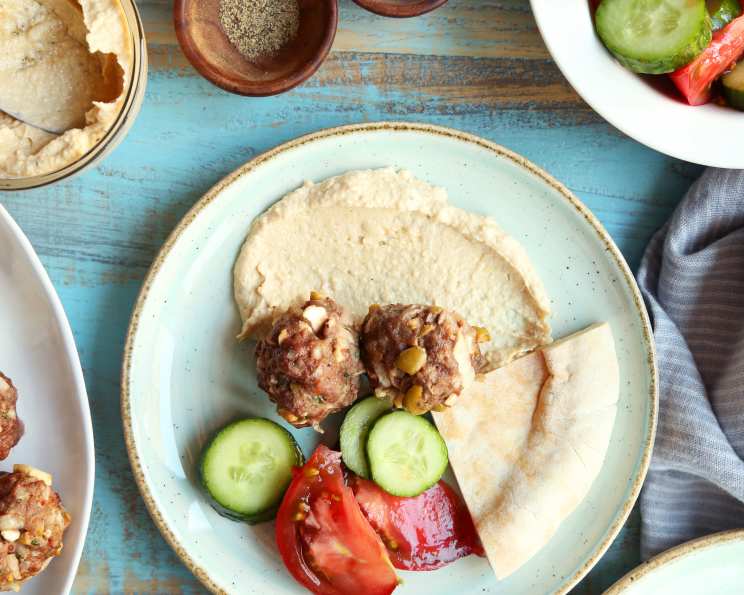
Kittencal’s Greek Lamb and Feta Meatballs (Keftedakia): A Taste of the Aegean
There are certain dishes that transport me instantly – a whiff of oregano, the salty tang of feta, the savory depth of lamb. This recipe for Greek Lamb and Feta Meatballs, or Keftedakia as they’re known in Greece, is one of those dishes. I first encountered them years ago at a small taverna tucked away in a Santorini village, the aroma wafting from its kitchen under the Mediterranean sun. They weren’t just meatballs; they were little pockets of pure joy, bursting with Mediterranean sunshine and the comforting embrace of home cooking. The unexpected burst of feta and briny olives within the tender lamb was a revelation, a far cry from the often one-dimensional beef meatballs I was accustomed to.
Recipe Overview
- Prep Time: 20 minutes (plus 24-hour chilling)
- Cook Time: 20-25 minutes
- Total Time: 24 hours 20 minutes
- Servings: 4-6
- Yield: 16 meatballs
- Dietary Type: Not specified (contains lamb, eggs, dairy)
Ingredients
For these delightful Mediterranean morsels, you’ll need a thoughtful selection of ingredients that come together to create a symphony of flavors.
- 1 lb ground lamb
- 1/2 teaspoon seasoning salt (or 1/2 teaspoon white salt)
- 1/2 teaspoon fresh ground black pepper (or to taste)
- 1-2 tablespoons fresh minced garlic
- 1/3 cup fresh minced parsley (a little more is always welcome!)
- 1 pinch dried oregano (gently rubbed between your fingers to release its fragrant oils)
- 1 small onion, finely chopped
- 1/2 cup crumbled feta cheese
- 1/2 cup chopped pitted green olives
- 2 eggs, lightly beaten
- 1 teaspoon white vinegar
- 1 tablespoon olive oil
Equipment Needed
- Large mixing bowl
- Baking sheet
- Measuring cups and spoons
- Knife and cutting board
Instructions
Crafting these keftedakia is a straightforward process, but the overnight chilling is key to their fantastic texture and flavor integration.
- Begin by placing the ground lamb into a large mixing bowl.
- To the lamb, add the seasoning salt (or white salt), fresh ground black pepper, fresh minced garlic, fresh minced parsley, dried oregano (remember to rub it first!), and the finely chopped onion.
- Next, crumble in the feta cheese and add the chopped pitted green olives. These ingredients are crucial for the signature Mediterranean punch.
- Pour in the lightly beaten eggs, which will act as a binder, and the white vinegar, which adds a subtle tang and helps tenderize the meat.
- Finally, drizzle in the olive oil.
- Now, using your hands, gently but thoroughly mix all the ingredients together until they are just combined. Be careful not to overmix, as this can result in tough meatballs. The goal is to ensure everything is evenly distributed throughout the lamb mixture.
- Once everything is well incorporated, cover the bowl tightly with plastic wrap or a lid.
- Refrigerate the mixture for a minimum of 24 hours. This crucial step allows the flavors to meld and deepen, and it also helps firm up the mixture, making it easier to shape. For an even more intense flavor, you can refrigerate it for up to 48 hours.
- When you are ready to cook, preheat your oven to 350 degrees F (175 degrees C).
- After the chilling period, take the bowl out of the refrigerator. The mixture should be firm. Shape the mixture into 16 evenly sized meatballs. You can do this by gently rolling portions of the mixture between your palms. Aim for a size that is easy to handle and cooks through evenly.
- Arrange the shaped meatballs on a baking sheet. You can line the baking sheet with parchment paper for easier cleanup, although it’s not strictly necessary.
- Place the baking sheet into the preheated oven.
- Bake for approximately 20-25 minutes, or until the meatballs are cooked through and have developed a beautiful, golden-brown exterior. The internal temperature should reach 160°F (71°C) to ensure they are safe to eat.
Expert Tips & Tricks
- Garlic Power: If you’re a true garlic lover, don’t hesitate to use the full 2 tablespoons of fresh minced garlic. The flavor mellows beautifully during the chilling and baking process.
- Herb Freshness: While dried oregano is specified, a tablespoon of fresh oregano, finely chopped, would also be a delightful addition.
- Olive Choice: The briny notes of green olives are essential here. If you can find Greek Kalamata olives, they would also be a fantastic choice, adding a richer, fruitier olive flavor.
- Feta Firmness: For the best results, use a good quality block feta cheese and crumble it yourself rather than pre-crumbled, which can sometimes be drier.
- Gentle Handling: Remember, overworking the lamb mixture is the enemy of tender meatballs. Mix just until everything is incorporated.
- Baking Sheet Prep: For foolproof removal, consider lining your baking sheet with parchment paper. It makes cleanup a breeze.
- Checking for Doneness: If you’re unsure if the meatballs are cooked through, you can carefully remove one from the baking sheet and cut it in half to check the center.
Serving & Storage Suggestions
These keftedakia are incredibly versatile. Serve them hot as an appetizer, perhaps with a side of tzatziki or a lemon-yogurt dip. They also make a fantastic addition to a Greek mezze platter, alongside dolmades, hummus, and pita bread. For a heartier meal, they can be served over rice, with roasted vegetables, or tucked into warm pita pockets with a sprinkle of fresh parsley and a squeeze of lemon.
Leftovers can be stored in an airtight container in the refrigerator for up to 3-4 days. To reheat, gently warm them in a skillet over medium-low heat or in a 300°F (150°C) oven until heated through. While they are best enjoyed fresh, they also freeze well. Cool completely, then store in a freezer-safe container or bag for up to 2-3 months. Thaw overnight in the refrigerator before reheating.
Nutritional Information
| Nutrient | Amount per Serving | % Daily Value |
|---|---|---|
| Calories | 118.2 kcal | N/A |
| Calories from Fat | N/A | 74% |
| Total Fat | 9.8 g | 15% |
| Saturated Fat | 4 g | 20% |
| Cholesterol | 48.1 mg | 16% |
| Sodium | 144.3 mg | 6% |
| Total Carbohydrate | 1.1 g | 0% |
| Dietary Fiber | 0.3 g | 1% |
| Sugars | 0.4 g | 1% |
| Protein | 6.3 g | 12% |
Note: Nutritional information is an estimate and can vary based on specific ingredients and portion sizes.
Variations & Substitutions
While this recipe shines with lamb, you could experiment with a blend of ground lamb and ground beef for a slightly milder flavor profile, using the same quantities for each. For those seeking a non-meat option, while this recipe is intrinsically lamb-based, you could explore developing a vegetarian keftede style using a mix of finely chopped mushrooms, lentils, and herbs, though the flavor and texture would differ significantly.
FAQs
Q: Can I make the meatballs smaller or larger?
A: Yes, you can adjust the size, but keep in mind that smaller meatballs will cook faster, and larger ones will take longer. Ensure they are cooked through to an internal temperature of 160°F (71°C).
Q: What if I don’t have seasoning salt?
A: You can simply use 1/2 teaspoon of regular white salt. The seasoning salt often contains a blend of salts and sometimes a touch of MSG, but plain salt works perfectly here.
Q: How can I prevent the meatballs from sticking to the baking sheet?
A: Lining the baking sheet with parchment paper is the easiest way. Alternatively, ensure you grease the baking sheet lightly with a bit of olive oil before placing the meatballs.
Q: Can I freeze the meatball mixture before shaping?
A: It’s best to shape the meatballs before freezing. Once the mixture has chilled for 24 hours, shape them into balls and freeze them on a tray until solid, then transfer to a freezer bag.
Q: How do I ensure the feta cheese is evenly distributed?
A: Make sure to crumble the feta into small pieces and gently fold it into the lamb mixture to avoid breaking it down too much, which can lead to pockets of cheese rather than an even distribution.
Final Thoughts
Kittencal’s Greek Lamb and Feta Meatballs are more than just a recipe; they are an invitation to a culinary journey. The simple act of combining these few, quality ingredients and allowing them to meld over time yields a dish that is both deeply satisfying and wonderfully flavorful. Whether you’re hosting a gathering or simply looking to elevate your weeknight meal, these keftedakia are sure to impress. Serve them with a crisp Greek salad and a glass of Assyrtiko wine for an authentic taste of the Aegean that will transport your taste buds. Enjoy the process, and savor every bite!