
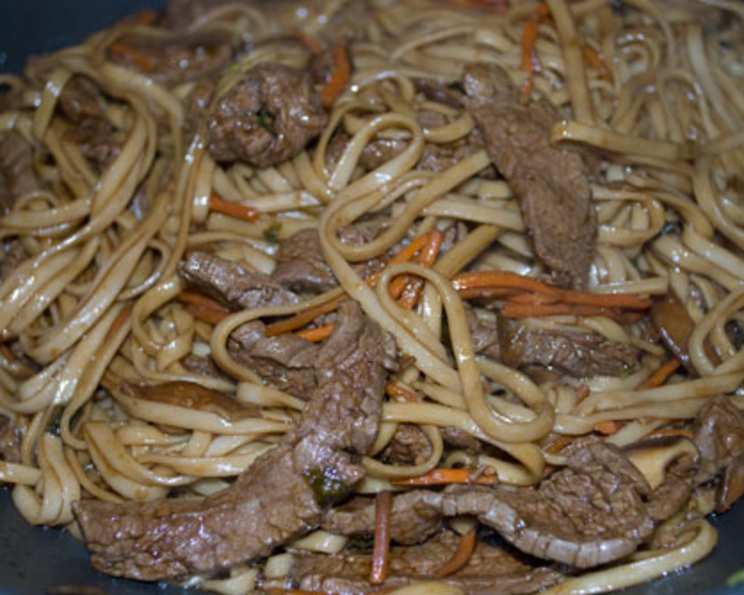
Korean Beef Noodles: A Taste of Seoul That Nourishes the Soul
There are dishes that simply feed the stomach, and then there are those that resonate deep within, imbuing a sense of comfort and belonging. For me, Korean Beef Noodles fall squarely into the latter category. I first encountered a dish strikingly similar to this on a chilly evening in a bustling Seoul market, the aroma of sizzling beef and savory sauce mingling with the crisp night air. It was a revelation – a symphony of textures and flavors that felt both familiar and exhilarating, instantly becoming my definition of true “soul food.” The thick, chewy noodles, the tender, marinated beef, and the earthy mushrooms combined to create a profoundly satisfying experience, leaving me utterly content, with no room for anything else, not even a sip of tea.
Recipe Overview
- Prep Time: 15 minutes
- Cook Time: 30 minutes
- Total Time: 45 minutes
- Servings: 4
- Yield: 4 servings
- Dietary Type: Not Specified
Ingredients
- 1 1⁄2 lbs beef flank steak
- 3 tablespoons peanut oil
- 1⁄2 lb shiitake mushrooms or 1⁄2 lb cremini mushrooms, caps sliced
- 1⁄2 cup soy sauce
- 2 tablespoons sesame oil
- 2 tablespoons sugar
- 12 ounces Chinese wheat noodles (udon may also be used)
- 4 cloves garlic, minced
- 4 scallions, thinly sliced
- 1-3 small dried hot red chili peppers
- 2 carrots, grated
Equipment Needed
- Large skillet or wok
- Medium saucepan for noodles
- Small bowl for sauce
- Cutting board
- Sharp knife
Instructions
-
Begin by preparing the beef flank steak. For the best results, slice it thinly across the grain into pieces approximately 3 inches long. A helpful tip here is to partially freeze the beef for about 30-45 minutes before slicing. This will make it much easier to achieve those thin, uniform slices. Once sliced, allow the beef to come to room temperature.
-
While the beef is reaching room temperature, prepare the savory marinade. In a small bowl, mix together the soy sauce, sesame oil, and sugar. Whisk gently until the sugar dissolves completely. Set this mixture aside until it’s time to incorporate it into the dish.
-
Now, let’s get those noodles ready. Bring a medium saucepan of water to a rolling boil. Add the Chinese wheat noodles (or your chosen udon noodles) and cook for about 8-10 minutes, or until they are tender but still have a pleasant bite. Drain the noodles thoroughly in a colander and set them aside.
-
As the noodles are cooking, you can start on the aromatic components of the dish. Heat 1 tablespoon of the peanut oil in a large skillet or wok over medium-high heat. Add the sliced shiitake mushrooms (or cremini mushrooms) and cook until softened, which should take about 3-5 minutes. Once softened, remove the mushrooms from the skillet and drain away any excess liquid that has collected. This step helps to intensify their flavor and prevent the final dish from becoming watery.
-
To the same skillet (no need to wash it), add the remaining 2 tablespoons of peanut oil and increase the heat to high. Once the oil is hot, add the minced garlic, thinly sliced scallions, and the dried hot red chili peppers. Sauté for about 1 minute, stirring constantly, or until the chili peppers become fragrant. Be careful not to burn the garlic.
-
Next, add the grated carrots, the sliced beef flank steak, and the cooked mushrooms to the skillet.
-
Cook the meat for 2-3 minutes, stirring frequently. The goal here is to cook the beef quickly, searing it on the outside while keeping the inside tender and slightly rare, which is how this dish is traditionally enjoyed. Try not to overcook the meat, as it can become tough.
-
Now, it’s time to bring all the flavors together. Pour the reserved soy sauce mixture over the beef and vegetables in the skillet.
-
Cook for about 2 minutes more, stirring everything together to ensure the beef and vegetables are evenly coated with the sauce. The sauce will thicken slightly as it cooks.
-
To serve, place the cooked noodles on a serving platter. Top the noodles generously with the beef and vegetable mixture. Then, toss everything together gently until the noodles are well mixed with the savory beef and vegetable topping.
-
Serve immediately to enjoy the dish at its best, when the noodles are warm and the beef is perfectly tender.
Expert Tips & Tricks
When slicing the beef, remember that the “across the grain” technique is crucial for tenderness. You can identify the grain by looking for the lines of muscle fibers in the meat. Slicing perpendicular to these lines will break down the fibers, resulting in a much more pleasant texture. If you find your chili peppers are too spicy, you can always remove the seeds before adding them to the skillet. For an extra layer of flavor, consider toasting your sesame oil briefly before adding it to the soy sauce mixture – just a few seconds in a dry pan until fragrant is all it takes.
Serving & Storage Suggestions
This Korean Beef Noodles dish is best served piping hot, straight from the skillet. The vibrant colors of the carrots and green scallions make for a visually appealing presentation. You can garnish with a few extra slivers of scallion or a sprinkle of toasted sesame seeds for added flair. Leftovers can be stored in an airtight container in the refrigerator for up to 2 days. While it’s most enjoyable fresh, you can reheat the noodles and beef mixture gently in a skillet over low heat, adding a tablespoon or two of water or broth to loosen the sauce if needed. Avoid microwaving, as it can make the noodles mushy and the beef tough.
Nutritional Information
| Nutrient | Amount per Serving | % Daily Value |
|---|---|---|
| Calories | 580.6 kcal | – |
| Calories from Fat | 298 kcal | – |
| Total Fat | 33.2 g | 51% |
| Saturated Fat | 9.2 g | 46% |
| Cholesterol | 137.8 mg | 45% |
| Sodium | 2130.3 mg | 88% |
| Total Carbohydrate | 17.2 g | 5% |
| Dietary Fiber | 3 g | 12% |
| Sugars | 10.1 g | 40% |
| Protein | 52.7 g | 105% |
Note: Nutritional values are estimates and can vary based on specific ingredients and portion sizes used.
Variations & Substitutions
While this recipe calls for Chinese wheat noodles, feel free to experiment with other types of noodles. Hearty udon noodles are an excellent substitute, offering a similar chewy texture. For a gluten-free version, you could explore using rice noodles, though be mindful that their cooking time and texture will differ. If you’re not a fan of shiitake mushrooms, cremini mushrooms are a perfectly acceptable alternative. For those who prefer a milder heat, simply reduce or omit the dried hot red chili peppers. A touch of grated ginger added with the garlic can also provide a lovely aromatic lift.
FAQs (Frequently Asked Questions)
Q: Can I use a different cut of beef for this recipe?
A: While flank steak is ideal for its tenderness and ability to be sliced thinly, a skirt steak or even thinly sliced sirloin could work, though they might require slight adjustments in cooking time.
Q: What if I don’t have dried hot red chili peppers?
A: You can substitute with a pinch of red pepper flakes for a similar heat, or a dash of sriracha stirred into the sauce for a more integrated spice.
Q: How can I make this dish spicier?
A: For a spicier kick, you can increase the number of dried hot red chili peppers or add a splash of your favorite hot sauce to the soy sauce mixture.
Q: Can I add more vegetables to this recipe?
A: Absolutely! Sliced bell peppers, snap peas, or broccoli florets can be added along with the carrots and mushrooms for added color and nutrients.
Q: Is it important to slice the beef against the grain?
A: Yes, slicing against the grain is crucial for tender beef. If you slice with the grain, the meat will be noticeably tougher and chewier.
Final Thoughts
This Korean Beef Noodles dish is more than just a meal; it’s an experience that brings people together and offers a moment of pure culinary joy. The simplicity of its preparation belies the depth of flavor and satisfaction it provides. I encourage you to give this recipe a try, to bring a taste of Seoul into your own kitchen, and to discover the comforting power of these delicious noodles. Share it with loved ones, gather around the table, and savor every savory, satisfying bite. I often find a crisp, lightly chilled Korean beer or a refreshing glass of barley tea to be the perfect accompaniment.