
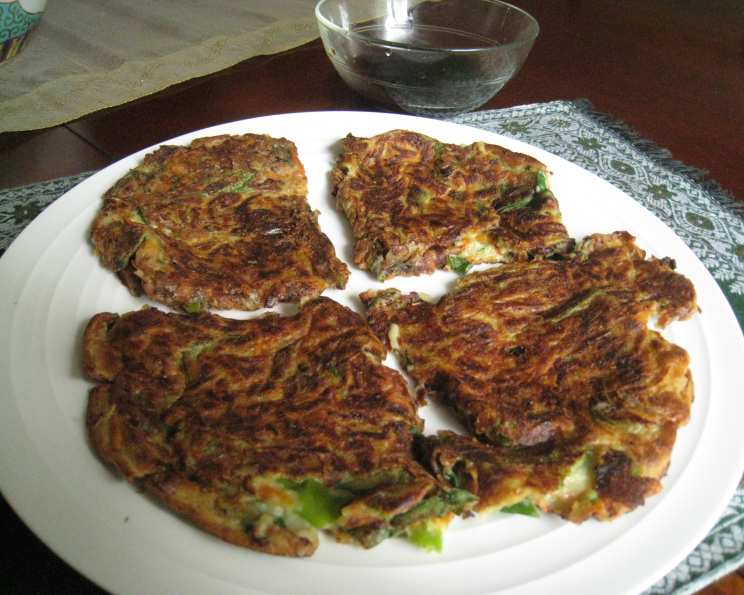
Korean Scallion Pancakes: A Taste of Comfort and Tradition (Pa Jun)
The aroma of sizzling scallions, infused with the savory depth of soy and the subtle sweetness of vegetables, is an olfactory memory that transports me straight back to bustling street markets and warm, family kitchens in Korea. I remember, as a child, being mesmerized by the vendors skillfully flipping these golden-hued pancakes, their spatulas dancing with practiced ease. The resulting crisp edges giving way to a tender, slightly chewy interior always felt like pure magic. It’s more than just a dish; it’s a comforting embrace, a taste of home that’s as delightful to share as it is to devour.
Recipe Overview
- Prep Time: 30 minutes (including chilling time)
- Cook Time: 32 minutes (approximately 8 minutes per pancake)
- Total Time: 1 hour 2 minutes
- Servings: 8-10 (as an appetizer or snack)
- Yield: 4 pancakes (from the given batter quantity)
- Dietary Type: Gluten-Free (using rice flour and gluten-free soy sauce)
Ingredients
For the Scallion Pancakes
- 1/4 cup rice flour
- 2 large eggs, lightly beaten
- 2 tablespoons vegetable oil, plus more for cooking
- 1/4 cup water
- 5 scallions, green parts only, cut into 3-inch lengths on the bias
- 1 medium carrot, grated
- 1 small zucchini, trimmed and grated
For the Dipping Sauce
- 3 tablespoons gluten-free soy sauce (or regular soy sauce if gluten is not a concern)
- 2 tablespoons water
- 1 tablespoon rice vinegar
- 1 teaspoon minced fresh ginger
- 1 teaspoon red pepper flakes
- 1 teaspoon granulated sugar
Equipment Needed
- Medium-sized mixing bowl
- Whisk
- 8-inch nonstick skillet
- Spatula
- Small bowl (for dipping sauce)
Instructions
- In a medium-sized mixing bowl, whisk together the rice flour, eggs, and 1 tablespoon of the vegetable oil with the water. Continue to whisk until you achieve a smooth batter, ensuring no lumps remain.
- Gently stir in the prepared scallions, grated carrot, and grated zucchini into the batter. Mix thoroughly to ensure all the vegetables are evenly distributed throughout the batter.
- Cover the bowl and chill the batter in the refrigerator for 30 minutes. This crucial step allows the rice flour to absorb the liquid and swell, contributing to the desirable chewy texture of the finished pancake.
- While the batter is chilling, prepare the dipping sauce. In a small bowl, whisk together the gluten-free soy sauce, water, rice vinegar, minced fresh ginger, red pepper flakes, and granulated sugar until the sugar is dissolved and all ingredients are well combined. Set aside.
- Once the batter has chilled, coat the bottom of an 8-inch nonstick skillet with the remaining vegetable oil. Set the skillet over medium heat.
- When the pan is sufficiently hot (you can test by flicking a drop of water into it; it should sizzle immediately), ladle in about a quarter of the batter. Spread the batter out into a circle, tilting the pan slightly to ensure an even layer. Aim for a thickness that will cook through evenly.
- Cook the pancake for about 8 minutes. You’ll know it’s ready to flip when the bottom is nicely browned and you start to see small holes forming on the surface of the pancake, indicating that the batter is setting.
- Using a spatula, carefully flip the pancake. Once flipped, press firmly on the top of the pancake with the spatula. This action helps to squeeze out any remaining uncooked batter from the interior and ensures even cooking.
- Cook the second side for another 8 minutes, or until the batter is cooked thoroughly and the pancake is browned on both sides. The goal is a golden-brown exterior with a tender, cooked-through interior.
- Repeat this process with the remaining batter, re-oiling the skillet as needed between batches, until all the batter has been used to make approximately four pancakes.
- Once cooked, cut the pancakes into small triangles, similar to how you would slice a pie.
- Serve the hot Pa Jun immediately with the prepared dipping sauce on the side.
Expert Tips & Tricks
To achieve that perfect crispy-chewy texture, ensure your skillet is properly preheated before adding the batter. A medium heat is key – too high and the outside will burn before the inside cooks, too low and it won’t get crispy enough. Don’t overcrowd the pan; if you’re making a larger batch, use a larger skillet or cook in multiple batches to ensure each pancake cooks evenly. The chilling step is non-negotiable for rice flour-based batters; it truly makes a difference in the final texture. If you prefer a more pronounced scallion flavor, feel free to add a little extra. For a richer pancake, you could add a tablespoon of sesame oil to the batter, though this will alter the flavor profile slightly.
Serving & Storage Suggestions
Pa Jun is best enjoyed fresh and hot, straight from the skillet, when its textures are at their peak. Serve as a delightful appetizer, a light lunch, or a comforting side dish to a Korean meal. The accompanying dipping sauce is essential for that burst of savory, tangy, and slightly spicy flavor. Leftovers can be stored in an airtight container in the refrigerator for up to 2 days. To reheat, gently pan-fry the slices in a little oil until warmed through and crispy again, or use a toaster oven. Avoid microwaving, as it tends to make the pancakes soft and rubbery.
Nutritional Information
| Nutrient | Amount per Serving | % Daily Value |
|---|---|---|
| Calories | 77.6 kcal | |
| Calories from Fat | N/A | 43 g (55%) |
| Total Fat | 4.8 g | 7% |
| Saturated Fat | 0.9 g | 4% |
| Cholesterol | 46.5 mg | 15% |
| Sodium | 26.1 mg | 1% |
| Total Carbohydrate | 6.6 g | 2% |
| Dietary Fiber | 0.8 g | 3% |
| Sugars | 1.6 g | 6% |
| Protein | 2.3 g | 4% |
(Note: Nutritional information is an estimate and may vary based on specific ingredients and portion sizes.)
Variations & Substitutions
While this recipe focuses on the classic scallion and vegetable combination, Pa Jun is incredibly versatile. For a seafood variation, known as Haemul Pa Jun, finely chopped shrimp, squid, or mussels can be added to the batter along with the vegetables. If you don’t have zucchini, shredded cabbage or finely diced bell peppers can be excellent substitutes. For those who enjoy a bit more heat, increase the red pepper flakes in the dipping sauce or add a pinch to the batter itself. If you’re looking for a dairy-free option, simply ensure your soy sauce is dairy-free.
FAQs
Q: Why is my scallion pancake not crispy enough?
A: Ensure your skillet is hot before adding the batter, cook over medium heat, and don’t flip the pancake too early. Allowing it to brown sufficiently on the first side is key to achieving crispness.
Q: Can I make the batter ahead of time?
A: The recipe calls for a 30-minute chill time for the batter, which is essential. You can prepare the batter up to a few hours in advance and keep it chilled in the refrigerator.
Q: What kind of flour is best for Pa Jun?
A: This recipe specifically uses rice flour for its gluten-free nature and ability to create a pleasantly chewy texture. If you’re not concerned about gluten, all-purpose flour can be used, but the texture will be different, more akin to a Western-style pancake.
Q: Can I add other vegetables to the pancake?
A: Absolutely! Finely shredded cabbage, thinly sliced mushrooms, or even small pieces of kimchi can be excellent additions to your Pa Jun.
Q: How do I ensure the pancake cooks through without burning?
A: Medium heat is crucial. If you notice the edges browning too quickly, reduce the heat slightly and continue to cook until the center is set. Pressing down on the pancake after flipping also helps distribute heat more evenly.
Final Thoughts
Pa Jun is a testament to the beauty of simple ingredients transformed into something truly special. It’s a dish that bridges generations, offering comfort and a delicious connection to Korean culinary heritage. Whether you’re a seasoned cook or just embarking on your culinary journey, I wholeheartedly encourage you to try this recipe. The process is rewarding, the aroma is intoxicating, and the taste is simply unforgettable. Serve it with a crisp, chilled makgeolli (Korean rice wine) or a light green tea for a perfectly balanced experience. I’d love to hear about your creations and any personal twists you add to this beloved classic!