
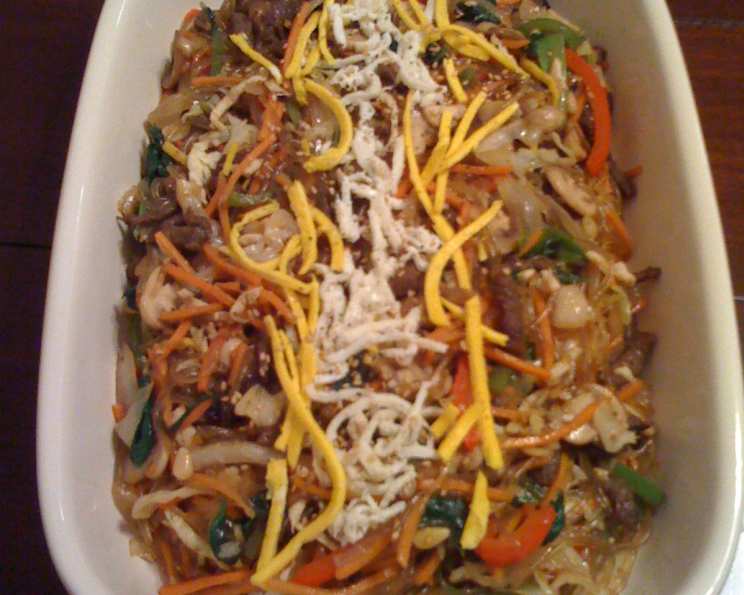
A Symphony of Textures and Flavors: Korean-Style Noodles With Vegetables (Chap Chae)
I remember the first time I truly experienced Chap Chae. It wasn’t in a bustling Korean restaurant, but rather at a quiet family gathering, the aroma of toasted sesame oil and sweet soy sauce wafting from the kitchen. My aunt, a woman of few words but immense culinary talent, had spent hours meticulously preparing this dish. As I twirled the translucent noodles with the vibrant slivers of vegetables, a wave of comfort and delight washed over me. Each bite was a revelation – the slight chew of the noodles, the crispness of the carrots, the earthy depth of the mushrooms, all brought together by that signature sweet and savory sauce. It’s a dish that speaks of patience, care, and the profound joy of sharing delicious food.
Recipe Overview
- Prep Time: 25 minutes
- Cook Time: 15 minutes
- Total Time: 40 minutes
- Servings: 4
- Yield: 4 servings
- Dietary Type: Vegan, Dairy-Free, Nut-Free (if using safflower oil)
Ingredients
To create this delightful Korean classic, gather the following:
- 5-6 ounces bean thread noodles (also known as cellophane, glass, or mung bean noodles; these are very thin and sold in small skeins)
- 1/2 cup reduced-sodium tamari soy sauce (ensure it’s wheat-free if needed)
- 3 tablespoons toasted sesame oil (look for the distinct, fragrant Asian-style oil)
- 3 tablespoons sugar
- 1 tablespoon chopped garlic (approximately 2 cloves)
- 1 tablespoon safflower oil (or an additional tablespoon of sesame oil for a more pronounced sesame flavor)
- 1 medium onion, sliced lengthwise about 1/8 inch thick (yields approximately 1 ½ cups)
- 2 medium carrots, cut into 1/8-inch-thick matchsticks, about 2 inches long
- 1/2 lb mushrooms, trimmed and sliced about 1/8 inch thick (about 3 cups; shiitake mushrooms are preferred for their deep flavor, but any variety will work beautifully)
- 4 cups Baby Spinach
- Sesame seeds, to taste, for garnish
- Cayenne pepper or other hot black pepper, to taste, for a hint of spice
Equipment Needed
- Large bowl (for soaking noodles)
- Colander
- Medium to large pot (for cooking noodles)
- Blender or immersion blender
- Deep, heavy-bottomed skillet or wok (at least 12 inches in diameter)
- Tongs or large spoons for tossing
Instructions
The magic of Chap Chae lies in the careful preparation of each component, allowing their individual textures and flavors to shine before coming together in a harmonious dance.
-
Soak and Cook the Noodles: Begin by placing the bean thread noodles in a large bowl. Cover them completely with warm water and let them soak for approximately 10 minutes, or until they are softened but not mushy. Once softened, drain the noodles thoroughly in a colander. Next, bring a 3- to 4-quart pot of water to a rolling boil. Add the drained noodles to the boiling water and cook for just about 2 minutes, or until they are tender. Be careful not to overcook them, as they will continue to soften slightly when tossed with the other ingredients. Drain the noodles again in the colander and immediately rinse them under cold running water until they are completely cool. This rinsing step is crucial to stop the cooking process and prevent the noodles from sticking together.
-
Prepare the Sauce: While the noodles are soaking, create the flavorful sauce. In a blender, combine the reduced-sodium tamari soy sauce, toasted sesame oil, sugar, and chopped garlic. Blend these ingredients until the mixture is smooth and well-emulsified. Set this delicious dressing aside.
-
Stir-Fry the Vegetables: Heat the safflower oil (or your extra tablespoon of sesame oil) in a deep, 12-inch heavy skillet or wok over high heat. Allow the oil to heat until it just begins to smoke – this indicates it’s hot enough for a quick, effective stir-fry. Add the sliced onion and matchstick-cut carrots to the hot oil. Stir-fry them vigorously for about 3 minutes, or until the onion has softened. Next, add the sliced mushrooms to the skillet. Continue to stir-fry for another 3 minutes, until the mushrooms have softened and released some of their moisture. Finally, add the baby spinach. Stir-fry for a mere 30 seconds, just until the spinach begins to wilt.
-
Combine and Finish: Add the cooled, drained noodles to the skillet with the stir-fried vegetables. Pour the prepared tamari mixture over everything. Using tongs or large spoons, gently toss all the ingredients together to ensure the noodles and vegetables are evenly coated with the sauce. Continue to simmer, stirring occasionally, for 3 to 5 minutes. The goal is to absorb most of the liquid, allowing the flavors to meld beautifully and the noodles to take on the rich sauce.
-
Serve: Transfer the Chap Chae to a shallow serving dish. Garnish generously with sesame seeds and a pinch of cayenne pepper or black pepper, if desired, for a touch of heat. Serve warm or at room temperature.
Expert Tips & Tricks
For a truly restaurant-quality Chap Chae, consider these insider tips:
- Noodle Prep is Key: Don’t skip the rinsing step after cooking the noodles. It’s essential for maintaining their distinct texture and preventing them from clumping into an unappetizing mass.
- High Heat, Quick Cook: Stir-frying vegetables at high heat preserves their crisp-tender texture and vibrant colors. Avoid overcrowding the pan, which can lead to steaming rather than searing. If your skillet is not large enough, cook the vegetables in batches.
- Taste and Adjust: The sauce is the heart of Chap Chae. Before adding it to the noodles, give it a taste. You can adjust the sweetness and saltiness to your preference by adding a touch more sugar or tamari.
- Mushroom Magic: If using dried shiitake mushrooms, rehydrate them in warm water for about 30 minutes, then squeeze out the excess liquid before slicing. The soaking liquid can be strained and added to the sauce for an extra layer of umami.
Serving & Storage Suggestions
Chap Chae is incredibly versatile and can be enjoyed in various ways. Serve it as a vibrant vegetarian main course, a delightful side dish alongside grilled meats or seafood, or as part of a larger Korean feast. Its flavors deepen as it sits, making it an excellent dish for make-ahead meals.
To store leftovers, allow the Chap Chae to cool completely before transferring it to an airtight container. It will keep in the refrigerator for up to 2 days. When you’re ready to enjoy it again, you can reheat it gently in a skillet over low heat with a tablespoon of water or sesame oil, or simply enjoy it chilled, as its flavors are still wonderful at room temperature.
Nutritional Information
| Nutrient | Amount per Serving | % Daily Value |
|---|---|---|
| Calories | 327.3 kcal | N/A |
| Calories from Fat | 126 kcal | N/A |
| Total Fat | 14 g | 21% |
| Saturated Fat | 1.8 g | 8% |
| Cholesterol | 0 mg | 0% |
| Sodium | 52.7 mg | 2% |
| Total Carbohydrate | 49.1 g | 16% |
| Dietary Fiber | 2.8 g | 11% |
| Sugars | 13.3 g | 53% |
| Protein | 3.4 g | 6% |
Note: Nutritional values are estimates and can vary based on specific ingredients and quantities used.
Variations & Substitutions
While the classic recipe is exquisite, feel free to personalize your Chap Chae:
- Vegetable Additions: This dish is incredibly forgiving and welcomes a variety of vegetables. Consider adding thinly sliced bell peppers (red, yellow, or green), snow peas for a delightful crunch, zucchini, or julienned cabbage. Ensure they are cut into similar sizes for even cooking.
- Protein Boost: For a non-vegetarian version, thinly sliced beef (marinated in soy sauce, garlic, and sesame oil) or shrimp can be stir-fried before the vegetables and then incorporated back into the dish. For a vegan protein, consider adding pan-fried tofu, cut into thin strips.
- Gluten-Free: The recipe is already naturally gluten-free if you use tamari soy sauce, which is made without wheat. Ensure your noodles are also made from sweet potato starch and are certified gluten-free if necessary.
- Spicy Kick: For those who love heat, increase the amount of cayenne pepper or add a tablespoon of gochujang (Korean chili paste) to the sauce.
FAQs (Frequently Asked Questions)
Q: What makes “bean thread noodles” unique for Chap Chae?
A: These noodles, made from sweet potato starch, have a wonderfully chewy yet tender texture that holds up well to stir-frying and absorbing the savory sauce without becoming mushy.
Q: Can I prepare Chap Chae ahead of time?
A: Absolutely! Chap Chae can be made a day in advance. The flavors meld beautifully overnight, making it even more delicious. Store it in an airtight container in the refrigerator.
Q: My noodles became sticky. What went wrong?
A: This often happens if the noodles are overcooked or not rinsed properly after boiling. Ensure you cook them for the exact time specified and rinse them thoroughly under cold water until they are completely cool.
Q: What is the best way to cut the vegetables for Chap Chae?
A: Cutting the vegetables into thin matchsticks or slivers of uniform size ensures they cook evenly and are easy to mix with the noodles.
Q: Is Chap Chae typically served hot or cold?
A: Chap Chae is delicious served either warm or at room temperature. It’s also quite enjoyable when served chilled, making it a perfect dish for picnics or potlucks.
Final Thoughts
Chap Chae is more than just a dish; it’s an experience. It’s a testament to the beauty of simple ingredients transformed into something extraordinary through careful preparation and a balance of flavors. Whether you’re a seasoned cook or just beginning your culinary journey, I encourage you to try this recipe. The process of creating it is as rewarding as the first delightful bite. Share it with loved ones, savor the moment, and discover the comforting magic of Korean cuisine.