
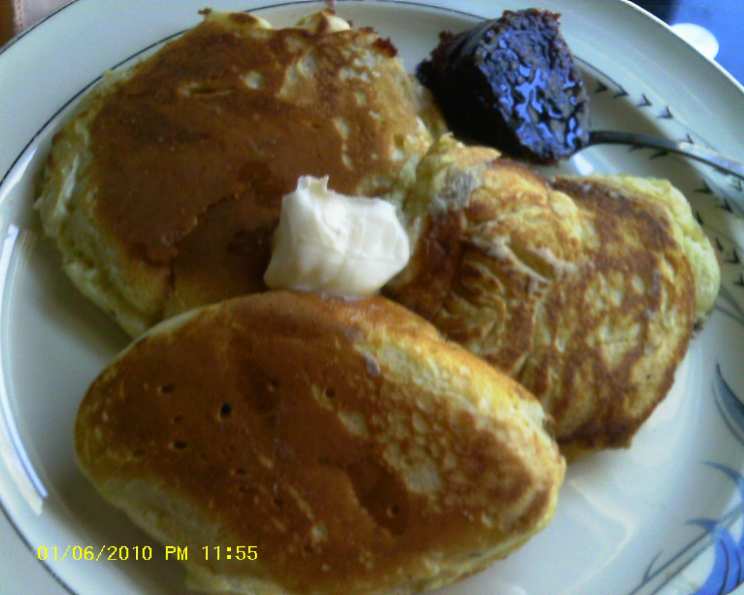
Queen Elizabeth II’s Drop Scones: A Royal Treat for Every Table
There’s a particular charm to recipes that whisper tales of history, of moments shared between remarkable individuals. When I first stumbled upon this recipe, the story of Queen Elizabeth II serving these humble drop scones to President Eisenhower during his visit to Scotland in 1959 immediately captured my imagination. I pictured the informal setting, the clinking of teacups, and the simple pleasure of a shared, homemade treat. To me, these scones are a delightful paradox – incredibly easy to make, yet imbued with a sense of occasion. They bridge the gap between a fluffy pancake and a tender biscuit, offering a comforting, slightly sweet bite that’s perfect for any time of day. While the Queen’s original recipe is a testament to elegant simplicity, I’ve always been one to experiment, and in my own kitchen, a tablespoon of malt vinegar finds its way into the wet ingredients, adding a subtle lift and tang. But for this royal rendition, we’ll stick to Her Majesty’s precise instructions, a delicious journey back in time.
Recipe Overview
- Prep Time: 20 minutes
- Cook Time: 30 minutes
- Total Time: 50 minutes
- Servings: 4
- Yield: Approximately 12-15 drop scones
- Dietary Type: Vegetarian
Ingredients
- 3 cups all-purpose flour
- 2 teaspoons baking soda
- 3 teaspoons cream of tartar
- 1/4 teaspoon salt
- 2 large eggs
- 1/4 cup powdered sugar (or 1/4 cup golden syrup for a slightly different sweetness profile)
- 1 3/4 cups milk (Note: The original recipe cited 1 1/2 cups, but 1 3/4 cups ensures a more manageable batter consistency)
- 3 tablespoons butter, melted
Equipment Needed
- Large mixing bowl
- Medium mixing bowl
- Whisk
- Spatula or wooden spoon
- Large, flat-bottomed skillet or griddle
- Measuring cups and spoons
- Small bowl for melted butter
Instructions
The beauty of these drop scones lies in their straightforward preparation, mirroring the practicality and grace often associated with the Queen herself. You’ll find yourself whisking up a batch of these delightful morsels in no time.
- Begin by gathering all your ingredients and ensuring they are at room temperature, if possible, for optimal incorporation.
- In a large mixing bowl, whisk together the flour, baking soda, cream of tartar, and salt. This dry mixture forms the foundation of your scones, providing the lift and structure. Ensure these are thoroughly combined to prevent pockets of leavening agents.
- In a separate medium mixing bowl, whisk the eggs until they are lightly beaten.
- To the beaten eggs, add the powdered sugar (or golden syrup, if using) and the milk. Stir until these wet ingredients are well combined.
- Now, gradually add the melted butter to the wet ingredients and whisk until everything is smoothly integrated.
- Create a well in the center of your dry ingredients and pour in the wet ingredients.
- Using a spatula or wooden spoon, gently mix the wet and dry ingredients together. The key here is to mix until just combined. A few lumps are perfectly acceptable; overmixing will develop the gluten too much, resulting in tough scones. The mixture will be quite thick, a characteristic of these drop scones.
- Place a large, flat-bottomed skillet or griddle over low heat. It is crucial to cook these slowly to allow them to rise beautifully without burning.
- Once the skillet is gently heated, melt a little butter in it.
- Using a tablespoon, drop spoonfuls of the batter onto the heated skillet. Do not overcrowd the pan; you want enough space for the scones to expand.
- Cook slowly for approximately 3-4 minutes per side, or until golden brown and cooked through. You’ll notice they rise significantly, hence the name “drop scones.” Adjust the heat as necessary to maintain a gentle, consistent cooking temperature.
- Flip the scones carefully and cook the other side for another 2-3 minutes until golden brown.
- Remove the cooked scones from the skillet and place them on a plate. Continue dropping and cooking the remaining batter, adding a little more butter to the skillet between batches as needed.
Expert Tips & Tricks
The true magic of a recipe like this lies not just in following the steps, but in understanding the nuances that elevate it. For these drop scones, a few small considerations can make a world of difference.
- The Heat is Key: The instruction to cook on a “lower setting” or “low heat” is paramount. These scones are designed to cook through gently. If your skillet is too hot, the outside will brown rapidly while the inside remains uncooked and gummy. Be patient; slow and steady wins the race here.
- Batter Consistency: If you find your batter to be a touch too thick to drop easily, you can add a tiny splash more milk, no more than a tablespoon at a time, until it reaches a more manageable, but still substantial, dropping consistency. Conversely, if it seems too thin, a teaspoon of flour can be gently incorporated.
- Doneness Test: To ensure they are cooked through, you can gently press the center of a scone. It should feel slightly firm and spring back, not feel soft or doughy. A quick peek inside by breaking one open is also a reliable indicator.
- Uniformity: For consistent cooking, try to drop spoonfuls of the batter that are roughly the same size. This ensures they all cook at a similar rate.
Serving & Storage Suggestions
These Queen Elizabeth II Drop Scones are best served warm, immediately after cooking. They are wonderfully versatile and can be enjoyed in a multitude of ways.
The traditional accompaniment, as suggested, is a dollop of jam or a drizzle of golden syrup. Any fruit preserve you love will be delightful, from classic strawberry to a more tart raspberry or even a rich apricot. A good quality butter is also a simple yet elegant addition. They pair beautifully with a cup of tea, a rich coffee, or even a glass of milk.
For storage, allow any leftover scones to cool completely. They can be stored in an airtight container at room temperature for up to 2 days. For longer storage, they can be placed in a freezer-safe bag or container and frozen for up to 2 months. To reheat, simply warm them gently in a low oven (around 300°F or 150°C) for a few minutes until heated through, or briefly toast them in a toaster or skillet.
Nutritional Information
(Please note: Nutritional values are estimates and can vary based on specific ingredients and portion sizes used.)
| Nutrient | Amount per Serving (approx.) | % Daily Value (approx.) |
|---|---|---|
| Calories | 320 kcal | 16% |
| Total Fat | 10 g | 13% |
| Saturated Fat | 5 g | 25% |
| Cholesterol | 80 mg | 27% |
| Sodium | 450 mg | 20% |
| Total Carbohydrate | 45 g | 16% |
| Dietary Fiber | 2 g | 7% |
| Sugars | 8 g | 16% |
| Protein | 10 g | 20% |
Variations & Substitutions
While this recipe honors the Queen’s original, the world of baking is always ripe for personal touches.
- For a Tangier Bite: As I mentioned, a tablespoon of malt vinegar added to the wet ingredients can provide a delightful subtle tang and a touch more lift.
- Lemon Zest: A teaspoon of finely grated lemon zest added to the dry ingredients can infuse the scones with a bright, fresh citrus aroma.
- Spices: For a hint of warmth, consider adding 1/2 teaspoon of ground cinnamon or a pinch of nutmeg to the dry ingredients.
- Dairy-Free Option: You can substitute the milk with your favorite non-dairy milk such as almond, soy, or oat milk. Ensure the butter is also replaced with a dairy-free butter substitute.
FAQs
Q: Why are these called “drop scones”?
A: They are called drop scones because the thick batter is dropped by the tablespoon onto a hot griddle or skillet to cook, rather than being rolled out and cut like traditional scones.
Q: Can I make the batter ahead of time?
A: It is best to mix the batter just before cooking. The leavening agents (baking soda and cream of tartar) begin to react as soon as they are moistened, so leaving the batter to sit for too long can reduce their effectiveness and result in flatter scones.
Q: What if I don’t have cream of tartar?
A: Cream of tartar is an acidic salt that reacts with baking soda to create lift. You can substitute it with an equal amount of baking powder, but be aware that the texture and rise might be slightly different.
Q: My scones are browning too quickly on the outside. What should I do?
A: This indicates that your skillet is too hot. Reduce the heat to a lower setting and allow the scones to cook more slowly. Patience is key to achieving perfectly cooked drop scones.
Q: Can I add fruit to the batter?
A: While not part of the original recipe, you could try folding in a small amount of fresh or dried fruit, such as currants or finely chopped apple, into the batter just before cooking. Be mindful that adding wet ingredients can alter the batter consistency, so you might need to adjust with a little extra flour.
Final Thoughts
There’s a profound satisfaction that comes from recreating a piece of history in your own kitchen, and the Queen Elizabeth II Drop Scones offer just that. They are a reminder that sometimes, the most cherished recipes are the simplest ones, born from a desire to share comfort and warmth. Whether you’re serving them for a leisurely weekend brunch, an afternoon tea, or simply as a comforting treat, these scones carry with them an air of understated elegance. They are a testament to the enduring power of good food to bring people together, a little piece of royal hospitality for everyone to enjoy. I encourage you to try this recipe, to savor its humble charm, and perhaps to create your own memories around these delightful drop scones.