
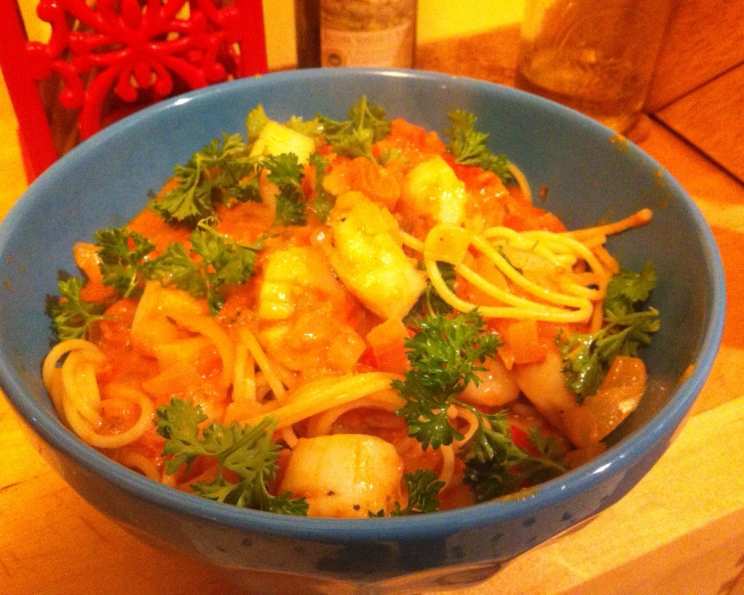
Quick Scallops and Spaghetti: A Symphony of Sea and Pasta
The scent of garlic sizzling in olive oil, the sweet, briny perfume of just-cooked scallops, and the comforting embrace of perfectly al dente spaghetti – this dish is a culinary ballet I’ve performed countless times in my own kitchen, often with the clock ticking and hungry faces around the table. It’s born from those spontaneous moments when inspiration strikes from necessity, a testament to the fact that deliciousness doesn’t always require hours of painstaking preparation. This spaghetti with scallops is a testament to that, a dish that transforms simple ingredients into something truly special, and remarkably quickly.
Recipe Overview
- Prep Time: 15 minutes
- Cook Time: 5 minutes (for scallops and onions) + pasta cooking time
- Total Time: 20 minutes
- Servings: 4
- Yield: 4 servings
- Dietary Type: Seafood
Ingredients
- 8 ounces whole wheat spaghetti (or similar type of pasta)
- 1 ½ lbs bay scallops
- 1 tablespoon olive oil
- ¼ teaspoon black pepper
- 6 garlic cloves, minced
- 1 medium onion, chopped
- Juice of 1 lemon
- ½ teaspoon salt, to taste
- ½ cup flat leaf parsley, chopped
- Red pepper flakes (optional)
Equipment Needed
- Large pot for boiling pasta
- Colander or spider strainer
- Large skillet
- Slotted spoon
- Large mixing bowl
Instructions
- Begin by bringing a large pot of salted water to a rolling boil for the spaghetti. Cook the spaghetti according to package instructions until it reaches that perfect al dente texture.
- While the spaghetti is cooking, you’ll prepare the star of our dish: the scallops. Drain the spaghetti once cooked and, crucially, reserve about 1 cup of the pasta water. This starchy liquid is gold for creating a luscious sauce.
- In your large skillet, heat the olive oil over medium-high heat. Allow it to shimmer for about a minute.
- Add the minced garlic cloves and the black pepper to the hot skillet. Sauté for about 45 seconds, stirring constantly. The goal here is to release their fragrant aromas without allowing the garlic to brown, which can lend a bitter taste.
- Introduce the bay scallops to the skillet. Cook until they turn opaque, which typically takes about 5 minutes.
- Using a slotted spoon, remove the cooked scallops from the skillet and transfer them to a separate bowl. This prevents them from overcooking in the residual heat.
- To the same skillet, add the chopped onion. Cook until softened. To help create our sauce, add a ladleful, or about ¼ to ½ cup, of the reserved pasta water to the skillet with the onions.
- Continue to cook the onions until they are clear and tender, allowing them to meld with the onion and starchy water.
- Once the onions have softened beautifully, squeeze in the juice of one large lemon. This bright citrus note will cut through the richness and elevate the flavors.
- Season with salt to taste. Remember that pasta water is often salted, so taste before adding too much.
- Now, it’s time for the grand finale. Drain the spaghetti (if you haven’t already) and place the hot pasta into a large mixing bowl.
- Immediately pour the contents of the skillet – the onion and lemon sauce – directly over the hot spaghetti.
- Add the chopped flat leaf parsley to the bowl.
- Toss everything together thoroughly, ensuring the pasta is well coated with the flavorful sauce and the scallops are evenly distributed.
- Serve immediately. For an extra kick, guests can add additional lemon, parsley, or red pepper flakes to their individual servings.
Expert Tips & Tricks
To ensure your scallops are perfectly cooked and not rubbery, it’s crucial to have your skillet hot before adding them. They cook very quickly, so keep a close eye on them. If your bay scallops are very small, they might cook even faster, so adjust your timing accordingly. Don’t be afraid of that reserved pasta water! It’s the secret ingredient that binds the sauce to the pasta, creating a silky texture rather than a watery one. If you find the sauce a little too thin after tossing, you can always return the mixture to the skillet over low heat for a minute or two, stirring gently, to allow it to thicken further. For a more intense lemon flavor, you can also add a little lemon zest along with the juice.
Serving & Storage Suggestions
This dish is best enjoyed the moment it’s made, when the pasta is perfectly al dente and the scallops are tender. Serve it in warm bowls, perhaps garnished with a few extra sprigs of parsley and a lemon wedge for those who like an extra burst of citrus. If you happen to have leftovers, they can be stored in an airtight container in the refrigerator for up to 2 days. Reheat gently over low heat in a skillet with a splash of water or broth to prevent drying out, or microwave with a similar addition. Be mindful that scallops can become a bit firmer upon reheating, so a gentle approach is key.
Nutritional Information
| Nutrient | Amount per Serving | % Daily Value |
|---|---|---|
| Calories | 370.8 kcal | |
| Calories from Fat | ||
| Total Fat | 5.2 g | 7% |
| Saturated Fat | 0.9 g | 4% |
| Cholesterol | 40.9 mg | 13% |
| Sodium | 970.2 mg | 40% |
| Total Carbohydrate | 54.2 g | 18% |
| Dietary Fiber | 1.2 g | 5% |
| Sugars | 1.6 g | 6% |
| Protein | 29.9 g | 59% |
Note: Nutritional values are estimates and can vary based on specific ingredients used.
Variations & Substitutions
While bay scallops are the star here, larger sea scallops can also be used. Simply cut them into bite-sized pieces before cooking. For a spicier kick, feel free to increase the amount of red pepper flakes, or add a pinch of cayenne pepper to the skillet with the garlic. If you’re not a fan of whole wheat pasta, feel free to use regular spaghetti, linguine, or even angel hair. For a richer sauce, you could whisk in a tablespoon of butter at the very end, just before tossing with the pasta.
FAQs
Q: Can I use frozen bay scallops?
A: Absolutely! Thaw them completely and pat them very dry with paper towels before cooking to ensure they sear properly.
Q: How do I prevent my scallops from getting tough?
A: Cook them quickly in a hot skillet until just opaque. Overcooking is the main culprit for tough scallops.
Q: What if I don’t have fresh parsley?
A: Dried parsley can be used in a pinch, but use about a third of the amount and add it earlier in the cooking process with the onions to allow its flavor to develop. Fresh is always best for this dish, though!
Q: Can I make this ahead of time?
A: While best served fresh, you can cook the pasta and prepare the scallop and onion mixture separately. Reheat the mixture gently and toss with freshly cooked pasta just before serving.
Q: Is there a vegetarian option?
A: This specific recipe is designed around seafood. However, you could adapt the sauce base with sautéed mushrooms and perhaps some white beans for a vegetarian pasta dish.
Final Thoughts
This Quick Scallops and Spaghetti is more than just a recipe; it’s a gateway to effortless elegance in your own kitchen. It’s proof that with a few well-chosen ingredients and a little technique, you can create a dish that feels both luxurious and approachable. So, the next time you’re faced with a tight schedule but a craving for something delicious, give this a try. I’d love to hear how it turns out for you, and what little touches you might add to make it your own. Enjoy the speed, the simplicity, and most importantly, the incredible flavor!