
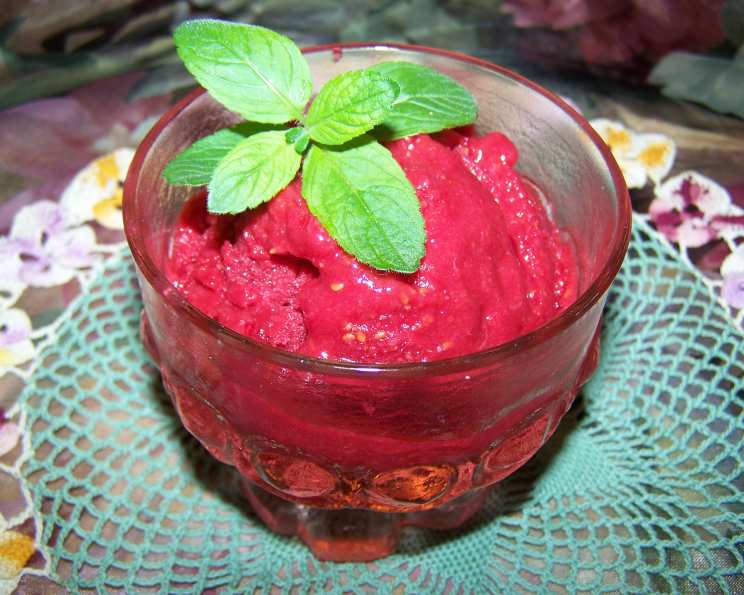
Raspberry Granita: A Taste of Summer Sunshine
There are certain flavors that transport me instantly back to sun-drenched afternoons and carefree childhood days. For me, the sharp, sweet tang of fresh raspberries, particularly when transformed into something as pure and exhilarating as granita, is one of them. I remember a trip to Sicily years ago, where tiny, family-run gelaterias served up bowls of this icy delight. Each spoonful was a burst of pure fruit, a vibrant ruby-red snow that melted on the tongue, leaving behind a refreshing sweetness that perfectly countered the heat of the Mediterranean sun. It was simple, elegant, and utterly captivating – a culinary revelation that sparked my lifelong love affair with this exquisite frozen dessert.
Recipe Overview
- Prep Time: 15 minutes
- Cook Time: 5 minutes (for syrup)
- Total Time: 25 minutes (plus freezing time)
- Servings: 6
- Yield: Approximately 6 cups
- Dietary Type: Vegan, Dairy-Free, Gluten-Free
Ingredients
- 1 kg fresh raspberries, pureed (frozen raspberries can be used, thawed before pureeing)
- 1 lemon, juiced
- 500 g granulated sugar
- 1/2 cup water
- Fresh mint leaves, for garnish (optional)
Equipment Needed
- Blender or food processor (for pureeing raspberries)
- Fine-mesh sieve (optional, for straining puree)
- Medium saucepan
- Whisk
- Shallow metal or glass freezer-safe container (a baking dish or large metal bowl works well)
- Fork or whisk (for scraping and fluffing)
Instructions
The magic of granita lies in its beautiful simplicity. It’s a testament to how a few high-quality ingredients, treated with care, can create something extraordinary. Here’s how to bring this taste of pure summer to your table:
-
Prepare the Raspberry Puree: If using fresh raspberries, wash them gently and place them in a blender or food processor. Blend until they are completely pureed. For a smoother granita, you can pass the puree through a fine-mesh sieve to remove the seeds, though many prefer the rustic texture with the seeds intact. If using frozen raspberries, thaw them completely before pureeing. You should have a vibrant, smooth puree.
-
Make the Simple Syrup: In a medium saucepan, combine the 500 g sugar and 1/2 cup water. Place the saucepan over medium heat. Stir constantly with a whisk until the sugar is completely dissolved. Once the sugar has dissolved, increase the heat to bring the mixture to a boil.
-
Simmer the Syrup: Once boiling, reduce the heat to a simmer and let it cook for 5 minutes. This brief simmering process ensures the syrup is well-formed and will help balance the tartness of the raspberries. After 5 minutes, remove the saucepan from the heat.
-
Cool the Syrup: Allow the simple syrup to cool completely. This is an important step, as adding hot syrup to the fruit puree can affect its flavor and texture. You can speed this up by placing the saucepan in an ice bath or transferring the syrup to a clean bowl and refrigerating it.
-
Combine the Flavors: In a large bowl, combine the raspberry puree with the juice of 1 lemon and the cooled simple syrup. Stir well to ensure all the ingredients are thoroughly incorporated. Taste the mixture. If you prefer a sweeter granita, you can add a little more sugar dissolved in a small amount of water, but remember that the sweetness will concentrate slightly as it freezes.
-
Begin the Freezing Process: Pour the raspberry mixture into your shallow metal or glass freezer-safe container. A shallow container allows for faster and more even freezing. Place the container in the freezer.
-
Scrape and Fluff: After about 45 minutes to 1 hour, check the granita. The edges should be starting to freeze. Use a fork or whisk to scrape and break up the ice crystals that have formed around the edges, incorporating them into the unfrozen liquid. This process is crucial for creating the characteristic flaky, icy texture of granita, rather than a solid block of ice.
-
Continue Freezing and Scraping: Return the container to the freezer. Repeat the scraping and fluffing process every 30 to 45 minutes for the next 2 to 3 hours, or until the entire mixture is frozen into light, fluffy ice crystals. The goal is to create a texture that is neither too hard nor too slushy, but a delightful balance of both.
-
Final Freeze: Once the granita has reached your desired consistency, you can cover it tightly and allow it to freeze for at least another hour to firm up before serving.
Expert Tips & Tricks
- The Importance of the Scrape: Don’t skip the scraping! This is the defining characteristic of granita. The more you scrape and fluff, the lighter and more delightful the texture will be. Aim for fine, airy ice crystals.
- Metal is Your Friend: Using a shallow metal container for freezing is highly recommended. Metal conducts cold much more efficiently than glass, which will help the granita freeze faster and more evenly, making the scraping process easier and yielding a better texture.
- Seed Removal for Silkiness: While I personally enjoy the slight texture the seeds add, if you’re aiming for an ultra-smooth, almost sorbet-like consistency, be diligent with straining the raspberry puree through a fine-mesh sieve.
- Sweetness Adjustment: Raspberries can vary greatly in their sweetness and tartness. Always taste your mixture before freezing and adjust the sweetness with more syrup if needed. Remember, frozen desserts often taste less sweet than their liquid counterparts, so err on the side of slightly sweeter than you think.
- Make Ahead Master: Granita is a fantastic make-ahead dessert. Once it’s fully frozen and fluffed, you can cover it tightly and keep it in the freezer for up to two weeks. The texture might firm up a bit in that time, but a quick re-fluff with a fork before serving will revive it beautifully.
Serving & Storage Suggestions
To serve, scoop generous portions of the fluffy raspberry granita into chilled glasses or bowls. The vibrant ruby color is stunning on its own. For an extra touch of elegance and aroma, garnish each serving with a fresh mint leaf. The cool mint provides a lovely aromatic counterpoint to the bright raspberry flavor.
Leftover raspberry granita can be stored, covered tightly with plastic wrap or a lid, in the freezer for up to two weeks. If it becomes too hard after prolonged freezing, simply let it sit at room temperature for 5-10 minutes and then re-fluff it with a fork before serving again. Granita is best enjoyed when it’s freshly made for optimal texture, but it holds up well for storage.
Nutritional Information
Here is an approximate nutritional breakdown for a single serving of Raspberry Granita. Please note that these values are estimates and can vary based on specific ingredients and portion sizes.
| Nutrient | Amount per Serving | % Daily Value |
|---|---|---|
| Calories | 250 kcal | 13% |
| Total Fat | 0.5 g | 1% |
| Saturated Fat | 0 g | 0% |
| Cholesterol | 0 mg | 0% |
| Sodium | 5 mg | 0% |
| Total Carbohydrate | 65 g | 24% |
| Dietary Fiber | 8 g | 29% |
| Sugars | 55 g | 110% |
| Protein | 1.5 g | 3% |
Note: The “Sugars” percentage is high due to the addition of sugar to create the simple syrup, which is essential for achieving the correct granita texture and balancing the tartness of the raspberries. The majority of the carbohydrates are from the fruit itself.
Variations & Substitutions
The beauty of granita is its versatility. While raspberry is classic, feel free to experiment:
- Berry Medley: Combine raspberries with other berries like strawberries, blueberries, or blackberries for a more complex flavor profile.
- Citrus Zing: Instead of lemon, try lime juice for a different citrusy note, or even a splash of orange juice.
- Herbal Infusion: Steep fresh herbs like basil or thyme in the simple syrup while it cools for an unexpected aromatic twist. Strain the herbs out before combining with the fruit puree.
- Boozy Granita: For an adult treat, add a tablespoon or two of a complementary liqueur, such as Chambord or Cointreau, to the fruit mixture before freezing. This can also help to keep the granita slightly softer.
FAQs
Q: Can I use frozen raspberries instead of fresh?
A: Absolutely! Frozen raspberries work perfectly. Ensure you thaw them completely before pureeing them.
Q: My granita is freezing into a solid block. What went wrong?
A: You likely didn’t scrape it frequently enough. The key to granita is to scrape and break up the ice crystals every 30-45 minutes as it freezes to create that characteristic fluffy texture.
Q: How long does it take for granita to freeze?
A: It typically takes around 2-4 hours of freezing time, with regular scraping, until it reaches the desired texture.
Q: Can I make granita without sugar?
A: While you can omit the sugar, the texture will be icier and less smooth, and the flavor will be much tarter. The sugar in the simple syrup is crucial for both texture and balancing the fruit’s natural acidity.
Q: Is granita the same as sorbet?
A: No, they are different. Sorbet is churned in an ice cream maker, which incorporates air and creates a smoother, creamier texture. Granita is frozen without churning and is then scraped, resulting in a coarser, icier, and more crystalline texture.
Final Thoughts
Raspberry Granita is more than just a frozen dessert; it’s an experience. It’s a moment of pure, unadulterated fruit flavor that is both incredibly refreshing and deeply satisfying. Whether you serve it as a light dessert after a summer barbecue, a palate cleanser between courses, or simply a sweet treat to cool down on a warm afternoon, its vibrant taste and beautiful simplicity are sure to impress. I encourage you to try this recipe and savor the taste of pure, frozen sunshine. It’s a delightful reminder that sometimes, the simplest pleasures are the most profound.