
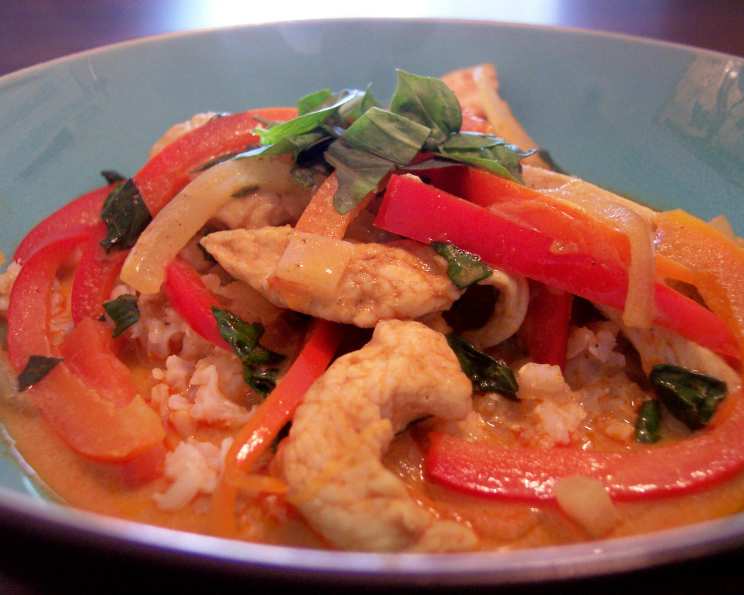
Thai Red Curry Chicken with Fragrant Basil
There are certain dishes that transport me instantly, and this Red Curry Chicken with Basil is one of them. I remember my first real taste of authentic Thai food, not in a fancy restaurant, but at a bustling night market in Bangkok. The air was thick with an intoxicating blend of spices, the sizzle of woks, and the chatter of vendors. Amidst it all, I found a small stall where a woman, with practiced grace, stirred a vibrant, crimson curry. The aroma that wafted from her pan – a symphony of chilies, garlic, galangal, and that distinct, almost sweet scent of Thai basil – was utterly captivating. That first bite was an explosion of flavor: creamy coconut milk, tender chicken, a gentle heat that built beautifully, and the fresh, anise-like punch of basil. It’s a flavor memory I’ve chased ever since, and this recipe is my homage to that unforgettable culinary moment. It’s the kind of meal that feels both exotic and comforting, perfect for a weeknight escape or a weekend indulgence.
Recipe Overview
- Prep Time: 20 minutes
- Cook Time: 11 minutes
- Total Time: 31 minutes
- Servings: 4
- Yield: Approximately 4 servings
- Dietary Type: Gluten-Free (ensure curry paste is gluten-free)
Ingredients
This recipe relies on a few key ingredients to achieve its signature flavor. When selecting your red curry paste, I highly recommend finding a good quality Thai brand, as the depth of flavor can vary significantly. For the coconut milk, ensure it’s full-fat and has been shaken well to combine the cream and liquid.
- 2 tablespoons vegetable oil
- 1 ½ tablespoons red curry paste
- 13 ½ ounces coconut milk, shaken
- 1 ½ lbs chicken breasts, raw, sliced into bite-size pieces
- 2 teaspoons sugar (granulated or palm sugar for a more authentic flavor)
- 2 teaspoons fish sauce
- 1 red bell pepper, thinly sliced
- 10 large Thai basil leaves, roughly chopped
Equipment Needed
For this flavorful curry, you won’t need any specialized equipment. A few common kitchen tools will suffice:
- A large skillet or wok
- A sharp knife for slicing
- A cutting board
- Measuring spoons and cups
- A stirring spoon or spatula
Instructions
Crafting this Thai Red Curry Chicken with Basil is a relatively quick process, allowing you to bring a taste of Thailand to your table with ease. The key is to have all your ingredients prepped and ready to go before you begin cooking, as the steps move along swiftly.
- Heat the oil in the frying pan over medium heat. A good quality skillet or wok will ensure even heating, which is crucial for developing the flavors of the curry paste.
- Add the red curry paste and simmer for 2 minutes, so that it is dissolved, fragrant, and foaming. This step is vital. Gently cooking the curry paste awakens its aromatics and releases its full flavor potential. You’ll know it’s ready when it becomes incredibly fragrant and you see tiny bubbles forming around it. Be mindful not to let it burn, so keep an eye on the heat.
- Stir in the can of coconut milk. Cook over medium heat for 4 minutes, stirring occasionally. Pour in the shaken coconut milk and allow it to simmer gently. Stirring occasionally prevents the milk from separating and helps to meld the flavors with the curry paste. The sauce will start to thicken slightly.
- Add the sliced chicken. Simmer for 4 minutes. Introduce your bite-sized chicken pieces into the simmering curry sauce. Stir to ensure each piece is coated. Allow the chicken to simmer and begin to cook through.
- Stir in the sugar, fish sauce, and red bell pepper. Simmer until the chicken is cooked, about 3 minutes more. These ingredients add the essential sweet, salty, and vegetal notes to the curry. The sugar balances the heat, the fish sauce provides umami depth, and the bell pepper adds a touch of sweetness and texture. Continue to simmer until the chicken is no longer pink and is cooked through, which should take approximately 3 minutes.
- Add the chopped basil. Season to taste with more sugar or fish sauce as desired. Just before serving, stir in the fresh Thai basil. The residual heat of the curry will wilt the leaves and release their wonderful aroma and flavor. Taste the curry and adjust the seasoning with a touch more sugar for sweetness or fish sauce for saltiness, if needed, to achieve your perfect balance.
Expert Tips & Tricks
To elevate this already delicious dish, consider these professional insights:
- Mise en Place is Key: As mentioned, have all your ingredients prepped before you start cooking. Slicing the chicken, chopping the bell pepper, and measuring out the liquids ensures a smooth and efficient cooking process.
- Curry Paste Quality Matters: Don’t skimp on the curry paste. A good quality paste will make a world of difference in the final flavor profile. If you can find it, a paste made with fresh ingredients will be superior.
- Thai Basil is a Must: While regular basil can be a substitute in a pinch, Thai basil has a distinct anise-like flavor that is integral to authentic Thai cuisine. Seek it out if you can; it’s usually available at Asian grocery stores.
- Coconut Milk Consistency: Full-fat coconut milk will yield a richer, creamier curry. If you prefer a lighter version, you can use light coconut milk, but the texture will be less luxurious.
- Adjusting Heat: The heat of red curry paste can vary. If you’re sensitive to spice, start with a little less paste and add more to taste. Conversely, if you love heat, you can add a fresh chili or two along with the bell pepper.
Serving & Storage Suggestions
This Red Curry Chicken with Basil is best served piping hot. Its vibrant colors and aromatic fragrance make for a beautiful presentation.
- Serving: Traditionally, this curry is served with steamed jasmine rice. The fluffy rice is perfect for soaking up the rich, flavorful sauce. You can also serve it with brown rice or even noodles for a different textural experience. Garnish with a few fresh basil leaves for an extra pop of color and aroma.
- Storage: Leftovers can be stored in an airtight container in the refrigerator for up to 3 days.
- Reheating: To reheat, gently warm the curry on the stovetop over low heat, stirring occasionally, or microwave until heated through. Avoid overheating, which can cause the sauce to separate.
Nutritional Information
The following nutritional information is an estimate per serving and may vary based on specific ingredients and brands used.
| Nutrient | Amount per Serving | % Daily Value |
|---|---|---|
| Calories | 563.4 kcal | |
| Calories from Fat | 363 kcal | |
| Total Fat | 40.4 g | 62% |
| Saturated Fat | 21.1 g | 105% |
| Cholesterol | 109 mg | 36% |
| Sodium | 389.4 mg | 16% |
| Total Carbohydrate | 12.6 g | 4% |
| Dietary Fiber | 3 g | 12% |
| Sugars | 9.6 g | 38% |
| Protein | 38.8 g | 77% |
Note: % Daily Value is based on a 2,000 calorie diet.
Variations & Substitutions
While this recipe is wonderfully satisfying as is, feel free to experiment with variations:
- Protein Swap: Shrimp or firm tofu can be excellent substitutes for chicken. Adjust cooking times accordingly – shrimp cooks very quickly, and tofu will need to be browned beforehand for best texture.
- Vegetable Additions: Feel free to add other vegetables like bamboo shoots, snow peas, broccoli florets, or eggplant. Add heartier vegetables earlier in the cooking process, and more delicate ones like snow peas towards the end.
- Spice Level: For a milder curry, use a less spicy red curry paste or reduce the amount. For extra heat, add a fresh red chili (deseeded or not, depending on your preference) along with the bell pepper, or a pinch of cayenne pepper to the curry paste.
- Sweetness: If you prefer a sweeter curry, you can add a little more sugar. Conversely, if it’s too sweet, a splash more fish sauce or a squeeze of lime juice can balance it out.
FAQs
Q: What is the best way to ensure the chicken is cooked through without becoming tough?
A: Slicing the chicken into uniform, bite-sized pieces and not overcrowding the pan allows it to cook evenly and quickly, ensuring tenderness.
Q: Can I use regular basil if I can’t find Thai basil?
A: Yes, you can, but the flavor profile will be different. Thai basil has a distinct anise-like flavor that is characteristic of this dish.
Q: How can I make this curry creamier?
A: Using full-fat coconut milk is the primary way to achieve a creamy texture. You can also simmer the curry for a few extra minutes to allow the sauce to reduce and thicken further.
Q: Is it okay to prepare parts of this dish ahead of time?
A: You can slice the chicken and vegetables in advance and store them separately in the refrigerator. The curry itself is best made fresh to enjoy the vibrant flavors.
Q: What can I serve this curry with besides rice?
A: This curry is also delicious served over cooked noodles, such as rice noodles or even spaghetti.
There you have it – a simple yet profoundly flavorful dish that captures the essence of Thai cooking. This Red Curry Chicken with Basil is more than just a meal; it’s an experience. It’s a testament to how a few well-chosen ingredients, combined with a touch of culinary care, can create something truly extraordinary. I encourage you to try it, adjust it to your liking, and savor every aromatic, spicy, and comforting bite. Let me know how it turns out!