
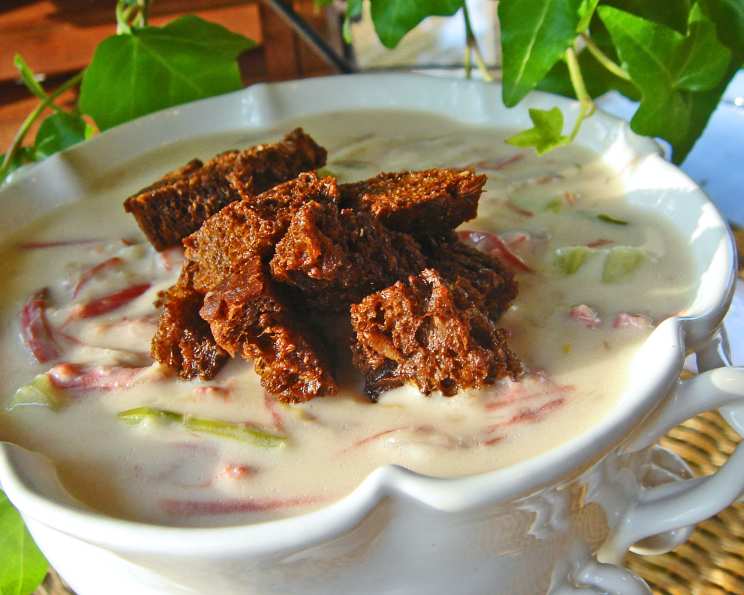
Reuben Soup: A Hug in a Bowl
There are certain dishes that transport you instantly, not just to a place, but to a feeling. For me, Reuben Soup is precisely that. It conjures up memories of blustery autumn evenings, the comforting warmth of my grandmother’s kitchen, and the sheer delight of my son, who, despite his professed disdain for corned beef, always asks for a second bowl of this magical concoction. It’s more than just a meal; it’s a culinary embrace, a testament to how familiar flavors can be reinterpreted into something truly special. This soup, with its savory depth and creamy finish, has become a cherished part of our family’s culinary repertoire, a reliable source of comfort and joy on any given day.
Recipe Overview
- Prep Time: 20 minutes
- Cook Time: 30 minutes
- Total Time: 50 minutes
- Servings: 6
- Yield: Approximately 6 cups
- Dietary Type: Comfort Food
Ingredients
Gather these key components to bring the magic of Reuben Soup to your table:
- 1/2 cup onion, finely chopped
- 1/2 cup celery, finely chopped
- 2 tablespoons butter
- 1 cup chicken broth
- 1 cup beef broth
- 1/2 teaspoon baking soda
- 2 tablespoons cornstarch
- 2 tablespoons water
- 3/4 cup sauerkraut, rinsed, drained, and chopped
- 2 cups half-and-half
- 2 cups corned beef, chopped (ensure it’s not canned for the best texture and flavor)
- 1 cup Swiss cheese, shredded
- Salt, to taste
- Pepper, to taste
- Rye croutons, for garnish
Equipment Needed
To craft this delightful soup, you’ll want to have these on hand:
- A large soup kettle or Dutch oven
- A whisk
- A measuring cup and spoons
- A knife and cutting board for chopping vegetables and corned beef
Instructions
Let’s embark on the journey of creating this incredibly satisfying Reuben Soup. Follow these steps carefully for a truly delicious outcome:
- Begin by melting the butter in your large soup kettle or Dutch oven over medium heat.
- Add the chopped onion and celery to the melted butter. Sauté these aromatics until they become tender, which should take about 5–7 minutes. You want them soft but not browned.
- Pour in the chicken broth and beef broth. Stir well to incorporate any flavorful bits from the bottom of the pot.
- Next, add the baking soda to the broth mixture. This might cause a slight frothing or bubbling, which is perfectly normal.
- In a small bowl, whisk together the cornstarch and water until a smooth slurry forms, ensuring there are no lumps.
- Pour this cornstarch slurry into the soup kettle. Stir continuously and bring the mixture to a boil. Let it boil for precisely 2 minutes, stirring occasionally, to allow the soup to thicken.
- Reduce the heat to low.
- Now, stir in the rinsed and chopped sauerkraut, the half-and-half, and the chopped corned beef.
- Allow the soup to simmer gently, stirring frequently, for 15 minutes. This simmering period allows the flavors to meld beautifully and ensures the corned beef is heated through.
- Add the shredded Swiss cheese to the soup. Continue to stir until the cheese is fully melted and the soup has a wonderfully creamy consistency.
- Season the soup to taste with salt and pepper. Crucially, go easy on the salt, as the corned beef is typically quite salty on its own. It’s always best to taste and adjust as needed.
- Ladle the hot soup into bowls.
- Garnish each serving generously with rye croutons.
Expert Tips & Tricks
- Corned Beef Quality: For the best results, avoid using canned corned beef. Opt for good quality deli corned beef or leftover homemade corned beef. The texture and flavor difference is significant.
- Sauerkraut Rinse: Don’t skip rinsing the sauerkraut. This helps to temper its strong tanginess, making it more approachable for those who might find it a bit too intense. However, if you love a pronounced sauerkraut flavor, you can rinse it less vigorously or not at all.
- Texture Adjustments: If you prefer a creamier, richer soup, you can substitute some of the half-and-half with heavy cream. Conversely, for a lighter version, explore using reduced-fat Swiss cheese and fat-free half-and-half as suggested in the original notes. Be aware that using lighter dairy products can sometimes affect the overall texture, potentially making it a little less velvety.
- Make Ahead: The base of the soup (up to step 9) can be made ahead of time. Let it cool completely, then refrigerate. When ready to serve, gently reheat it over low heat, then stir in the Swiss cheese and rye croutons just before serving.
Serving & Storage Suggestions
This Reuben Soup is best served piping hot, right after the Swiss cheese has melted to perfection. The rye croutons provide a delightful crunch that contrasts beautifully with the creamy soup. It makes for a hearty lunch or a warming starter to a larger meal.
Leftovers can be stored in an airtight container in the refrigerator for up to 3 days. When reheating, gently warm the soup over low heat, stirring frequently. You may need to add a splash of milk or broth if it has thickened considerably. Avoid boiling the soup once the cheese has been added, as this can cause it to separate. It’s best to add the Swiss cheese to the reheated soup just before serving.
Nutritional Information
Here’s an estimated breakdown of the nutritional content per serving of Reuben Soup:
| Nutrient | Amount per Serving | % Daily Value |
|---|---|---|
| Calories | 237 kcal | 12% |
| Total Fat | 18.5 g | 24% |
| Saturated Fat | 11.5 g | 58% |
| Cholesterol | 56.6 mg | 19% |
| Sodium | 604.5 mg | 26% |
| Total Carbohydrate | 9.3 g | 3% |
| Dietary Fiber | 0.9 g | 3% |
| Sugars | 1.5 g | 3% |
| Protein | 8.9 g | 18% |
Note: Nutritional values are approximate and can vary based on specific ingredients used.
Variations & Substitutions
While this Reuben Soup is wonderfully satisfying as is, here are a few ideas to spark your creativity:
- Spicy Kick: For those who enjoy a little heat, add a pinch of red pepper flakes along with the sauerkraut.
- Deli Style: If you can find it, add a tablespoon or two of Thousand Island dressing to the soup just before serving for an extra layer of classic Reuben flavor.
- Vegetarian Twist: While challenging to replicate the exact flavor profile without corned beef, a hearty vegetarian version could be achieved using crumbled tempeh or firm tofu that has been seasoned with liquid smoke and spices to mimic the savory notes. You’d still use the sauerkraut, Swiss cheese, and rye croutons for the characteristic Reuben essence.
FAQs
Q: Why is baking soda added to the soup?
A: The baking soda is a clever little trick that helps to tenderize the sauerkraut and can also assist in making the soup creamier by reacting with the acidity of the sauerkraut.
Q: Can I use different types of cheese?
A: While Swiss cheese is traditional and pairs beautifully, you could experiment with a blend of Swiss and Gruyère for a nuttier flavor, or even a mild cheddar if Swiss is unavailable.
Q: How can I make this soup thicker if it’s too thin?
A: If your soup isn’t as thick as you’d like, you can create another cornstarch slurry with 1 tablespoon of cornstarch and 2 tablespoons of water, then whisk it into the simmering soup and cook for a few more minutes until thickened.
Q: What is the best way to chop the corned beef?
A: For the best texture, dice the corned beef into small, bite-sized pieces. If using leftover cooked corned beef, ensure it’s chilled, as this makes it much easier to dice cleanly.
Q: Is it essential to rinse the sauerkraut?
A: Rinsing the sauerkraut helps to mellow its sharp, vinegary flavor, making it more palatable for a soup base. If you love a robust sauerkraut taste, you can adjust the rinsing to your preference.
Final Thoughts
Reuben Soup is a true testament to the power of comfort food. It takes familiar, beloved flavors and transforms them into a velvety, warming bowl that feels like a culinary hug. Whether you’re a lifelong fan of the Reuben sandwich or simply seeking a deeply satisfying soup experience, this recipe is sure to become a cherished favorite in your home. Don’t hesitate to serve it with a crisp pickle spear on the side, or perhaps a slice of crusty rye bread for dipping. I encourage you to give it a try, savor every spoonful, and perhaps discover your own cherished memories with this delightful dish.