
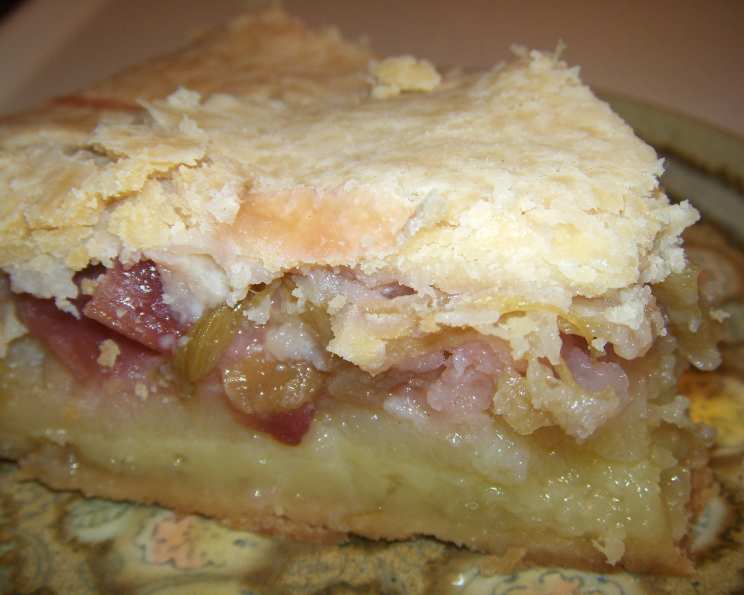
Rhubarb Custard Pie: A Symphony of Tart and Sweet
There are certain flavors that instantly transport me back to my grandmother’s sun-drenched kitchen, the air thick with the promise of something delicious. Rhubarb custard pie is one of those treasures. It’s a dish that embodies the very essence of early summer – that vibrant, almost defiant tartness of fresh rhubarb, mellowed and cradled by a silken, subtly sweet custard. I remember the thrill of peeling those crimson stalks, the slight sting of their acidity on my fingertips, a sensory prelude to the glorious pie that would emerge from her oven. It’s a classic for a reason, a testament to the magic that happens when simple ingredients are treated with respect and a touch of culinary intuition.
Recipe Overview
- Prep Time: 20 minutes
- Cook Time: 50 minutes
- Total Time: 1 hour 10 minutes
- Servings: 6-8
- Yield: 1 pie
- Dietary Type: Vegetarian
Ingredients
This pie is a beautiful balance of textures and flavors, and selecting the freshest ingredients will make all the difference.
For the Crust:
- 2 pie crusts, one for the bottom and one for the top (store-bought or your favorite homemade recipe)
For the Custard Filling:
- 1 ½ cups sugar
- ¼ cup all-purpose flour
- ¼ teaspoon ground nutmeg
- 1 dash salt
- 3 large eggs, beaten
- 4 cups sliced rhubarb (about 1-inch pieces)
- 2 tablespoons butter, cut into small pieces (for topping the pie)
Equipment Needed
To bring this delightful pie to life, you’ll want to have a few key tools ready:
- A 9-inch pie dish
- A large mixing bowl
- A whisk
- A measuring cup and spoons
- A knife for slicing rhubarb and butter
- A baking sheet (to catch any potential drips)
- An oven
- A cooling rack
Instructions
Crafting this Rhubarb Custard Pie is a wonderfully straightforward process, leading to a dessert that sings with both bright tartness and creamy sweetness.
- Begin by preheating your oven to 400 degrees Fahrenheit (200 degrees Celsius). It’s important to have your oven at the correct temperature before you start assembling the pie.
- In your large mixing bowl, combine the sugar, all-purpose flour, ground nutmeg, and salt. Whisk these dry ingredients together thoroughly to ensure they are evenly distributed. This step is crucial for preventing lumps and creating a smooth custard.
- Add the beaten eggs to the dry ingredients. Using your whisk, beat the mixture until it is smooth and well combined. You’re looking for a homogenous texture with no pockets of dry flour.
- Gently fold in the sliced rhubarb into the egg and sugar mixture. Stir until the rhubarb pieces are evenly coated.
- Carefully place one pie crust into your 9-inch pie dish. Press it gently against the bottom and up the sides. This will be the base for your filling.
- Pour the rhubarb filling into the prepared bottom crust. Ensure the filling is spread evenly throughout the crust.
- Take the second pie crust and slice it to make a lattice top. You can do this by cutting the dough into even strips and weaving them over the filling, or by using a cookie cutter to create decorative shapes.
- Arrange the lattice top or decorative crust pieces over the rhubarb filling.
- Dot the top of the pie with the small pieces of butter. This will melt during baking and add a lovely richness to the crust and the surface of the filling.
- Place the pie on a baking sheet. This is a helpful precaution to catch any overflow during the high-temperature initial bake.
- Bake the pie in the preheated oven at 400 degrees Fahrenheit (200 degrees Celsius) for 50 minutes. The initial high heat helps to set the crust and begin the cooking process for the filling.
- Once the baking time is complete, carefully remove the pie from the oven and place it on a cooling rack. Allow the pie to cool completely before slicing and serving. This resting period is essential for the custard to fully set and for the flavors to meld.
Expert Tips & Tricks
To elevate your Rhubarb Custard Pie experience, consider these culinary insights:
- Rhubarb Selection: For the most vibrant color and flavor, opt for bright red, firm rhubarb stalks. Avoid any that appear limp or have a dull hue. Younger stalks tend to be less fibrous and have a more delicate flavor.
- The Lattice Technique: If you’re new to lattice tops, don’t be intimidated! Aim for strips of roughly equal width. For a more rustic look, embrace slight imperfections. If the dough becomes too soft while you’re working with it, pop it back into the refrigerator for a few minutes to firm up.
- Butter Placement: Distributing the butter evenly over the lattice or top crust ensures that it melts into all areas, contributing to a golden-brown and slightly crisp finish.
- Cooling is Key: I cannot stress this enough: patience with cooling is paramount. Cutting into a warm rhubarb custard pie can lead to a runny center. Allow it to cool for at least 2-3 hours, or even longer, at room temperature. The custard will continue to set as it cools.
- Adjusting for Your Oven: Every oven is a little different. If you notice your crust browning too quickly during the initial bake, you can loosely tent the pie with aluminum foil.
Serving & Storage Suggestions
Rhubarb Custard Pie is a dessert that truly shines when served at room temperature or slightly chilled. It pairs wonderfully with a dollop of freshly whipped cream, a scoop of vanilla bean ice cream, or even a drizzle of crème anglaise. The contrast of the cool cream or ice cream against the warm or room-temperature pie is simply divine.
Leftover pie can be stored, tightly covered with plastic wrap or foil, at room temperature for up to 2 days, provided your kitchen is not excessively warm. For longer storage, it’s best to keep it refrigerated. In the refrigerator, the pie will maintain its quality for 3-4 days.
To reheat a slice of refrigerated pie, you can place it in a low oven (around 300°F or 150°C) for about 10-15 minutes, or until warmed through. Be mindful not to overheat, as this can compromise the custard’s texture. This pie does not freeze particularly well due to the custard filling, so it’s best enjoyed fresh.
Nutritional Information
Here’s an estimated breakdown of the nutritional content per serving (based on 8 servings):
| Nutrient | Amount per Serving | % Daily Value |
|---|---|---|
| Calories | 604 kcal | |
| Calories from Fat | 238 g | |
| Total Fat | 26.5 g | 40% |
| Saturated Fat | 8.2 g | 41% |
| Cholesterol | 115.9 mg | 38% |
| Sodium | 403.2 mg | 16% |
| Total Carbohydrate | 85.2 g | 28% |
| Dietary Fiber | 3.8 g | 15% |
| Sugars | 51.2 g | 204% |
| Protein | 8.2 g | 16% |
Note: Nutritional values are estimates and can vary based on specific ingredients and preparation methods used.
Variations & Substitutions
While this classic Rhubarb Custard Pie is a masterpiece in its own right, feel free to explore these delightful variations:
- Spiced Crust: Introduce a hint of warmth to your pie crust by adding a pinch of cinnamon or ginger to the flour mixture when preparing your homemade crust, or by choosing a pre-made spiced pie crust.
- Citrus Zest: For an added layer of brightness, consider zesting half a lemon or orange directly into the rhubarb mixture. This can further enhance the tartness and add a subtle floral note.
- Berry Boost: While this recipe focuses on rhubarb, a small handful of fresh strawberries or raspberries can be added to the rhubarb filling. They complement the tartness beautifully and add a lovely visual appeal. Be mindful that berries may release more liquid, so ensure your lattice is well-sealed.
- Nutty Crunch: If you enjoy a bit of texture, you can sprinkle a thin layer of chopped almonds or pecans over the rhubarb filling before adding the lattice top.
FAQs
Q: Why is my rhubarb filling watery?
A: Rhubarb naturally contains a lot of water. Ensuring your rhubarb is well-drained after slicing, and allowing the pie to cool completely are the best ways to achieve a set custard. The flour in the filling also helps to thicken it.
Q: Can I use frozen rhubarb for this pie?
A: Yes, you can use frozen rhubarb, but be sure to thaw it completely and drain off as much excess liquid as possible before adding it to the filling. You may need to slightly adjust the baking time.
Q: How do I know when the pie is done baking?
A: The pie is done when the crust is golden brown and the custard filling is set. The center should appear mostly firm, with perhaps a slight jiggle. The butter dots on top should be melted and sizzling.
Q: Can I make the filling ahead of time?
A: While you can prepare the dry ingredients for the filling ahead of time, it’s best to combine them with the wet ingredients and rhubarb just before assembling the pie to prevent the rhubarb from becoming too soft.
Q: My pie crust is browning too quickly, what should I do?
A: If your crust is browning too rapidly, you can loosely tent the edges or the entire pie with aluminum foil. This will shield the crust from direct heat while allowing the filling to finish cooking.
Final Thoughts
There’s a comforting nostalgia baked into every slice of Rhubarb Custard Pie, a feeling of tradition and simple pleasures. It’s a dessert that speaks to the seasons, celebrating the fleeting beauty of rhubarb season with every bite. I encourage you to gather your ingredients, embrace the process, and share this wonderful creation with loved ones. Whether served warm with a scoop of vanilla ice cream or enjoyed at room temperature as an afternoon treat, this pie is sure to bring smiles and create its own delicious memories. Don’t hesitate to share your experience, any delightful variations you discover, or how it tasted alongside your favorite afternoon tea or coffee. Happy baking!