
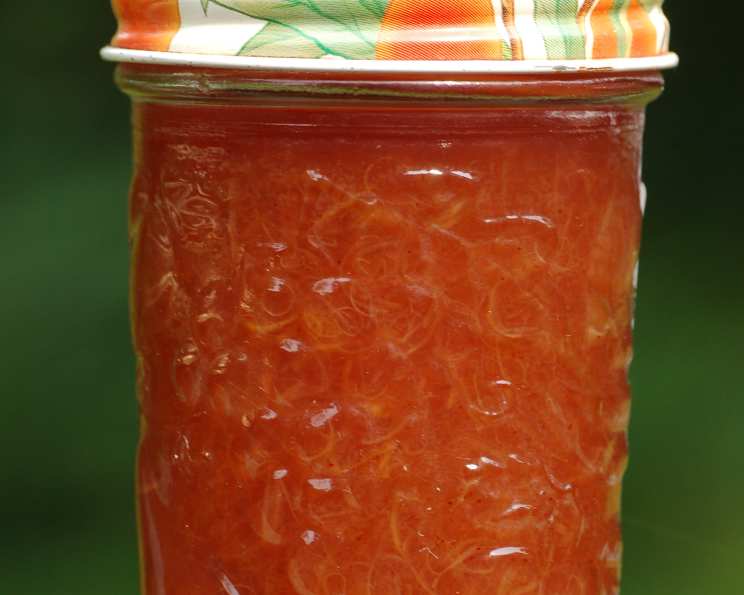
Rhubarb Jam with Cinnamon: A Taste of Summer Sunshine
As a kid, my hands would be perpetually stained pink from sneaking tart, vibrant rhubarb stalks straight from my grandmother’s garden. My absolute favorite ritual was to dip those crisp, ruby-red pieces into a small mound of granulated sugar mixed with a generous whisper of cinnamon. It was a simple pleasure, a burst of sweet-tart sunshine that instantly transported me to long, lazy summer days. This rhubarb jam, with its comforting cinnamon embrace, is more than just a preserve; it’s a jar brimming with those cherished childhood memories, a sweet echo of barefoot adventures and sun-drenched afternoons.
Recipe Overview
- Prep Time: 15 minutes
- Cook Time: 30 minutes
- Total Time: 45 minutes
- Servings: Depends on jar size and spread quantity
- Yield: 6 (250 mL) jars
- Dietary Type: Vegan-friendly (check pectin for gelatin)
Ingredients
- 8 cups rhubarb, chopped into 2 cm pieces
- 250 mL water
- 1 (57 g) package dry pectin
- 6 ½ cups granulated sugar
- 1 tablespoon lemon juice
- 1 tablespoon cinnamon
Equipment Needed
For this delightful jam-making endeavor, you’ll need a few essential tools:
- Canning kettle or large stockpot for sterilizing jars and water bath processing
- Small saucepan for warming lids and rings
- Large, heavy-bottomed saucepan for cooking the jam
- Long-handled spoon or heatproof spatula for stirring
- Jar lifter
- Funnel (optional, but very helpful for filling jars)
- Ladle
- Dry towels for cooling
Instructions
The magic of preserving happens step-by-step, and this rhubarb jam with cinnamon is no exception. Follow these instructions closely for a beautifully textured and perfectly preserved treat.
-
Prepare Your Jars and Equipment: Begin by thoroughly washing out your jars, lids, and rings. Place the clean jars upright into your canning kettle or large stockpot. Fill the kettle with enough water to cover the jars by at least an inch. Bring the water to a rolling boil and boil for at least 10 minutes to sterilize the jars. While the jars are sterilizing, place the rings and lids in a separate bowl and cover them with hot water to keep them pliable and ready for sealing.
-
Cook the Rhubarb: In your large, heavy-bottomed saucepan, combine the 8 cups of chopped rhubarb with the 250 mL of water. Place the saucepan over high heat and bring the mixture to a boil.
-
Tenderize the Rhubarb: Once boiling, reduce the heat to medium, cover the saucepan, and continue to cook until the rhubarb is tender. This should take approximately 2 to 3 minutes. You’re looking for the rhubarb to soften but not completely disintegrate.
-
Incorporate the Pectin: Slowly add the dry pectin to the bubbling rhubarb mixture, stirring constantly as you do so. Ensure the pectin is well incorporated.
-
Reach a Full Boil: Turn the heat back up to high. The mixture should be boiling vigorously. If it’s not yet at a full rolling boil (a boil that cannot be stirred down), wait until it reaches this stage before proceeding to the next step.
-
Add the Sugar: This is where a second pair of hands can be incredibly useful! While the mixture is at a full rolling boil, slowly pour in the 6 ½ cups of granulated sugar, stirring continuously as you add it. Keep stirring to prevent the sugar from sticking to the bottom of the pan and burning.
-
Boil and Stir: Continue to stir the jam and maintain the full rolling boil. You’ll need to keep stirring to prevent sticking and burning, which can quickly ruin a batch of jam. Continue this process until the mixture returns to a full boil.
-
Add Flavorings: Once the jam is at a consistent full rolling boil again, add the 1 tablespoon of lemon juice and the 1 tablespoon of cinnamon. Continue to stir the mixture for another minute while it remains at a rolling boil. This ensures the flavors are infused and the jam reaches its setting point.
-
Remove from Heat and Skim: Turn off the heat and carefully remove the saucepan from the burner. Use a spoon to skim off any foam that has risen to the surface. This step helps create a clearer, more visually appealing jam.
-
Fill the Jars: Working quickly, carefully pour the hot jam into your prepared, sterilized jars. Use a ladle and, if you have one, a canning funnel to make this process neater. Put on the lids and rings, tightening them to finger-tight. This means snug but not so tight that air cannot escape during processing.
-
Water Bath Processing: Carefully place the filled jars back into the canning kettle, ensuring they are covered by at least an inch of water. Bring the water back to a rolling boil, then process the jars for 10 minutes. Adjust processing time based on your altitude if necessary.
-
Cool and Seal: Using a jar lifter, remove the jars from the water bath and place them on a dry towel laid out on your counter. Allow the jars to cool for 24 hours. During this time, you should hear the satisfying “ping” as the lids seal. The lids should pop down fairly quickly as the jam cools and creates a vacuum seal.
-
Enjoy Your Homemade Jam! Once completely cooled, check that the lids have sealed properly (they should be concave and not flex when pressed). Store any unsealed jars in the refrigerator. The sealed jars can be stored in a cool, dark place for up to a year.
Expert Tips & Tricks
- Rhubarb Readiness: The tartness of rhubarb can vary significantly. If your rhubarb seems particularly mild, you might consider a tiny splash more lemon juice at the end for brightness, but always taste and adjust cautiously.
- Pectin Power: Ensure your dry pectin is fresh. Stale pectin may not set the jam properly, leading to a runny consistency.
- The Sugar Step: Adding sugar to a rolling boil is crucial for jam setting. Don’t rush this step. If the mixture isn’t boiling vigorously enough when you start adding sugar, it can lead to a syrupy rather than jammy texture.
- Foam Factor: Skimming the foam is not just about aesthetics. Excessive foam can sometimes interfere with a proper seal. A small knob of butter added during cooking can also help reduce foam, but for a vegan-friendly jam, skimming is the preferred method.
- Jar Sterilization is Key: Never skip the jar sterilization process. It’s the most critical step in ensuring your jam is safe to store at room temperature.
Serving & Storage Suggestions
This Rhubarb Jam with Cinnamon is incredibly versatile. It’s divine spread generously on toast, scones, or biscuits. It also makes a spectacular topping for yogurt, ice cream, or pancakes. For a more sophisticated touch, consider swirling it into cheesecake batter or using it as a filling for tarts and pastries.
Storage:
- Sealed jars: Store in a cool, dark pantry for up to 1 year.
- Unsealed jars (or opened jars): Refrigerate and consume within 3-4 weeks.
- Freezing: While not ideal as it can affect texture, you can freeze jam in freezer-safe containers for up to 6 months. Thaw in the refrigerator.
Nutritional Information
(Please note: Nutritional values are estimates and can vary based on specific ingredient brands and quantities used.)
| Nutrient | Amount per Serving (approx. 2 tbsp) | % Daily Value |
|---|---|---|
| Calories | 904.1 kcal | – |
| Calories from Fat | 3 g | 0% |
| Saturated Fat | 0.1 g | 0% |
| Cholesterol | 0 mg | 0% |
| Sodium | 28.9 mg | 1% |
| Total Carbohydrate | 232.8 g | 77% |
| Dietary Fiber | 3.8 g | 15% |
| Sugars | 218.1 g | 872% |
| Protein | 1.5 g | 3% |
Variations & Substitutions
While this recipe sings with rhubarb and cinnamon, don’t be afraid to experiment!
- Spice Blend: For a more complex spice profile, consider adding a pinch of nutmeg, ground ginger, or even a tiny amount of cardamom along with the cinnamon.
- Citrus Twist: Swap the lemon juice for lime juice for a slightly different tangy note.
- Boozy Addition: A tablespoon or two of Grand Marnier or Amaretto stirred in at the very end of cooking can add a sophisticated depth of flavor.
- Mixed Berry Rhubarb: For a delightful twist, reduce the rhubarb by 2 cups and add 2 cups of mixed berries (strawberries, raspberries, or blueberries work beautifully).
FAQs
Q: Why is my jam not setting?
A: Jam failure to set can be due to several reasons: insufficient cooking time, old or inactive pectin, or too much liquid. Ensure you’re reaching a full rolling boil and cooking for the specified duration.
Q: Can I use frozen rhubarb?
A: Yes, frozen rhubarb can be used. You may need to cook it for a minute or two longer as it will release more liquid. Drain any excess liquid before proceeding with the pectin.
Q: How do I know if the jam has sealed?
A: A sealed lid will be concave (curved downwards) and will not flex or move when pressed in the center. The “ping” sound heard during cooling is also a strong indicator of a seal.
Q: Can I reduce the sugar?
A: Reducing sugar significantly can affect the jam’s setting ability and shelf life, as sugar acts as a preservative. If you opt for a lower-sugar version, be prepared to refrigerate it and consume it more quickly.
Q: What is “finger-tight”?
A: “Finger-tight” means to screw the lid on until you feel resistance, then give it just a little bit more turn with your fingertips – not with the full force of your hand. This allows air to escape during processing.
Final Thoughts
There’s an unparalleled satisfaction in opening a jar of homemade jam, a tangible reminder of the season’s bounty captured for enjoyment throughout the year. This Rhubarb Jam with Cinnamon is a testament to that joy – a perfect balance of tart fruit, warming spice, and comforting sweetness. I encourage you to gather your rhubarb, embrace the process, and fill your kitchen with the irresistible aroma of simmering jam. It’s a recipe that’s sure to become a cherished part of your own culinary traditions, a sweet whisper from your kitchen to your loved ones’ hearts. Enjoy every spoonful!