
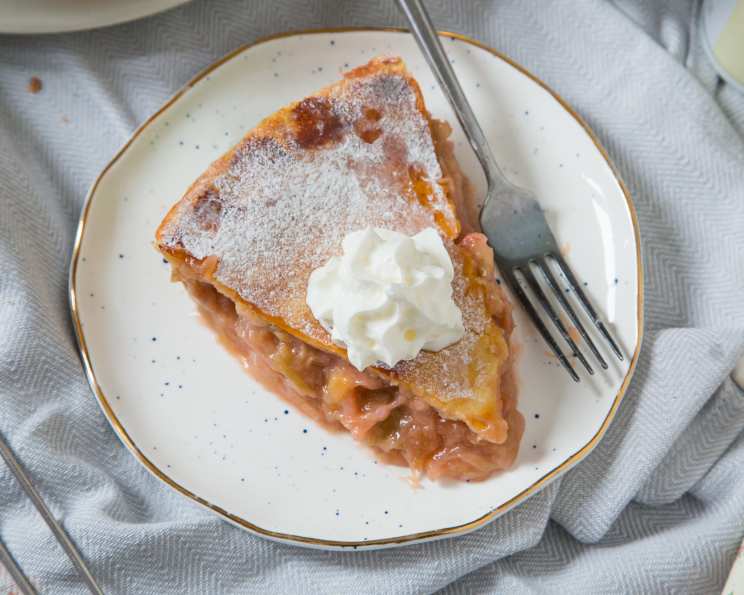
Rhubarb Pineapple Pie: A Tangy-Sweet Revelation!
There are certain flavors that instantly transport me back to my grandmother’s kitchen – the comforting aroma of baking, the gentle hum of her ancient oven, and the anticipation of a treat made with love. For me, rhubarb has always held that nostalgic power. It’s a fruit that’s both tart and tender, a springtime herald that begs to be transformed into something truly special. I remember one particular summer afternoon, when Grandma pulled out a worn, spattered cookbook, its pages filled with handwritten notes and stained with countless culinary adventures. She declared we were making something “different and delicious,” and what emerged was this Rhubarb Pineapple Pie. The unexpected marriage of sharp rhubarb and tropical pineapple was a revelation, a symphony of sweet and tart that has been a treasured favorite in my culinary repertoire ever since.
Recipe Overview
- Prep Time: 20 minutes
- Cook Time: 50-60 minutes
- Total Time: 1 hour 10 minutes – 1 hour 20 minutes
- Servings: 8
- Yield: 1 standard 9-inch pie
- Dietary Type: Vegetarian
Ingredients
This delightful pie relies on a beautiful balance of tart rhubarb and sweet pineapple, brought together by a simple flour-sugar binder.
-
For the Filling:
- 1 1⁄4 cups granulated sugar
- 1⁄4 cup all-purpose flour
- 3 1⁄4 cups thinly sliced rhubarb (about 1/2-inch pieces)
- 14 ounces crushed pineapple, drained (ensure it’s well-drained to avoid a watery filling)
-
For the Crust:
- Pastry for double-crust pie (homemade or store-bought)
- 1⁄2 teaspoon granulated sugar (for sprinkling on top)
Ingredient Notes:
- For the rhubarb, aim for stalks that are firm and vibrant. Avoid any that are mushy or wilted.
- When crushing the pineapple, make sure to drain off as much liquid as possible. You can press it gently with the back of a spoon against a sieve to remove excess moisture.
Equipment Needed
To create this magnificent pie, you’ll want to have these essential tools on hand:
- A large mixing bowl for combining the filling ingredients.
- A pie dish (9-inch standard size).
- A rolling pin if you’re making your own pastry.
- A pastry brush or your fingers for moistening the pie crust rim.
- A sharp knife for slicing rhubarb and cutting vents in the top crust.
- An oven.
- A cooling rack for allowing the pie to set properly after baking.
Instructions
Crafting this pie is a straightforward process, designed to bring out the best of its unique flavor combination.
- Begin by preparing your pastry. If you are using a homemade double-crust recipe, prepare it according to your preferred method. Roll out one half of the pastry and carefully fit it into your 9-inch pie dish, pressing it gently against the bottom and up the sides. Do not crimp the edges yet, as you will do this after adding the filling and the top crust.
- In a large mixing bowl, combine the 1 1⁄4 cups of granulated sugar and the 1⁄4 cup of all-purpose flour. Stir these dry ingredients together until they are well incorporated. This mixture will act as the thickening agent for our fruit filling.
- Add the 3 1⁄4 cups of thinly sliced rhubarb and the 14 ounces of drained crushed pineapple to the bowl with the sugar and flour. Gently stir all the ingredients together, ensuring that the rhubarb and pineapple are evenly coated with the sugar and flour mixture.
- Pour this delicious fruit mixture evenly into the unbaked pie shell that you prepared in step 1.
- Moisten the rim of the bottom pastry with a little water using a pastry brush or your fingertips. This will help the top crust adhere securely.
- Carefully place the second half of your pastry for the double-crust pie over the fruit filling. Trim any excess dough from the edges, leaving enough to crimp with the bottom crust.
- Crimp the edges of the top and bottom crusts together to seal the pie. This not only creates a beautiful finish but also ensures the filling stays contained during baking.
- Using a sharp knife, cut slits in the top crust. These vents are crucial for allowing steam to escape during baking, preventing the crust from becoming soggy or bursting. You can create a decorative pattern if you wish.
- For a lovely golden-brown finish and a touch of sweetness, sprinkle the remaining 1⁄2 teaspoon of granulated sugar evenly over the top crust.
- Bake the pie in a preheated oven at 350°F (175°C). It is best to place the pie on the bottom rack of your oven. This ensures that the bottom crust cooks thoroughly and achieves a beautiful crispness.
- Continue to bake for 50 to 60 minutes, or until the crust is golden brown and the rhubarb is tender when pierced with a knife or skewer. You should also see the filling bubbling gently through the vents.
- Once baked to perfection, carefully remove the pie from the oven and place it on a cooling rack. Allow the pie to cool completely before slicing and serving. This is essential for the filling to set properly.
Expert Tips & Tricks
As a chef, I’ve learned a few secrets that can elevate any pie, and this Rhubarb Pineapple Pie is no exception.
- Draining the Pineapple is Key: I can’t stress this enough – thoroughly draining your crushed pineapple is paramount. Excess moisture is the enemy of a well-set pie crust. If you want to be extra sure, you can even gently press the pineapple in a sieve with a spoon to extract as much liquid as possible.
- Rhubarb Prep: For more uniform cooking, try to slice your rhubarb into pieces of roughly the same thickness, around 1/2 inch. This ensures that all the rhubarb pieces will be tender at the same time.
- The “Bottom Rack” Advantage: Baking on the bottom rack is a baker’s best friend for fruit pies. The direct heat from the bottom element ensures that the lower crust gets thoroughly cooked and crisped, preventing that dreaded soggy bottom.
- Cooling is Crucial: Resist the temptation to slice into your pie the moment it comes out of the oven! Allowing it to cool for at least 2-3 hours on a wire rack is non-negotiable. This resting period lets the filling thicken and set, resulting in clean, beautiful slices. If you cut it too soon, you’ll have a delicious, albeit messy, pie.
- Preventing a Burnt Crust: If you notice the edges of your pie crust browning too quickly before the center is done, you can loosely tent the edges with aluminum foil. This will protect them from over-browning while allowing the rest of the pie to bake.
Serving & Storage Suggestions
This Rhubarb Pineapple Pie is a versatile dessert that shines on its own or with a few complementary additions.
- Serving: Serve this pie slightly warm or at room temperature. It’s absolutely divine on its own, showcasing the unique interplay of flavors. For an extra touch of indulgence, a dollop of sweetened whipped cream, a scoop of vanilla bean ice cream, or a drizzle of crème anglaise are classic partners. The cool creaminess of these accompaniments beautifully contrasts with the tartness of the fruit.
- Storage: Store any leftover pie loosely covered at room temperature for up to two days. If the weather is particularly warm, or if you have more than two days’ worth of leftovers, it’s best to refrigerate it. Properly stored, it will keep in the refrigerator for up to four days.
- Reheating: To enjoy a slice warm again, you can gently reheat individual portions in a low oven (around 300°F/150°C) for about 10-15 minutes, or until warmed through.
Nutritional Information
Here’s an estimated nutritional breakdown per serving, keeping in mind that exact values can vary based on specific ingredients and portion sizes.
| Nutrient | Amount per Serving | % Daily Value |
|---|---|---|
| Calories | 450 kcal | 23% |
| Total Fat | 20g | 26% |
| Saturated Fat | 8g | 40% |
| Cholesterol | 0mg | 0% |
| Sodium | 200mg | 9% |
| Total Carbohydrate | 70g | 25% |
| Dietary Fiber | 3g | 11% |
| Total Sugars | 45g | 90% |
| Protein | 3g | 6% |
Note: Values are approximate and can vary based on the specific ingredients used, such as the fat content of the pie crust.
Variations & Substitutions
While this Rhubarb Pineapple Pie is truly special as is, feel free to play with it!
- Gluten-Free Crust: For a gluten-free version, simply use your favorite gluten-free pastry dough. Many commercial options are available, or you can find reliable recipes online for homemade gluten-free pie crusts.
- Spice It Up: A pinch of ground ginger or a whisper of cinnamon added to the dry ingredients can complement the fruit beautifully. Start with 1/4 teaspoon and adjust to your preference.
- Citrus Zest: A teaspoon of lemon zest or orange zest added to the filling can brighten the flavors even further, offering another layer of complexity.
- Sweetener Adjustments: Depending on the tartness of your rhubarb and your personal preference, you can slightly adjust the amount of sugar. However, remember that the sugar also plays a role in thickening the filling, so don’t reduce it too drastically.
FAQs
Q: Why is my pie crust soggy on the bottom?
A: A soggy bottom is often caused by excess moisture from the filling or not baking the pie at a high enough temperature or on the correct rack. Ensuring your fruit is well-drained and baking on the bottom rack at 350°F (175°C) are key steps to a crisp bottom crust.
Q: Can I use fresh pineapple instead of canned?
A: Yes, you can use fresh pineapple, but it’s crucial to drain it very well, just as you would with canned pineapple. You might need to chop it to a size similar to the rhubarb pieces.
Q: My rhubarb is very tart. Should I add more sugar?
A: You can adjust the sugar slightly to your taste, but remember that the sugar also helps to thicken the filling. If you significantly reduce the sugar, you might need to slightly increase the flour to compensate for the change in consistency.
Q: How can I tell if the rhubarb is cooked through?
A: The rhubarb should be tender and yield easily to a fork or a skewer inserted into one of the slits in the crust. The filling should also appear to be bubbling gently.
Q: Can I make the pie ahead of time?
A: Yes, this pie can be baked a day in advance. Allow it to cool completely and then store it at room temperature or in the refrigerator. It tastes wonderful at room temperature or gently reheated.
Final Thoughts
This Rhubarb Pineapple Pie is a testament to the magic that happens when unexpected ingredients come together. It’s a delightful departure from the usual apple or berry pies, offering a unique and vibrant flavor profile that is both refreshing and satisfying. Whether you’re a seasoned baker or just starting your culinary journey, I wholeheartedly encourage you to give this recipe a try. It’s a wonderful conversation starter, a guaranteed crowd-pleaser, and a beautiful way to celebrate the bounty of spring and summer. Don’t hesitate to experiment with the serving suggestions – a scoop of your favorite ice cream or a cloud of whipped cream truly makes this pie sing. I’d love to hear about your experience with this tangy-sweet revelation!