
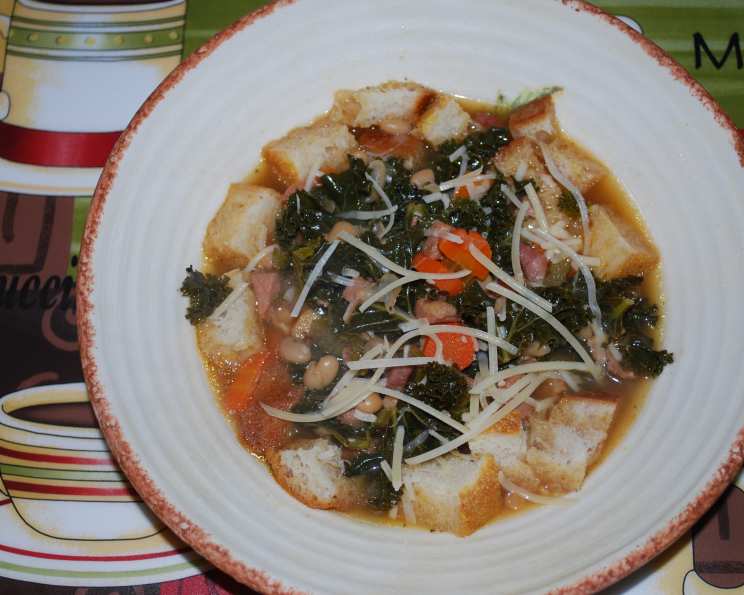
Ribollita: A Tuscan Embrace in a Bowl
There’s a profound comfort that comes from a dish designed not just to nourish, but to honor. Ribollita, a hearty Tuscan soup, is precisely that. For me, it’s more than just a recipe; it’s a culinary philosophy. I remember a particularly chilly autumn afternoon, staring into my refrigerator with a sense of mild panic. Leftover crusty bread, a lone bunch of kale wilting slightly, a half-used container of pancetta – the usual suspects. It was then that the wisdom of “ribollita,” meaning “reboiled,” truly resonated. It’s the ultimate testament to Italian resourcefulness, turning humble scraps and wilting greens into a soul-warming stew that tastes even better the next day. This version, inspired by Giada De Laurentiis, is a beautiful distillation of that principle, allowing the ingredients to meld and deepen their flavors into something truly spectacular.
Recipe Overview
- Prep Time: 15 minutes
- Cook Time: 30 minutes
- Total Time: 45 minutes
- Servings: 6-8
- Yield: 1 large pot of soup
- Dietary Type: Hearty, Traditional Italian
Ingredients
Gathering these ingredients is like collecting treasures for a flavorful adventure. The beauty of Ribollita lies in its flexibility, but here are the specific components that form the backbone of this delightful Tuscan stew:
- 1/4 cup extra virgin olive oil, plus a little extra for drizzling on the bread
- 1 onion, finely chopped
- 1 carrot, chopped
- 4 ounces pancetta, chopped
- 2 cloves garlic, 1 minced and 1 left whole
- 1 teaspoon salt
- 1 teaspoon fresh ground black pepper
- 1 tablespoon tomato paste
- 1 (15-ounce) can diced tomatoes
- 1 lb frozen spinach, thawed and squeezed dry
- 1 (15-ounce) can cannellini beans, drained
- 1 tablespoon herbes de Provence
- 3 cups chicken stock (or vegetable bouillon for a vegetarian option)
- 1 bay leaf
- 1 piece Parmesan cheese rind, about 3 inches long
- 4-6 ciabatta rolls, halved lengthwise (or any good quality, day-old bread)
- Grated Parmesan cheese, for serving
Equipment Needed
While Ribollita is a dish of humble origins, a few key tools will ensure its success:
- A heavy, large pot or Dutch oven for simmering the soup.
- A wooden spoon for stirring and scraping.
- A baking sheet for toasting the bread.
- A garlic press or sharp knife for mincing.
- Serving bowls to present this magnificent soup.
Instructions
The magic of Ribollita unfolds as we layer flavors and allow them to meld. Follow these steps to achieve that authentic Tuscan depth:
- Begin by heating the 1/4 cup of extra virgin olive oil in your heavy large pot over medium heat.
- Add the chopped onion, chopped carrot, chopped pancetta, and the minced garlic. Season with the salt and fresh ground black pepper.
- Cook this aromatic base, stirring occasionally, until the onion is beautifully golden brown and the pancetta is delightfully crisp. This should take approximately 7 minutes.
- Introduce the tomato paste to the pot. Stir it in and cook for about 1 minute until it darkens slightly, ensuring it’s fully dissolved.
- Pour in the diced tomatoes. As you stir, use your wooden spoon to scrape the bottom of the pan. This crucial step releases all the flavorful browned bits, adding an extra layer of depth to the soup.
- Next, add the squeezed dry spinach, the drained cannellini beans, the herbes de Provence, the chicken stock (or vegetable bouillon), the bay leaf, and the Parmesan cheese rind.
- Bring the entire mixture to a boil. Once boiling, reduce the heat to low, cover the pot, and simmer gently for 30 minutes. This allows the flavors to meld and deepen beautifully.
- While the soup is simmering, it’s time to prepare the essential bread component. Preheat your oven to 350 degrees F (175 degrees C).
- Arrange the ciabatta roll halves (or your chosen bread) on a baking sheet. Drizzle them generously with a little extra virgin olive oil.
- Toast the bread in the preheated oven until it’s golden brown. This will take about 5 minutes. Keep a close eye on them to prevent burning.
- Once the toasts are golden, remove them from the oven. Take the whole garlic clove and rub the cut side vigorously over the toasted surface of each bread half. This imparts a subtle yet delicious garlic essence.
- To serve, place the prepared toasts into the bottom of your serving bowls.
- Ladle the rich, simmering Ribollita generously over the toasts.
- Sprinkle liberally with grated Parmesan cheese and serve immediately.
Expert Tips & Tricks
To elevate your Ribollita from merely good to absolutely sublime, consider these seasoned chef insights:
- The Bread is Key: Don’t skimp on the bread quality. A sturdy, day-old ciabatta or a rustic country loaf is ideal. The goal is for it to absorb the soup without becoming completely mushy. If you don’t have ciabatta, any slightly stale, dense bread will work wonders.
- Don’t Rush the Sauté: That initial sauté of the onions, carrots, and pancetta is where a significant portion of the soup’s foundational flavor is built. Let those vegetables soften and caramelize properly, and crisp up that pancetta for maximum deliciousness.
- The Parmesan Rind is Gold: Never discard a Parmesan rind! It infuses the soup with an incredible umami depth. Make sure it’s clean before adding it to the pot.
- “Reboiling” for Flavor: The “rebollita” (reboiled) aspect is crucial. The soup truly benefits from being made a day in advance and gently reheated. The flavors meld and intensify overnight, creating an even more complex and satisfying dish.
- Adjusting Thickness: If your Ribollita is thicker than you prefer, you can add a little more chicken stock or even some hot water to reach your desired consistency. Conversely, if it’s too thin, you can simmer it uncovered for a few extra minutes to reduce it slightly.
Serving & Storage Suggestions
Ribollita is a comforting soup that shines when served with generosity.
- Serving: The traditional and most delightful way to serve Ribollita is to place the toasted, garlic-rubbed bread in the bottom of deep bowls. Ladle the steaming hot soup generously over the bread, allowing it to soak up the rich broth. A final flourish of freshly grated Parmesan cheese and a drizzle of good extra virgin olive oil completes the presentation.
- Storage: Ribollita is a fantastic make-ahead dish. Once cooled completely, it can be stored in an airtight container in the refrigerator for up to 3-4 days. The flavors will continue to develop, making it even more delicious the next day.
- Reheating: To reheat, gently warm the soup on the stovetop over low heat, stirring occasionally, until heated through. You may need to add a splash more stock or water if it has thickened too much. For individual portions, it can also be reheated in the microwave.
Nutritional Information
| Nutrient | Amount per Serving | % Daily Value |
|---|---|---|
| Calories | 279.6 kcal | |
| Calories from Fat | 102 g | |
| Total Fat | 11.4 g | 17% |
| Saturated Fat | 1.9 g | 9% |
| Cholesterol | 3.6 mg | 1% |
| Sodium | 802.4 mg | 33% |
| Total Carbohydrate | 33.7 g | 11% |
| Dietary Fiber | 8.6 g | 34% |
| Sugars | 7 g | 28% |
| Protein | 13.9 g | 27% |
Note: Nutritional information is an estimate and can vary based on specific ingredients and brands used.
Variations & Substitutions
While this recipe is a classic, the spirit of Ribollita encourages adaptation:
- Vegetarian/Vegan: For a truly vegetarian or vegan Ribollita, simply omit the pancetta and use vegetable stock instead of chicken stock. You can add a little extra olive oil at the beginning to sauté the vegetables, and perhaps some smoked paprika for a hint of savory depth.
- Greens: If you don’t have spinach, kale, Swiss chard, or even a mix of hearty greens can be used. Just be sure to chop them finely and add them towards the end of the simmering time, as they may require a bit longer to soften.
- Beans: While cannellini beans are traditional, other white beans like Great Northern or even chickpeas can be used.
- Herbs: If you don’t have Herbes de Provence, a combination of dried thyme, rosemary, and oregano can be substituted. Fresh herbs are also a lovely addition, added in the last 10 minutes of simmering.
FAQs (Frequently Asked Questions)
Q: What is the meaning of “Ribollita”?
A: “Ribollita” translates from Italian to “reboiled,” highlighting the soup’s tradition of being made with leftovers and often reheated, making it even more flavorful.
Q: Can I use fresh spinach instead of frozen?
A: Absolutely! If using fresh spinach, you’ll need about 1 pound of fresh leaves. Wilt them in the pot with the other ingredients and cook until tender before proceeding.
Q: How long can I store Ribollita?
A: Ribollita keeps wonderfully in the refrigerator for 3-4 days and often tastes even better on the second or third day as the flavors meld.
Q: My soup seems too thick, what can I do?
A: You can easily adjust the thickness by stirring in more chicken stock or hot water until you reach your desired consistency.
Q: Is it important to use a Parmesan rind?
A: While optional, a Parmesan rind adds a significant depth of savory flavor (umami) to the soup, so it’s highly recommended if you have one available.
Final Thoughts
Ribollita is more than just a soup; it’s a testament to the enduring power of simple, honest ingredients and the beauty of making do. It’s a dish that whispers tales of Tuscan kitchens, of resourcefulness, and of the profound joy found in sharing a warm, comforting meal. This recipe, with its careful balance of humble ingredients and thoughtful preparation, is an invitation to experience that warmth firsthand. So, gather your ingredients, embrace the process, and let the aroma of this hearty soup fill your home. I encourage you to make it, savor it, and perhaps even share it with those you hold dear. A crusty bread and a robust red wine would be a perfect accompaniment to this truly soul-satisfying bowl.