
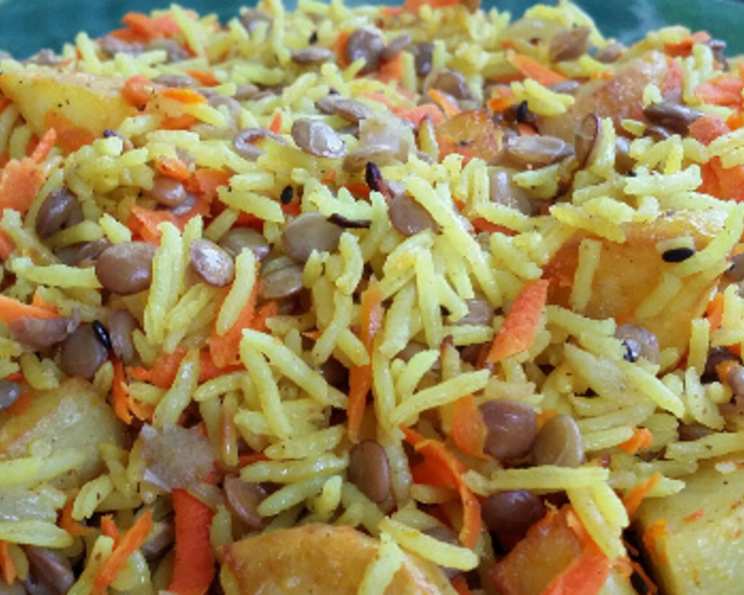
A Fragrant Embrace: Indian-Style Rice and Lentil Pilaf
There are meals that nourish the body, and then there are meals that nourish the soul. This Indian-style Rice and Lentil Pilaf falls squarely into the latter category for me. It’s a dish that evokes the warmth of a bustling Indian kitchen, the gentle hum of conversation, and the comforting aroma of spices slowly unfurling their magic. I first encountered a version of this dish years ago, not in a fancy restaurant, but in the humble home of a dear friend’s grandmother. The way the tender lentils and fluffy rice melded with the subtle warmth of whole spices, all balanced by the earthy sweetness of potatoes and carrots, was a revelation. It’s a symphony of textures and flavors, a testament to how simple ingredients, treated with care, can create something truly extraordinary.
Recipe Overview
- Prep Time: 20 minutes
- Cook Time: 55 minutes
- Total Time: 1 hour 15 minutes
- Servings: 4
- Yield: Approximately 6 cups
- Dietary Type: Vegan, Dairy-Free, Gluten-Free
Ingredients
- 1 medium onion, chopped
- 1⁄4 cup vegetable oil, divided
- 1 1⁄2 inches cinnamon stick
- 6 cardamom pods
- 1 bay leaf
- 1⁄2 teaspoon coriander seed
- 1⁄2 teaspoon cumin seed
- 2 dried red chilies
- 3 whole cloves
- 3⁄4 cup basmati rice
- 1⁄2 teaspoon ground turmeric
- Kosher salt, to taste
- 2⁄3 cup lentils (brown or green work best)
- 1⁄2 lb potato, cut into 1/2 inch cubes (boiling kind, like Yukon gold or Red Bliss)
- 3 medium carrots, grated
- Fresh ground black pepper, to taste
Equipment Needed
- Medium saucepan with a lid
- Paper towel
- Small saucepan with a lid
- Large nonstick skillet
- Colander
Instructions
- Begin by preparing the aromatic base. Heat 2 tablespoons of vegetable oil in a medium saucepan over medium heat. Once the oil shimmers, add the cinnamon stick, cardamom pods, bay leaf, coriander seed, cumin seed, dried red chilies, and whole cloves. Cook for approximately 1 minute, stirring constantly, until the spices become wonderfully fragrant. This toasting process awakens their essential oils and deepens their flavor. Be careful not to burn them.
- Using a slotted spoon, carefully remove the whole spices from the saucepan and set them aside. They have imparted their essence to the oil and will be added back later.
- Turn the heat down to medium-low and add the chopped onion to the same saucepan. Cook for approximately 10 minutes, stirring occasionally, until the onion has softened and turned translucent. Avoid browning. Once softened, remove the pot from the heat and set it aside.
- Now, prepare the rice. Rinse the basmati rice thoroughly in a colander under cold running water until the water runs clear. This removes excess starch, ensuring fluffy, separate grains. Once the rice is rinsed and drained, add it to the saucepan with the softened onions.
- Introduce the reserved whole spices back into the saucepan with the rice and onions. Stir in the ground turmeric and cook over medium heat, stirring for about 1 minute. This brief toasting of the rice and spices helps to enhance their flavors further.
- Add 1 1⁄2 cups of water and 1⁄2 teaspoon of kosher salt to the rice mixture. Bring the entire mixture to a boil over high heat.
- Once boiling, significantly reduce the heat to low. To create a steaming environment, place a paper towel over the top of the saucepan, and then place the lid securely on top of the paper towel. This helps to trap steam. Let the rice simmer for approximately 20 minutes, or until all the liquid has been absorbed.
- Once the liquid is absorbed, remove the pan from the heat and allow it to rest, still covered, for approximately 15 minutes. This steaming period is crucial for allowing the rice to finish cooking and become perfectly tender and fluffy.
- While the rice is steaming, let’s prepare the lentils. In a separate saucepan, combine the lentils, 2 cups of water, and 1⁄2 teaspoon of kosher salt. Bring this mixture to a boil over high heat.
- Once boiling, reduce the heat to low, place a lid on the saucepan, and simmer for approximately 25 minutes, or until the lentils are tender but not mushy.
- Now, it’s time to cook the vegetables. Heat the remaining 2 tablespoons of vegetable oil over medium heat in a large nonstick skillet. Add the potato cubes and cook for approximately 10 to 12 minutes, stirring occasionally, until the potatoes are nicely browned and beginning to soften.
- Lower the heat to low and continue to cook the potatoes for about 5 minutes more. This ensures they are tender throughout.
- Add the grated carrots to the skillet with the potatoes. Cook for an additional 3 minutes, or until both the potatoes and carrots are tender.
- Finally, bring everything together. Fluff the cooked rice gently with a fork. Remove and discard the bay leaf, cardamom pods, cinnamon stick, cloves, and dried red chilies from the rice.
- Drain any excess water from the cooked lentils.
- Stir the drained lentils into the fluffed rice. Then, gently fold in the potato and carrot mixture.
- Season the pilaf with kosher salt and fresh ground black pepper to your taste. Mix everything gently to combine all the flavors and textures.
Expert Tips & Tricks
- Spice Toasting is Key: Don’t skip the step of toasting the whole spices. It’s the foundation of the dish’s incredible aroma and flavor. If you find your spices are toasting too quickly, reduce the heat slightly.
- Rice Rinse Ritual: Rinsing basmati rice is non-negotiable for achieving that perfectly separated, fluffy texture. Imagine it like washing tiny pearls to reveal their true luster.
- Lentil Tenderness: The cooking time for lentils can vary depending on their age and type. Check them for tenderness after 20 minutes. They should be soft enough to mash easily with a fork but still hold their shape.
- Potato Choice Matters: Using a boiling potato variety like Yukon Gold or Red Bliss is important. These potatoes hold their shape well during cooking, preventing them from becoming mushy.
- The Paper Towel Trick: The paper towel under the lid is a simple yet effective way to ensure even steaming and prevent water from dripping onto the rice, which can make it clumpy.
Serving & Storage Suggestions
This Indian-Style Rice and Lentil Pilaf is a versatile dish that can be served as a hearty main course or a substantial side. For an attractive presentation, mound the pilaf in a serving bowl and garnish with a sprinkle of fresh cilantro or a dollop of plain yogurt (if not serving vegan). It pairs beautifully with Indian curries, grilled vegetables, or a simple raita.
Leftovers can be stored in an airtight container in the refrigerator for up to 3 days. To reheat, gently warm it in a saucepan over low heat with a splash of water or vegetable broth to prevent it from drying out, or microwave it until heated through. While freezing is possible, the texture of the rice and vegetables might be slightly altered upon thawing.
Nutritional Information
| Nutrient | Amount per Serving | % Daily Value |
|---|---|---|
| Calories | 377.3 kcal | |
| Total Fat | 15.5 g | 23% |
| Saturated Fat | 2.1 g | 10% |
| Cholesterol | 0 mg | 0% |
| Sodium | 45.6 mg | 1% |
| Total Carbohydrate | 53.7 g | 17% |
| Dietary Fiber | 7.9 g | 31% |
| Sugars | 5.9 g | 23% |
| Protein | 8.2 g | 16% |
Note: Nutritional values are estimates and can vary based on specific ingredients and portion sizes.
Variations & Substitutions
- For a Spicier Kick: Add a pinch of red pepper flakes along with the dried chilies during the initial spice toasting.
- Add Greens: Wilt in a handful of spinach or kale during the last few minutes of cooking the potato and carrot mixture for an extra boost of nutrients.
- Nutty Addition: Stir in a tablespoon or two of toasted slivered almonds or cashews just before serving for a delightful crunch.
- Vegetable Swap: Feel free to experiment with other root vegetables like parsnips or sweet potatoes, ensuring they are cut into similarly sized pieces for even cooking.
FAQs (Frequently Asked Questions)
Q: Can I use a different type of rice?
A: While basmati is ideal for its fragrance and texture, other long-grain rice varieties can be used, though cooking times may vary slightly.
Q: My lentils are still too firm, what should I do?
A: If your lentils are not tender after 25 minutes, continue to simmer them, adding a little more water if needed, until they reach your desired tenderness.
Q: Can I omit the whole spices?
A: You can, but the pilaf will lose a significant layer of its characteristic aroma and flavor. If you must omit them, consider adding a pinch of ground cardamom or cinnamon towards the end of cooking.
Q: Is this dish suitable for meal prepping?
A: Absolutely! This pilaf reheats beautifully, making it an excellent choice for preparing ahead of time.
Q: What if I don’t have a nonstick skillet for the vegetables?
A: A well-seasoned cast-iron skillet or any heavy-bottomed skillet will work. Ensure you use enough oil and stir frequently to prevent sticking.
Final Thoughts
This Indian-Style Rice and Lentil Pilaf is more than just a recipe; it’s an invitation to experience comfort, warmth, and incredible flavor. It’s a dish that speaks of home, of shared meals, and of the enduring power of simple, honest cooking. I encourage you to gather these humble ingredients, embrace the gentle process, and allow the fragrant spices to guide you. Serve it with your favorite Indian accompaniment or simply enjoy its wholesome goodness on its own. I’d love to hear about your experience creating this soulful dish – may it bring as much joy to your table as it does to mine.