
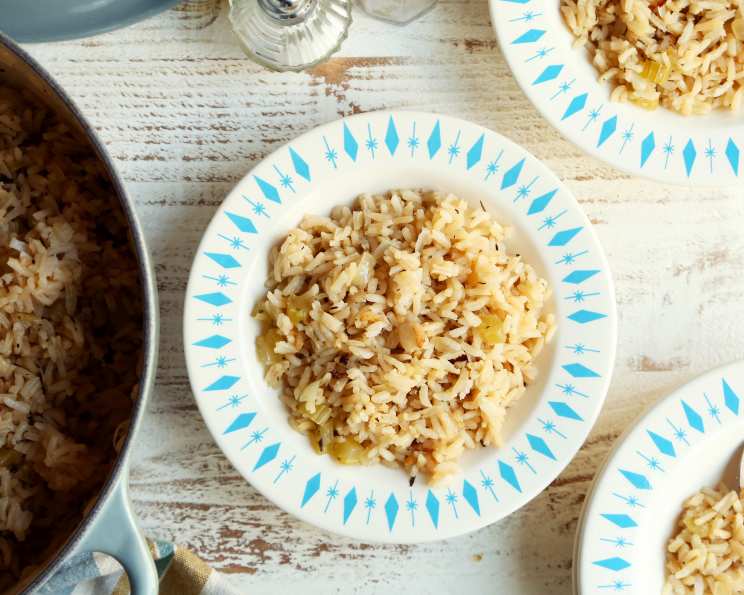
Aromatic Herb Rice Pilaf: A Culinary Hug in a Casserole Dish
There’s a certain comfort that emanates from a bubbling casserole dish, especially one filled with fragrant rice infused with the earthy embrace of fresh herbs. I remember countless family gatherings where my grandmother’s rice pilaf, a dish as humble as it is delightful, would grace the table. The aroma, a symphony of sautéed aromatics and toasted rice, would fill the kitchen, instantly signaling warmth and abundance. It was more than just a side dish; it was a culinary hug, a taste of home that spoke of love and shared meals. This particular pilaf, with its subtle yet essential touch of celery and onion, has always held a special place in my heart, a testament to how simple ingredients, treated with care, can create something truly extraordinary.
Recipe Overview
- Prep Time: 15 minutes
- Cook Time: 50 minutes
- Total Time: 1 hour 5 minutes
- Servings: 8
- Yield: Approximately 6 cups
- Dietary Type: Can be adapted to Vegetarian/Vegan (see Variations)
Ingredients
This recipe relies on a few key players to build its beautiful flavor profile. The long-grain rice provides a fluffy base, while the vegetables and pantry staples weave together a savory tapestry.
- 2 cups long grain rice
- 1 cup chopped celery
- 1/2 cup chopped onion
- 1/4 cup butter (see Variations for dairy-free option)
- 4 cups chicken broth (see Variations for vegetarian/vegan option)
- 1 teaspoon Worcestershire sauce
- 1 teaspoon soy sauce
- 1 teaspoon dried oregano
- 3/4 teaspoon dried thyme
- 1/2 teaspoon dried basil
Equipment Needed
While this pilaf is straightforward, having the right tools makes the process even smoother.
- A large skillet with a lid, or a separate skillet for sautéing and a casserole dish.
- A 2-quart casserole dish (or similar size, oven-safe dish).
- Measuring cups and spoons.
- A spatula or wooden spoon for stirring.
Instructions
The beauty of this rice pilaf lies in its simplicity and the methodical layering of flavors. Follow these steps for a perfectly executed dish every time.
- Begin by preheating your oven to 325°F (160°C). This gentle, consistent heat is crucial for allowing the rice to cook through without burning.
- In your large skillet, melt the butter over medium heat.
- Add the chopped celery and chopped onion to the skillet. Sauté these aromatics for about 5 to 7 minutes, stirring occasionally, until they begin to soften and become translucent. This process coaxes out their natural sweetness.
- Now, add the long grain rice to the skillet with the softened vegetables. Stir continuously for about 3 to 5 minutes, allowing the rice grains to toast. You’ll notice the rice becoming slightly opaque and smelling wonderfully nutty. This toasting step is key to developing a distinct flavor and preventing mushy rice.
- Once the rice is toasted, transfer the entire mixture from the skillet into your greased 2-quart casserole dish. Ensure the rice and vegetables are spread evenly.
- In a separate bowl or directly into the skillet (after removing the rice mixture), combine all the remaining ingredients: the chicken broth, Worcestershire sauce, soy sauce, oregano, thyme, and basil. Whisk or stir well to ensure the seasonings are fully incorporated into the liquid.
- Pour this flavorful liquid evenly over the rice and vegetable mixture in the casserole dish. Gently stir once to ensure the rice is mostly submerged.
- Cover the casserole dish tightly with a lid or aluminum foil. This traps the steam, which is essential for cooking the rice to perfection.
- Bake in the preheated oven at 325°F (160°C) for 50 minutes. Resist the urge to lift the lid during this time, as escaping steam will disrupt the cooking process.
- After 50 minutes, carefully remove the lid. The rice should be tender and all the liquid should be absorbed. You can test for doneness by gently probing a fork into the center. If there’s still too much liquid or the rice isn’t tender enough, cover and bake for an additional 5-10 minutes, checking periodically.
- Once the rice is perfectly cooked and tender, remove the casserole dish from the oven. Let it stand, covered, for about 5-10 minutes before fluffing. This resting period allows the grains to firm up and prevents them from becoming clumpy.
- Fluff the rice gently with a fork to separate the grains and distribute the herbs evenly.
Expert Tips & Tricks
As a seasoned chef, I’ve learned a few tricks to elevate even the most straightforward dishes. For this pilaf, consider these insights:
- The Importance of Toasting: Don’t skip the step of toasting the rice. It’s the secret to a non-mushy, flavorful pilaf. The nutty aroma that develops is unparalleled.
- Broth Quality Matters: Using a good quality chicken broth will significantly impact the final taste. If you have homemade chicken stock, even better!
- Fresh Herbs vs. Dried: While this recipe calls for dried herbs, feel free to experiment with fresh. If using fresh herbs, you’ll want to use about three times the amount of dried. Add them towards the end of the sautéing process for the vegetables or stir them in just before serving.
- Even Sautéing: Ensure your vegetables are chopped to a similar size for even cooking. This prevents some pieces from being mushy while others remain firm.
- Grease Wisely: A light greasing of the casserole dish ensures that none of that delicious pilaf sticks to the bottom. A spray of cooking oil or a thin smear of butter works perfectly.
Serving & Storage Suggestions
This aromatic herb rice pilaf is incredibly versatile and serves as an ideal accompaniment to a wide array of main courses. It’s particularly wonderful alongside roasted chicken, grilled fish, or even a hearty lentil stew. For an elegant presentation, fluff the pilaf gently with a fork and serve it in a warm serving bowl.
Leftovers can be stored in an airtight container in the refrigerator for up to 3 to 4 days. To reheat, gently warm the pilaf in a covered dish in the oven at 300°F (150°C) or on the stovetop over low heat with a tablespoon or two of water or broth to reintroduce moisture. Avoid microwaving if possible, as it can sometimes make rice a bit gummy.
Nutritional Information
This is an approximate nutritional breakdown per serving, assuming 8 servings. Individual results may vary based on specific ingredients used.
| Nutrient | Amount per Serving | % Daily Value |
|---|---|---|
| Calories | 246.4 kcal | |
| Calories from Fat | 61 kcal | |
| Total Fat | 6.8 g | 10% |
| Saturated Fat | 3.9 g | 19% |
| Cholesterol | 15.2 mg | 5% |
| Sodium | 485.6 mg | 20% |
| Total Carbohydrate | 39 g | 12% |
| Dietary Fiber | 1 g | 4% |
| Sugars | 1.1 g | 4% |
| Protein | 6.1 g | 12% |
Variations & Substitutions
The beauty of a well-loved recipe is its adaptability. Here are a few ways you can tailor this pilaf to your preferences:
- Vegetarian/Vegan: For a vegetarian or vegan version, simply swap the chicken broth for a good quality vegetable broth. If you’re aiming for a fully vegan dish, use vegan butter or a neutral-flavored oil like olive oil or canola oil instead of butter. The Worcestershire sauce also typically contains anchovies; look for a vegan Worcestershire sauce for a completely plant-based option.
- Add More Herbs: Don’t be shy with herbs! Feel free to add other dried or fresh herbs like parsley, dill, or even a pinch of rosemary for a more robust flavor.
- Spice it Up: A pinch of red pepper flakes added with the vegetables can provide a subtle warmth.
- Nutty Crunch: Toasted almonds, pecans, or pine nuts can be stirred in just before serving for added texture and flavor.
- Broth Boost: For an extra depth of flavor, consider using a combination of broth and a splash of white wine.
FAQs (Frequently Asked Questions)
Q: Why is my rice pilaf mushy?
A: Mushy rice is often a result of overcooking, not toasting the rice sufficiently, or using too much liquid. Ensure you’re measuring your rice and liquid accurately and allowing the rice to toast properly.
Q: Can I use a different type of rice?
A: While long-grain rice is recommended for its texture and fluffiness, you could experiment with other rice varieties. However, cooking times and liquid ratios may need to be adjusted, so it’s best to follow package directions for your chosen rice.
Q: How can I make this pilaf ahead of time?
A: You can prepare the pilaf up to the point of baking. Let it cool completely, then cover and refrigerate. When ready to bake, allow it to come to room temperature slightly before placing it in the oven, potentially adding a few extra minutes to the baking time.
Q: What main dishes pair well with herb rice pilaf?
A: This pilaf is a fantastic complement to a wide range of proteins, including roasted chicken, grilled lamb chops, pan-seared salmon, or even a simple vegetable stir-fry.
Q: My pilaf seems a little dry. What can I do?
A: If your pilaf is a bit dry after cooking, gently stir in a tablespoon or two of extra broth or melted butter before serving. You can also cover it and let it steam for an additional 5 minutes.
Final Thoughts
This Aromatic Herb Rice Pilaf is more than just a recipe; it’s an invitation to create moments of warmth and connection around the dinner table. It’s a dish that proves that simple ingredients, treated with respect and a touch of culinary love, can yield profound satisfaction. I encourage you to try this recipe, to let its comforting aromas fill your kitchen, and to savor every fragrant, tender grain. Share it with loved ones, perhaps paired with a crisp white wine or a robust red, and watch as it becomes a cherished staple in your own culinary repertoire. Happy cooking!