
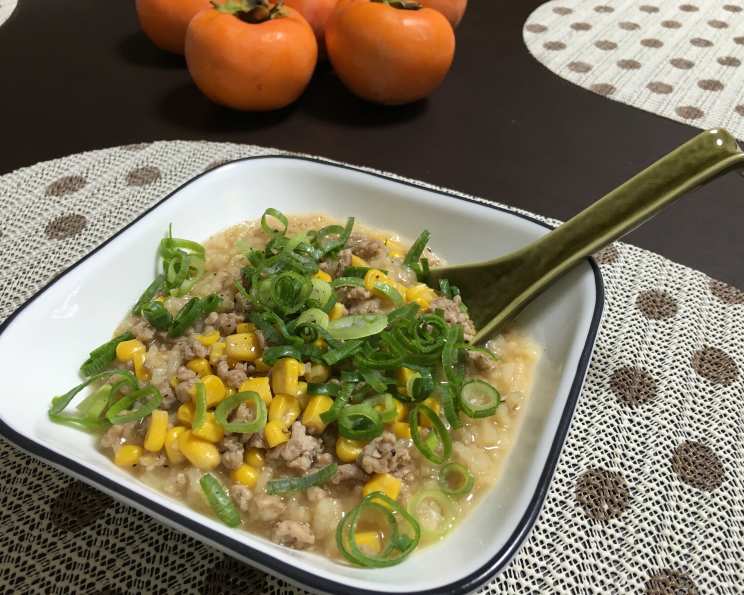
The Comforting Embrace of Rice Cooker Pork & Corn Congee
There’s a certain magic that happens when humble ingredients transform into something deeply nourishing and soul-satisfying. For me, that magic is embodied in a steaming bowl of congee. I remember, on particularly chilly evenings growing up, my grandmother would pull out her trusty rice cooker and the scent of simmering rice would fill our small apartment. It wasn’t just food; it was a warm hug, a gentle reminder to slow down and savor the simple pleasures. This particular rendition, with its savory pork and sweet bursts of corn, evokes those cherished memories, bringing a taste of home and comfort right to your kitchen, effortlessly prepared.
Recipe Overview
- Prep Time: 15 minutes
- Cook Time: 45-60 minutes
- Total Time: 1 hour – 1 hour 15 minutes
- Servings: 4
- Yield: 1 large bowl (per serving)
- Dietary Type: Adaptable (can be made dairy-free and gluten-free depending on soy sauce used)
Ingredients
This recipe celebrates simplicity, allowing the core flavors to shine.
- 4 cups water (or chicken broth, beef broth, or vegetable broth for a richer flavor)
- 1/2 cup short-grain rice, uncooked
- 1 teaspoon minced garlic
- 1 teaspoon minced gingerroot
- 1 tablespoon soy sauce
- 1 tablespoon oyster sauce
- 1 dash black pepper
- 100 g ground pork (approximately 1/4 lb)
- 100 g sweet corn (approximately 3.5 oz)
- 2 tablespoons scallions, thinly sliced for garnish
Equipment Needed
The beauty of this recipe lies in its minimal equipment requirements, primarily centered around a convenient kitchen appliance.
- Rice Cooker (3.5 cup or larger recommended for comfortable cooking)
- Frying Pan (if browning pork separately)
- Measuring Cups and Spoons
- Knife and Cutting Board (for scallions)
- Serving Bowls
Instructions
Harnessing the power of your rice cooker, this dish becomes remarkably hands-off, allowing you to attend to other tasks while it simmers to perfection.
- Begin by gathering all your ingredients. If your rice cooker has a dedicated porridge, congee, jook, or okayu function, familiarize yourself with its operation. If not, the standard “cook” setting will work beautifully.
- In the inner pot of your rice cooker, combine the water (or your chosen broth), short-grain rice, minced garlic, minced gingerroot, soy sauce, oyster sauce, and black pepper.
- Give the mixture a good stir to ensure the rice and aromatics are well distributed.
- Secure the lid on your rice cooker and select the appropriate setting (e.g., porridge or cook). Initiate the cooking process.
- Throughout the cooking cycle, which will typically take about 45 to 60 minutes, it’s beneficial to stir the congee occasionally. This helps to prevent the rice from sticking to the bottom of the pot and ensures a more even, creamy consistency. You’ll notice the rice grains begin to break down and the liquid will thicken into a comforting porridge.
- While the congee is simmering, prepare the optional pork and corn. In a separate frying pan over medium heat, brown the ground pork, crumbling it as it cooks until it is fully done.
- Once the pork is browned, add the sweet corn to the pan. Cook for a few minutes until the corn is heated through.
- When the rice cooker indicates that the congee is ready, carefully open the lid (watch out for steam!). The rice should be tender and the mixture should have a thick, porridge-like consistency. If you prefer a thinner congee, you can stir in a little more hot water or broth. If you desire a thicker congee, continue to cook for an additional 5-10 minutes, stirring frequently.
- Gently mix the cooked ground pork and sweet corn into the prepared congee. Stir until everything is well combined and heated through.
- Serve the congee immediately in warm bowls.
- Garnish generously with the thinly sliced scallions just before serving.
Expert Tips & Tricks
Elevate your congee game with these professional insights.
- Rice Choice Matters: While short-grain rice is ideal for its starchy quality that contributes to creaminess, other types of rice can be used. If using long-grain rice, you may need to adjust the water-to-rice ratio slightly and cook for a bit longer to achieve a similar texture.
- Broth is Your Best Friend: Don’t underestimate the power of using broth instead of water. It imparts a depth of flavor that water alone cannot provide. Chicken broth is a classic choice, but beef or vegetable broth can offer unique nuances.
- The Power of the Rinse: For an even smoother congee, consider rinsing your rice thoroughly under cold water until the water runs clear before adding it to the rice cooker. This removes excess starch, which can sometimes make congee gummy.
- Don’t Fear the Stir: While the rice cooker does most of the work, occasional stirring is key. It not only prevents sticking but also encourages the rice to break down more effectively, contributing to that velvety texture.
- Pre-Cooked Pork: If you’re short on time, you can use pre-cooked crumbled pork or even leftover shredded chicken or beef to add protein to your congee.
- Spice it Up: For a touch of heat, a pinch of red pepper flakes or a dash of chili oil can be added during the cooking process or as a finishing touch.
Serving & Storage Suggestions
Congee is a wonderfully versatile dish, perfect for any meal and a champion for leftovers.
Serve your congee piping hot, ensuring the pork and corn are evenly distributed. The fresh, bright green of the scallions provides a beautiful contrast to the creamy, pale congee and adds a delightful burst of freshness. Consider pairing it with a side of pickled vegetables or a drizzle of sesame oil for an extra layer of flavor complexity.
Leftover congee can be stored in an airtight container in the refrigerator for up to 3 days. When reheating, you may need to add a splash of water or broth as the congee will thicken considerably upon chilling. Gently reheat on the stovetop over low heat, stirring frequently, or in the microwave, again stirring halfway through to ensure even heating. Freezing congee is also an option, but the texture may change slightly upon thawing.
Nutritional Information
Here’s an approximate nutritional breakdown for a serving of this delicious congee:
| Nutrient | Amount per Serving | % Daily Value |
|---|---|---|
| Calories | 186 kcal | |
| Calories from Fat | 51 kcal | |
| Total Fat | 5.8 g | 8% |
| Saturated Fat | 2.1 g | 10% |
| Cholesterol | 18 mg | 6% |
| Sodium | 400.3 mg | 16% |
| Total Carbohydrate | 26.3 g | 8% |
| Dietary Fiber | 1.7 g | 6% |
| Sugars | 1 g | 3% |
| Protein | 7.4 g | 14% |
Note: Nutritional values are estimates and can vary based on specific ingredients and preparation methods.
Variations & Substitutions
The beauty of congee lies in its adaptability. Feel free to explore these ideas to make it your own.
- Vegetarian/Vegan: Omit the ground pork. For added flavor and texture, you can sauté shiitake mushrooms, firm tofu, or a medley of your favorite vegetables (carrots, peas, broccoli florets) and add them in step 9. Use vegetable broth and ensure your soy sauce is gluten-free if needed.
- Protein Power: Instead of ground pork, consider using shredded chicken, turkey, or even small pieces of beef. The cooking time for these proteins might vary, so you may want to cook them separately and add them towards the end, or cook them in the rice cooker with the congee if they are small enough.
- Seafood Delight: For a taste of the sea, add cooked shrimp or diced fish (like cod or tilapia) in the last 10-15 minutes of cooking.
- Aromatic Boost: Experiment with adding a star anise pod or a small piece of dried tangerine peel during the cooking process for a subtle, fragrant complexity.
- Texture Play: Incorporate other ingredients like diced radish, mushrooms, or even quinoa for added texture and nutrients.
FAQs (Frequently Asked Questions)
Q: Can I use regular long-grain rice instead of short-grain rice?
A: Yes, you can, but short-grain rice is preferred for its starchier quality, which helps create a creamier congee. If you use long-grain rice, you may need to increase the water ratio slightly and cook for a longer duration.
Q: My congee is too thick. How can I thin it out?
A: If your congee is too thick, simply stir in a little more hot water or broth until you reach your desired consistency.
Q: My congee is too thin. How can I thicken it?
A: To thicken congee, continue to cook it uncovered over low heat, stirring frequently, until the excess liquid evaporates. Alternatively, you can cook a small amount of extra rice separately and stir it into the existing congee.
Q: Can I add other vegetables to this congee?
A: Absolutely! This is a fantastic base for adding a variety of vegetables such as chopped carrots, peas, finely diced celery, or leafy greens like spinach or bok choy. Add them during the last 10-15 minutes of cooking.
Q: Is it safe to leave the rice cooker on “cook” unattended for the entire time?
A: Modern rice cookers are designed to be safe for unattended cooking on their designated settings. However, it’s always a good practice to check on your congee periodically, especially for the first time using a new recipe or if you have an older model.
Final Thoughts
This rice cooker congee with pork and corn is more than just a meal; it’s an experience. It’s a testament to how simple ingredients, prepared with a little intention and the convenience of modern appliances, can yield profoundly comforting and delicious results. I encourage you to try this recipe, to embrace its ease, and to savor the warmth it brings to your table. Don’t hesitate to make it your own by experimenting with the suggested variations. And when you do, I’d love to hear about your creations – what flavors you added, how you served it, and the memories it helped you create. Happy cooking!