
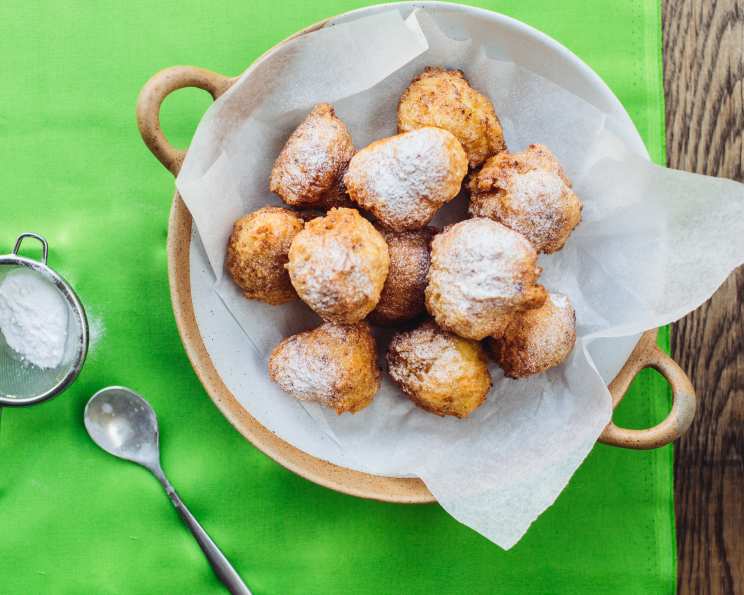
Ricotta Balls: A Taste of Italian Sunshine, Anytime
There’s a special kind of magic in food that transports you. For me, it’s the aroma of something sweet and golden frying, a scent that instantly conjures memories of bustling Italian piazzas and my nonna’s tiny kitchen, filled with laughter and the hum of conversation. These ricotta balls, often a cherished treat during holidays, are more than just doughnuts; they are little parcels of pure joy, kissed by the fryer and dusted with a snowdrift of powdered sugar. They’re a testament to how simple ingredients can create something utterly delightful, a taste of Italy that’s surprisingly accessible for any home cook.
Recipe Overview
- Prep Time: 15 minutes
- Cook Time: 30 minutes
- Total Time: 45 minutes
- Servings: 24
- Yield: Approximately 24 balls
- Dietary Type: Vegetarian
Ingredients
You’ll need just a handful of common ingredients to bring these delightful ricotta balls to life:
- 1 large egg, lightly beaten
- 1 tablespoon sugar
- 1 cup all-purpose flour
- 3 tablespoons milk
- 2 teaspoons baking powder
- 1 cup ricotta cheese
- Vegetable oil or shortening for deep frying (ensure it’s a neutral-flavored oil for a dessert dish, avoiding strong flavors like olive oil)
Equipment Needed
While these ricotta balls are wonderfully simple, having the right tools will make the process even smoother:
- A large mixing bowl
- A whisk or fork
- A tablespoon or small cookie scoop
- A deep, heavy-bottomed pot or Dutch oven for frying
- A slotted spoon or spider skimmer
- Paper towels for draining
- A plate or wire rack for cooling
- A sieve or small sieve for dusting with powdered sugar
Instructions
Creating these golden delights is a straightforward process, perfect for a weekend baking project or a spontaneous sweet craving.
- In your large mixing bowl, combine the beaten egg and tablespoon of sugar. Whisk them together until they are well incorporated.
- Add the cup of all-purpose flour to the bowl.
- Next, pour in the 3 tablespoons of milk.
- Stir in the 2 teaspoons of baking powder.
- Finally, gently fold in the cup of ricotta cheese. Mix all the ingredients together until a cohesive dough forms. It will be a relatively soft dough, but it should hold its shape.
- Prepare your frying station. Pour enough vegetable oil or shortening into your deep, heavy-bottomed pot or Dutch oven to reach a depth of about 2-3 inches. Heat the oil over medium-high heat until it reaches approximately 350°F (175°C). You can test the temperature by dropping a tiny bit of dough into the oil; it should sizzle immediately and float to the surface.
- Using a tablespoon or small cookie scoop, carefully drop rounded teaspoonfuls of the dough into the hot oil. Do not overcrowd the pot; fry in batches to maintain the oil temperature and ensure even cooking.
- As the ricotta balls cook, you’ll notice they begin to float. They have a fascinating habit of turning themselves over when one side is sufficiently browned and cooked. This is your cue that they are doing their job perfectly.
- Continue to fry them until they are golden brown and appear cooked through. This typically takes about 3-5 minutes per batch. Keep an eye on the heat; if they start to brown too quickly without cooking through, adjust the heat as needed to prevent burning the outside while the inside remains doughy.
- Once perfectly golden, use a slotted spoon or spider skimmer to carefully remove the ricotta balls from the hot oil.
- Place the fried ricotta balls onto a plate lined with paper towels to drain and absorb any excess oil.
- Allow the ricotta balls to cool on the paper towels or a wire rack.
- When cool, dust generously with powdered sugar using a sieve for an even, beautiful finish.
Expert Tips & Tricks
To elevate your ricotta balls from good to unforgettable, consider these chef-inspired techniques:
- Ricotta Quality Matters: Use a good quality, full-fat ricotta cheese. The drier and creamier the ricotta, the better the texture of your balls will be. If your ricotta seems watery, strain it through a fine-mesh sieve lined with cheesecloth for an hour or two in the refrigerator to remove excess moisture.
- Don’t Overmix: Once the dry and wet ingredients are combined, mix just until everything comes together. Overmixing can lead to tougher ricotta balls.
- Oil Temperature is Key: Maintaining the correct oil temperature is crucial for perfectly cooked ricotta balls. Too low, and they’ll be greasy; too high, and they’ll burn before they cook through. A candy thermometer or an instant-read thermometer is your best friend here.
- Batch Cooking for Consistency: As mentioned, frying in small batches ensures the oil temperature remains stable and allows each ball to cook evenly.
- The Dusting Technique: For a truly elegant presentation, use a small sieve to sift the powdered sugar over the cooled ricotta balls. This creates a delicate, even coating rather than clumps.
Serving & Storage Suggestions
These ricotta balls are best enjoyed fresh, still warm from the fryer, with that light dusting of powdered sugar. They are a perfect accompaniment to a cup of espresso or a glass of sweet wine.
If you happen to have any leftovers (which is unlikely!), they can be stored in an airtight container at room temperature for up to two days. While they lose a bit of their initial crispness, they are still delicious. For longer storage, you can refrigerate them, but their texture will change further. To refresh them slightly, you can warm them gently in a low oven (around 250°F or 120°C) for a few minutes, though they won’t regain their original crispness. Freezing is not recommended as the texture is significantly compromised upon thawing.
Nutritional Information
Here is an estimated nutritional breakdown per ricotta ball, based on typical ingredients and portion sizes. Please note that these are approximate values and can vary depending on the exact ingredients used and the size of the balls.
| Nutrient | Amount per Serving | % Daily Value |
|---|---|---|
| Calories | 43.2 kcal | |
| Calories from Fat | ||
| Total Fat | 1.6 g | 2 % |
| Saturated Fat | 1 g | 4 % |
| Cholesterol | 13.2 mg | 4 % |
| Sodium | 42.9 mg | 1 % |
| Total Carbohydrate | 5 g | 1 % |
| Dietary Fiber | 0.1 g | 0 % |
| Sugars | 0.6 g | 2 % |
| Protein | 2 g | 4 % |
(Note: The % Daily Value is based on a 2,000 calorie diet.)
Variations & Substitutions
While the classic ricotta ball is divine as is, there are always ways to put your own spin on it:
- Citrus Zest: Add a teaspoon of finely grated lemon or orange zest to the dough for a bright, fragrant note. This is particularly lovely with the sweetness of the fried dough.
- Spiced Delight: For a warming touch, incorporate a pinch of cinnamon or nutmeg into the dry ingredients.
- Sweet Filling: If you’re feeling adventurous, you could attempt to pipe a small amount of jam or chocolate ganache into the center of each ball before frying. This requires more care to ensure the filling doesn’t leak.
- Alternative Dusters: Beyond powdered sugar, consider a light dusting of finely grated Parmesan cheese for a savory-sweet twist, or toss them in a cinnamon-sugar mixture immediately after frying.
FAQs
Q: Why are my ricotta balls not turning over on their own?
A: This could be due to a few reasons: the oil might not be hot enough, the balls might be too small, or the dough might be too dense. Ensure your oil is at the correct temperature (around 350°F/175°C) and that you’re dropping them in reasonably sized portions.
Q: Can I make the dough ahead of time?
A: It’s best to fry these ricotta balls shortly after the dough is made. While you can refrigerate the dough for a few hours, its texture might change, potentially affecting the frying outcome.
Q: How do I know if the ricotta balls are cooked through?
A: They should be a uniform golden brown on all sides and feel light when removed from the oil. The self-turning action is a good indicator that the inside is cooking. If you’re concerned, you can carefully cut one open to check.
Q: My ricotta balls are absorbing too much oil, what did I do wrong?
A: This is usually a sign that the oil temperature was too low. When the oil isn’t hot enough, the dough sits in it longer, allowing it to soak up more oil before it can cook and firm up.
Q: Can I bake these instead of frying?
A: While frying is the traditional method that yields the characteristic texture and flavor of ricotta balls, you could experiment with baking. However, they won’t achieve the same crisp exterior and might be more cake-like. If baking, aim for a moderately hot oven (around 375°F/190°C) and expect a different result.
Final Thoughts
These ricotta balls are a delightful journey to the heart of Italian home cooking. They’re proof that the simplest pleasures are often the most profound. Whether you’re recreating cherished family traditions or embarking on a new culinary adventure, I encourage you to embrace the joy of making these little golden spheres. Serve them with pride, share them generously, and savor the taste of sunshine and happiness they bring to any table. They pair beautifully with a rich, dark coffee or a delicate Moscato d’Asti. Buon appetito!