
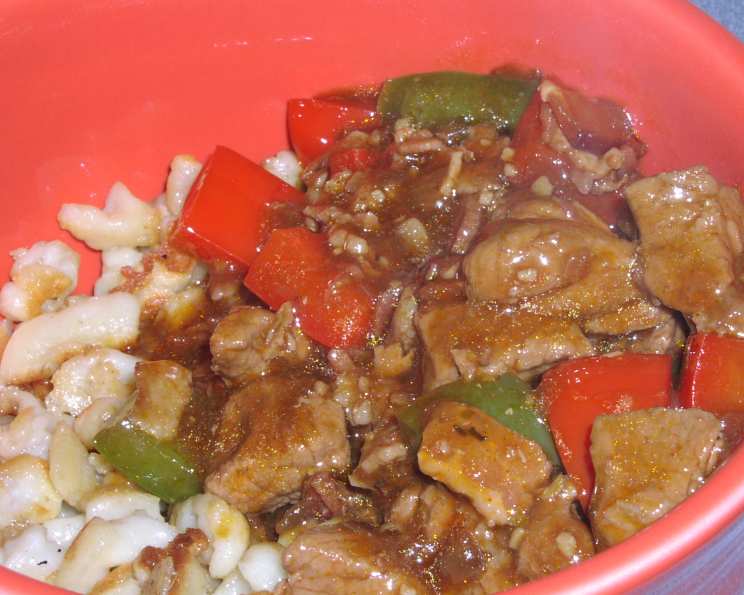
Rindergulasch: A Taste of German Comfort
There’s a particular aroma that fills a kitchen when a pot of slow-simmered goulash begins its magic. For me, that scent is inextricably linked to cozy evenings spent in Germany, the kind where the rain taps a gentle rhythm against the windowpane and a hearty, warming meal is the ultimate solace. This Rindergulasch, a German take on a classic beef stew, was a discovery born from those cherished moments, a recipe I learned to love and adapt, bringing its deep, comforting flavors into my own home. It’s more than just a dish; it’s a culinary hug, a reminder of shared meals and simple, profound pleasures.
Recipe Overview
- Prep Time: 20 minutes
- Cook Time: 1 hour 30 minutes
- Total Time: 1 hour 50 minutes
- Servings: 4
- Yield: Approximately 6 cups
- Dietary Type: Non-Vegetarian
Ingredients
- 1 lb onion, diced
- 3 cloves fresh garlic, peeled and finely chopped
- 1/4 lb thick-cut bacon, finely chopped
- 2 1/8 lbs beef shoulder, cut into bite-sized chunks (trim any visible fat)
- 2 tablespoons bacon grease or lard
- 2 teaspoons sweet Hungarian paprika
- 3 tablespoons tomato paste
- 5 1/8 cups beef broth
- 1 lemon, zest of, finely grated
- 1 red bell pepper, cut into bite-sized chunks
- 1 green bell pepper, cut into bite-sized chunks
- 1 bunch fresh marjoram, stemmed and finely chopped
- Salt, to taste
- Black pepper, to taste
- Fresh cooked egg noodles or spaetzle noodles, for serving
Equipment Needed
- Large stewpot or Dutch oven
- Cutting board
- Sharp knife
- Measuring cups and spoons
- Whisk
- Covered dish for browning meat
Instructions
- Begin by preparing your ingredients. Dice the onion, finely chop the garlic, and finely chop the bacon. Cut the beef shoulder into bite-sized chunks, ensuring any excess fat is trimmed. Chop the red and green bell peppers into similarly sized pieces. Stem and finely chop the fresh marjoram.
- In a large stewpot or Dutch oven, heat the bacon grease (or lard) over medium-high heat until melted and shimmering.
- Working in small portions to avoid overcrowding the pot and ensuring proper browning, add the beef chunks and sear them on all sides until nicely browned. It’s important not to cook them all the way through at this stage. Remove each browned batch from the pot and set aside in a covered dish.
- In the same pot, add the chopped bacon, diced onion, and chopped garlic. Sauté these ingredients for about 5-10 minutes, or until they begin to wilt and take on a golden-brown hue.
- Return the browned beef chunks to the pot with the softened aromatics. Sprinkle the sweet Hungarian paprika evenly over the meat and vegetables.
- Whisk in the tomato paste, stirring continuously for about a minute to coat the ingredients and slightly caramelize the paste.
- Add just a little of the beef broth to the pot. Bring this mixture to a boil, stirring to deglaze any browned bits from the bottom of the pot.
- Once it has boiled, add a little more broth, then, after it boils again, add the rest of the beef broth along with the finely grated lemon zest. The lemon zest adds a subtle brightness that beautifully cuts through the richness of the beef.
- Reduce the heat to low, cover the pot tightly, and let the goulash stew gently for approximately 80 minutes. This slow simmering is crucial for tenderizing the beef and developing deep flavor.
- In the final 5 minutes of the total cooking time, add the diced red and green bell peppers and the finely chopped fresh marjoram to the pot. Stir them in and allow them to soften slightly.
- Test the flavor of the Rindergulasch now. Add salt and black pepper to your preference.
- TIP: If you prefer your peppers to be a little softer, you can either let the goulash cook a little longer with the peppers added, or add them a few minutes sooner in the final stages of cooking.
- Serve the Rindergulasch hot, ladled generously over bowls of fresh cooked egg noodles or spaetzle noodles.
Expert Tips & Tricks
The key to a truly magnificent Rindergulasch lies in patience and attention to detail. Don’t rush the browning of the beef; this Maillard reaction is responsible for much of the deep, savory flavor. If you have the time, consider cutting the beef into slightly larger chunks and browning them in batches, ensuring each piece gets a beautiful crust. This also helps prevent the meat from steaming rather than searing. For an even richer flavor, you can deglaze the pot with a splash of red wine after sautéing the onions and garlic, before adding the tomato paste and broth. This adds another layer of complexity. If you find your goulash is a bit too thin, you can thicken it slightly by creating a slurry of a tablespoon of flour or cornstarch mixed with a few tablespoons of cold water, and whisking it into the simmering goulash during the last 15-20 minutes of cooking.
Serving & Storage Suggestions
Rindergulasch is a dish that truly benefits from resting. While it’s delicious served immediately, its flavors meld and deepen beautifully if allowed to sit for at least 30 minutes off the heat before serving. It’s often even better the next day. Serve it piping hot, ladled over fluffy, buttered egg noodles or tender spaetzle. A dollop of sour cream or a sprinkle of fresh parsley can add a lovely finishing touch.
For storage, ensure the Rindergulasch has cooled completely before transferring it to airtight containers. It will keep well in the refrigerator for up to 3-4 days. When reheating, gently warm it on the stovetop over low heat, stirring occasionally, or in the microwave. If the goulash has thickened too much during storage, you can add a splash of beef broth or water to achieve your desired consistency. This dish also freezes exceptionally well for up to 3 months, making it an excellent candidate for batch cooking and meal prep. Thaw overnight in the refrigerator before reheating.
Nutritional Information
| Nutrient | Amount per Serving | % Daily Value |
|---|---|---|
| Calories | 283.3 kcal | – |
| Calories from Fat | – | 177 g |
| Total Fat | 19.7 g | 30% |
| Saturated Fat | 8.3 g | 41% |
| Cholesterol | 34.5 mg | 11% |
| Sodium | 1535 mg | 63% |
| Total Carbohydrate | 19 g | 6% |
| Dietary Fiber | 4.4 g | 17% |
| Sugars | 8.8 g | 35% |
| Protein | 9.6 g | 19% |
Note: Nutritional values are estimates and can vary based on specific ingredients and portion sizes used.
Variations & Substitutions
While this Rindergulasch recipe is a classic for a reason, feel free to explore its versatility. For a richer, more robust flavor profile, consider adding a tablespoon or two of red wine to deglaze the pot after sautéing the onions and garlic, before adding the tomato paste. If you’re looking to incorporate more vegetables, diced carrots or parsnips can be added along with the onions and garlic for an extra boost of earthy sweetness. For those who prefer a slightly spicier goulash, a pinch of hot paprika or a finely minced chili pepper can be added along with the sweet paprika. If you find yourself without fresh marjoram, a teaspoon of dried marjoram can be used, though the fresh herb offers a more vibrant flavor.
FAQs
Q: Can I make Rindergulasch ahead of time?
A: Absolutely! Rindergulasch is a perfect make-ahead dish. The flavors meld and deepen beautifully overnight, making it even tastier the next day.
Q: What is the best cut of beef to use for Rindergulasch?
A: Beef shoulder (also known as chuck roast) is ideal due to its marbling, which becomes incredibly tender and flavorful with slow cooking.
Q: How do I prevent my Rindergulasch from becoming tough?
A: Ensure you are searing the beef properly in batches and then allowing it to simmer gently over low heat for the specified cooking time. Avoid boiling it vigorously.
Q: Can I make this recipe vegetarian?
A: While this is a traditional beef goulash, you could adapt it by using hearty mushrooms (like portobello or cremini) and a rich vegetable broth, though the flavor profile will be quite different.
Q: What are spaetzle noodles?
A: Spaetzle are a type of soft egg noodle or dumpling, originating from Germany, often served as a side dish with stews and roasts.
Final Thoughts
This Rindergulasch is more than just a recipe; it’s an invitation to slow down, savor the process, and indulge in a dish that nourishes both body and soul. The aromas that waft from your kitchen as it simmers are a promise of the comforting, deeply satisfying meal to come. Serve it with a glass of robust red wine, perhaps a German Spätburgunder, and let its warmth envelop you. I encourage you to try this classic preparation, and I’d love to hear about your own Rindergulasch experiences and any personal touches you bring to this beloved dish. Guten Appetit!