
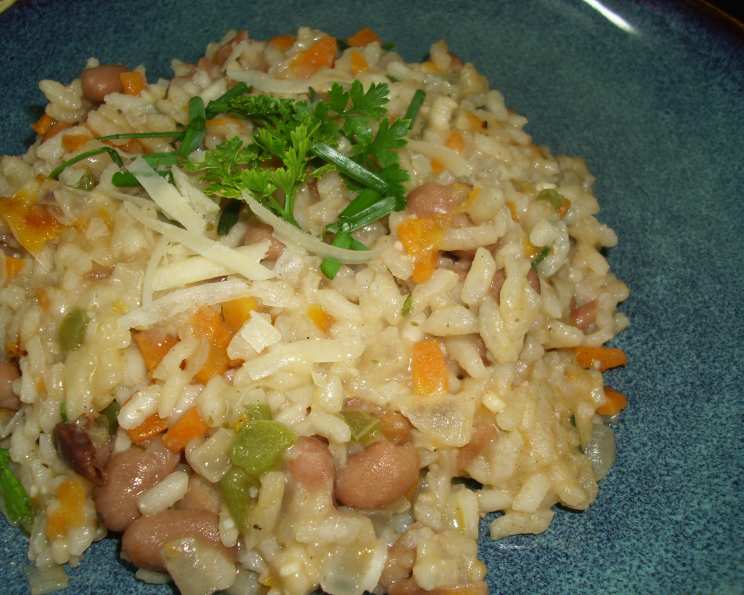
Risotto with Beans and Vegetables: A Hug in a Bowl
There are some dishes that, with the first spoonful, wrap you in a comforting embrace, transporting you back to a time of warmth and simple pleasures. This risotto, brimming with tender beans and vibrant vegetables, is precisely that dish for me. I remember making it on a blustery autumn evening, the kind where the wind howls outside and all you crave is something hearty and soul-satisfying. The aroma that filled my kitchen – a delicate dance of sautéed aromatics, earthy mushrooms, and simmering broth – was an instant balm. It’s a dish that feels both elegant enough for company and wonderfully casual for a quiet night in, proving that sometimes, the most profound culinary experiences come from the most humble ingredients.
Recipe Overview
- Prep Time: 15 minutes
- Cook Time: 30 minutes
- Total Time: 45 minutes
- Servings: 4 (main dish) or 6 (side dish)
- Yield: Approximately 8 cups
- Dietary Type: Vegetarian, Gluten-Free (ensure broth is gluten-free)
Ingredients
Here’s what you’ll need to create this delightful risotto:
- 3 cups vegetable broth (or chicken broth, if preferred)
- 2 cups sliced fresh mushrooms
- 1 medium onion, chopped
- 2 garlic cloves, minced
- 2 tablespoons olive oil
- 1 cup Arborio rice
- 1 cup finely chopped zucchini
- 1 cup finely chopped carrot
- 1 (15-ounce) can white kidney beans (cannellini) or 1 (15-ounce) can pinto beans, rinsed and drained
- ½ cup finely shredded Parmesan cheese
- 2 tablespoons snipped fresh flat-leaf Italian parsley
- Finely shredded Parmesan cheese (optional, for serving)
Equipment Needed
- Medium saucepan (for broth)
- Large saucepan or Dutch oven (for risotto)
- Wooden spoon or heatproof spatula
- Measuring cups and spoons
Instructions
Crafting a perfect risotto is a rewarding process that requires a little patience and a lot of love. Follow these steps to achieve that signature creamy texture:
-
Prepare the Broth: In a medium saucepan, combine the vegetable broth (or chicken broth) and bring it to a boil over medium-high heat. Once boiling, reduce the heat to low and let it simmer gently until you’re ready to use it. Keeping the broth warm is crucial for consistent cooking of the rice.
-
Sauté the Aromatics and Mushrooms: While the broth simmers, heat the olive oil in a large saucepan or Dutch oven over medium heat. Add the sliced mushrooms, chopped onion, and minced garlic cloves. Cook and stir for about 5 minutes, or until the onion is tender and translucent. Be sure not to brown the garlic; we want its sweet aroma, not bitterness.
-
Toast the Rice: Add the Arborio rice to the saucepan with the sautéed vegetables. Cook and stir the rice for about 5 minutes more, allowing it to become golden brown. This toasting step is key to developing the nutty flavor of the rice and helps the grains absorb liquid more evenly, contributing to the creamy texture.
-
Begin Adding Broth (The Risotto Dance): Now comes the heart of risotto-making. Ladle in 1 cup of the warm broth to the rice mixture. Stir constantly, allowing the rice to absorb the liquid before adding more. This constant stirring encourages the release of starch from the Arborio grains, which is what gives risotto its characteristic creamy, velvety texture.
-
Incorporate Vegetables and More Broth: Once the first cup of broth is absorbed, add another ½ cup of broth to the rice mixture. Now, add the finely chopped zucchini and finely chopped carrot. Continue to cook and stir constantly until this liquid is also absorbed.
-
Continue Adding Broth Gradually: Add another 1 cup of broth to the rice mixture, again adding it ½ cup at a time. Keep stirring constantly, allowing each addition of broth to be absorbed before adding the next. This gradual process should take approximately 20 minutes. You’ll notice the risotto becoming thicker and creamier as you continue.
-
Final Broth Addition and Doneness Check: Stir in the remaining ½ cup of broth. Continue to cook and stir until the rice is slightly creamy and just tender. The rice grains should have a slight bite to them (al dente), not be mushy. They should be cooked through but still retain a little firmness in the center.
-
Finish and Enrich: Remove the saucepan from the heat. Stir in the rinsed and drained white kidney beans (cannellini) or pinto beans, and the ½ cup of finely shredded Parmesan cheese. Stir gently until the cheese is melted and incorporated, and the beans are heated through.
-
Garnish and Serve: Sprinkle the risotto with the 2 tablespoons of snipped fresh flat-leaf Italian parsley. If desired, you can also sprinkle with additional finely shredded Parmesan cheese for an extra layer of salty, nutty goodness. Serve immediately to enjoy its peak creaminess.
Expert Tips & Tricks
- Broth Temperature is Key: Always keep your broth warm. Adding cold broth to hot rice shocks the grains and can result in uneven cooking and a less creamy texture.
- Stir, Stir, Stir: While you don’t need to stir non-stop without any breaks, consistent stirring is vital. It rubs the starch off the outside of the Arborio rice grains, creating that luscious, creamy consistency that defines risotto.
- Don’t Overcook the Vegetables: The zucchini and carrots are added relatively early to ensure they are tender, but we don’t want them to turn to mush. They should retain a slight bite.
- Taste as You Go: Seasoning is crucial. Taste the risotto periodically throughout the cooking process and adjust salt and pepper as needed. Remember that the Parmesan cheese will also add saltiness.
- Arborio Rice is Your Friend: This short-grain Italian rice is specifically bred for risotto due to its high starch content. If you can’t find Arborio, Carnaroli or Vialone Nano are excellent alternatives.
Serving & Storage Suggestions
This risotto is best enjoyed immediately after it’s made, when it’s at its creamiest. Serve it hot in shallow bowls. A simple green salad with a light vinaigrette and some fresh fruit would make a perfect accompaniment, as suggested, turning it into a complete and satisfying meal.
Leftovers can be stored in an airtight container in the refrigerator for up to 2 days. Risotto will thicken considerably as it cools. To reheat, gently warm it in a saucepan over low heat, adding a splash or two of vegetable broth or water to loosen it up and restore its creamy texture. Stir continuously until heated through. Avoid microwaving if possible, as it can sometimes make the rice gummy.
Nutritional Information
| Nutrient | Amount per Serving (approximate, for 4 main dish servings) | % Daily Value (approximate) |
|---|---|---|
| Calories | 423.5 | |
| Calories from Fat | ||
| Total Fat | 11.6 g | 17% |
| Saturated Fat | 3.4 g | 16% |
| Cholesterol | 11 mg | 3% |
| Sodium | 537.8 mg | 22% |
| Total Carbohydrate | 64.1 g | 21% |
| Dietary Fiber | 9.3 g | 37% |
| Sugars | 6.3 g | 25% |
| Protein | 16 g | 31% |
Note: Nutritional values are estimates and can vary based on specific ingredients and preparation methods used.
Variations & Substitutions
This risotto is a fantastic canvas for customization. Feel free to experiment with these ideas:
- Seasonal Vegetables: In the spring, swap zucchini and carrots for fresh peas and asparagus. In the summer, consider adding diced bell peppers or corn. In the fall, butternut squash or sweet potato would be wonderful additions.
- Herbs: While parsley is classic, other fresh herbs like thyme, rosemary, or chives can add different aromatic dimensions.
- Beans: If white kidney beans or pinto beans aren’t your favorite, try chickpeas or lentils for a different texture and flavor profile.
- For a Vegan Version: Omit the Parmesan cheese entirely. You can enhance the creaminess by adding a tablespoon or two of nutritional yeast for a cheesy flavor and a drizzle of vegan butter or olive oil at the end. Ensure your broth is also vegan.
- For a Richer Flavor: If you’re not strictly vegetarian, using chicken broth instead of vegetable broth will add another layer of savory depth.
FAQs
Q: Why is my risotto not creamy?
A: The creaminess comes from the starch released by the Arborio rice grains. Ensure you’re using Arborio rice (or a similar risotto rice) and that you are stirring frequently enough to encourage this starch release. Also, make sure your broth is simmering and warm when you add it.
Q: Can I use pre-cooked rice for risotto?
A: No, this recipe relies on the specific starch release of raw Arborio rice during the cooking process. Pre-cooked rice will not achieve the desired creamy texture.
Q: How can I make this dish more substantial for a main course?
A: You can easily make this a hearty main dish by adding a protein source. Grilled chicken breast, pan-seared shrimp, or crumbled Italian sausage would all be delicious additions. You could also stir in some sautéed spinach or kale towards the end of cooking.
Q: Is Arborio rice the only type of rice I can use?
A: While Arborio is the most common and readily available for risotto, other short-grain Italian rices like Carnaroli or Vialone Nano are also excellent choices and will yield similar results.
Q: My risotto seems a bit too thick, what can I do?
A: If your risotto becomes too thick before the rice is cooked to your liking, simply stir in a little more warm broth or hot water, a tablespoon at a time, until it reaches your desired consistency.
A Culinary Comfort
This Risotto with Beans and Vegetables is more than just a recipe; it’s an invitation to slow down, connect with your food, and create something truly nourishing. It’s a testament to how simple ingredients, treated with care and attention, can transform into a dish that warms the soul. So, gather your ingredients, put on your favorite apron, and embark on this delightful culinary journey. I promise, the reward of that first creamy, comforting bite will be well worth the effort. Don’t hesitate to share your creations and variations – I always love hearing about your kitchen adventures!