
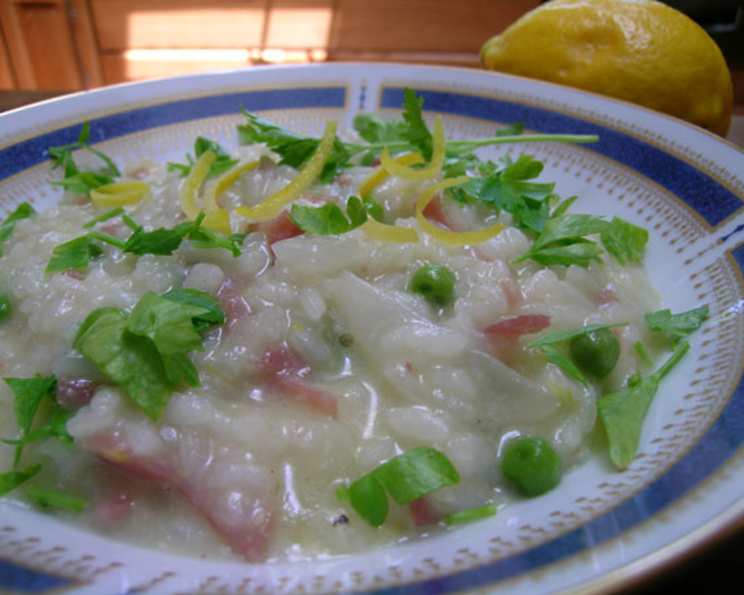
Risotto Perfection: A Taste of Spring with Peas and Prosciutto
There’s a certain magic that happens when simple ingredients are treated with respect and patience, culminating in a dish that sings with flavor and comfort. For me, this Risotto with Peas and Prosciutto is one of those dishes. I remember a crisp spring evening in Tuscany, the air still carrying a hint of coolness but the promise of summer in the air. We’d spent the day exploring ancient olive groves, and as the sun began to dip below the rolling hills, we found ourselves at a small trattoria tucked away from the tourist bustle. The matriarch of the family, with flour dusting her apron and a smile as warm as the hearth, served us a risotto that was utterly sublime. It was creamy, vibrant, and each spoonful was a delicate balance of savory prosciutto, sweet peas, and the subtle zest of lemon. That meal wasn’t just food; it was an experience, a testament to the power of good ingredients and skillful technique. This recipe, I’m proud to say, captures that essence beautifully, offering a restaurant-quality experience right in your own kitchen. Don’t underestimate the humble pea or the salty punch of prosciutto – together with the creamy rice and a whisper of lemon, they create something truly special.
Recipe Overview
- Prep Time: 15 minutes
- Cook Time: 30 minutes
- Total Time: 45 minutes
- Servings: 6
- Yield: Serves 4 as an entree or 6-8 as a side dish.
- Dietary Type: Can be adapted for Vegetarian by omitting prosciutto.
Ingredients
- 5 cups chicken broth
- 1/2 cup onion, finely chopped
- 1/4 cup unsalted butter
- 1 1/2 cups Arborio rice (approximately 12 ounces)
- 1/2 cup dry white wine
- 1 cup frozen peas, thawed
- 2 ounces prosciutto, julienned
- 1/2 teaspoon lemon zest, grated
- 1 cup Parmesan cheese, grated
- 3 tablespoons parsley, finely chopped
- Salt and freshly ground black pepper to taste
Equipment Needed
- A 3- to 4-quart heavy-bottomed saucepan or Dutch oven
- A separate saucepan for heating the broth
- A wooden spoon or heatproof spatula
Instructions
The art of making risotto lies in coaxing the starch out of the rice, creating that signature creamy texture without the addition of cream. It’s a process that requires your attention, but the rewards are immeasurable.
-
Prepare the Broth: Begin by bringing the chicken broth to a gentle simmer in a separate saucepan. Once simmering, reduce the heat to low, cover, and keep it warm. This ensures that when you add it to the rice, the cooking temperature doesn’t drop significantly, which is crucial for achieving a creamy consistency.
-
Sauté the Aromatics: In your heavy-bottomed saucepan or Dutch oven, melt 2 tablespoons of the unsalted butter over moderate heat. Add the finely chopped onion and cook, stirring occasionally, until it softens and becomes translucent. This should take about 3 to 4 minutes. You’re looking for a gentle softening, not browning, as browning can impart an undesirable bitterness.
-
Toast the Rice: Add the Arborio rice to the saucepan with the softened onions. Stir the rice constantly for about 1 minute. This step, known as toasting, coats each grain of rice with butter and slightly toasts the exterior, helping the grains absorb liquid more evenly and preventing them from becoming mushy.
-
Deglaze with Wine: Pour in the dry white wine. Continue to stir constantly until the wine is almost completely absorbed by the rice. The wine adds a lovely layer of acidity and depth of flavor to the risotto.
-
The Gradual Broth Addition: Now comes the defining technique of risotto making. Add approximately 1 cup of the simmering chicken broth to the rice. Stir constantly, maintaining a strong simmer, until the broth is almost completely absorbed. This constant stirring encourages the rice to release its starch, which is what creates the creamy texture.
-
Continue the Process: Continue adding the simmering broth, about 1/2 cup at a time. With each addition, stir constantly and allow the liquid to be absorbed before adding the next. This patient, rhythmic process is key. Keep going until the rice is just tender and wonderfully creamy, yet still has a slight bite to it – this is the ‘al dente’ stage. This entire broth-adding process should take about 18 to 20 minutes. You may not need all of the broth, and that’s perfectly fine.
-
Incorporate the Final Flavors: Once the rice has reached the desired texture, stir in the thawed frozen peas, the julienned prosciutto, the grated lemon zest, 2/3 cup of the grated Parmesan cheese, and the finely chopped parsley. Add the remaining 2 tablespoons of unsalted butter. Stir everything together until well combined and the butter and cheese have melted, creating a lusciously smooth risotto.
-
Adjust Consistency and Season: Taste the risotto and season with salt and freshly ground black pepper as needed. The prosciutto and Parmesan cheese are quite salty, so season judiciously. If the risotto seems too thick at this point, you can thin it out with a little of the remaining broth until it reaches your preferred consistency. It should be creamy and flowing, not stiff.
-
Serve Immediately: Risotto is best enjoyed the moment it’s ready. Serve it immediately in warm bowls.
-
Garnish: Sprinkle the remaining 1/3 cup of grated Parmesan cheese over the top of each serving.
Expert Tips & Tricks
- Quality Broth is Key: While you can use vegetable broth, a good quality chicken broth will significantly elevate the flavor of your risotto. Homemade is always a bonus if you have it!
- Don’t Rush the Broth: The gradual addition and constant stirring of the broth is non-negotiable for achieving that perfect creamy texture. Resist the urge to dump in all the liquid at once.
- The Power of Stirring: The constant stirring isn’t just for show. It helps to release the starch from the Arborio rice, creating that signature creamy, unctuous texture that defines a great risotto.
- Al Dente is Crucial: The rice should be tender but still have a slight chew. Overcooked risotto becomes mushy and loses its appeal. Taste frequently towards the end of the cooking time.
- Fresh Herbs for Vibrancy: Don’t skip the fresh parsley and lemon zest. They add a brightness that cuts through the richness of the risotto and truly makes the dish sing.
- Prosciutto Perfection: Julienne the prosciutto thinly so it distributes evenly throughout the risotto. You can also crisp up some of the prosciutto pieces separately and use them as a garnish for added texture.
Serving & Storage Suggestions
This Risotto with Peas and Prosciutto is a dish that shines when served immediately. Ladle generous portions into shallow, warm bowls. Garnish with the reserved Parmesan cheese and perhaps a few extra fresh parsley leaves. A light sprinkle of black pepper can also add a nice finishing touch.
Leftovers, while not ideal, can be stored. Allow the risotto to cool completely before transferring it to an airtight container. Store in the refrigerator for up to 2 days.
To reheat, it’s best to add a splash of broth or water to the risotto in a saucepan over low heat. Stir gently and continuously until heated through and creamy again. Be patient, as it might take a few minutes to revive its texture. Microwaving is possible, but it often results in a less desirable, sometimes gummy, texture.
Nutritional Information
| Nutrient | Amount per Serving | % Daily Value |
|---|---|---|
| Calories | 390.6 kcal | |
| Calories from Fat | ||
| Total Fat | 14 g | 21% |
| Saturated Fat | 8.2 g | 40% |
| Cholesterol | 35 mg | 11% |
| Sodium | 905.3 mg | 37% |
| Total Carbohydrate | 46 g | 15% |
| Dietary Fiber | 2.7 g | 10% |
| Sugars | 2.6 g | 10% |
| Protein | 15.2 g | 30% |
(Note: Nutritional values are estimates and can vary based on specific ingredients and brands used.)
Variations & Substitutions
- Vegetarian Delight: Omit the prosciutto and consider adding a mix of sautéed mushrooms or blanched asparagus for added depth and texture.
- Herb Power: While parsley is classic, feel free to experiment with other fresh herbs like chives, basil, or even a touch of mint for a different aromatic profile.
- Cheese Choices: While Parmesan is traditional, a sharp Pecorino Romano or a good quality Grana Padano can also be used.
- Lemon Love: If you’re a big fan of lemon, you can add a bit more zest or even a tiny squeeze of fresh lemon juice at the very end for an extra burst of brightness.
FAQs
Q: Why is my risotto not creamy?
A: The creaminess of risotto comes from the starch released by the rice. Ensure you are using Arborio rice (or a similar high-starch rice like Carnaroli), toasting it properly, and gradually adding hot broth while stirring constantly.
Q: Can I use long-grain rice instead of Arborio?
A: It’s highly recommended to use Arborio or Carnaroli rice. These varieties are specifically bred to release starch, which is essential for the creamy texture of risotto. Long-grain rice will not achieve the same result.
Q: How do I know when the risotto is cooked?
A: The rice should be tender to the bite but still have a slight firmness in the center – this is the ‘al dente’ stage. It should also be creamy and flowing, not stiff or dry. Taste a few grains to check for doneness.
Q: What if I don’t have chicken broth?
A: You can substitute with a good quality vegetable broth for a vegetarian option, or even a light mushroom broth for an earthier flavor. Ensure it is hot when added to the rice.
Q: Can I make this ahead of time?
A: Risotto is best enjoyed fresh as its texture can degrade upon standing and reheating. While leftovers can be stored and reheated, they will not have the same delicate creaminess as freshly made risotto.
A Taste of Spring, Anytime
This Risotto with Peas and Prosciutto is more than just a recipe; it’s an invitation to slow down, engage your senses, and create something truly delicious. It’s a comforting embrace on a cool evening and a bright, flavorful celebration of spring ingredients, no matter the season. The gentle sweetness of the peas, the savory whisper of prosciutto, and the bright lift of lemon zest all come together in a symphony of textures and tastes. I encourage you to try this recipe, to experience that same quiet satisfaction I felt in that Tuscan trattoria. Serve it with a crisp glass of Sauvignon Blanc or a light-bodied Pinot Grigio, and savor every creamy, comforting spoonful. Let me know your thoughts – I’d love to hear about your own risotto adventures!