
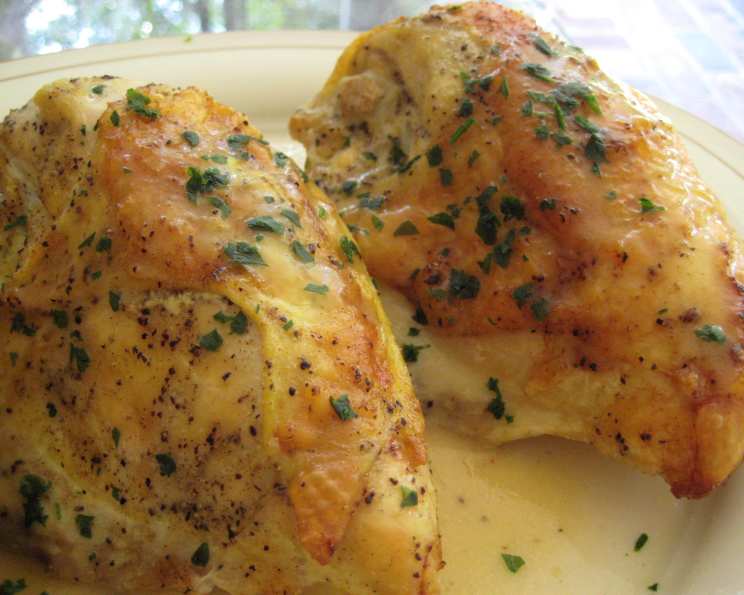
Roast Chicken Breasts with Parsley Pan Gravy
There are those dishes that, with just a few simple ingredients and a touch of care, transport you back to a specific moment. For me, roast chicken has always been one of those culinary anchors. I can vividly recall Sunday dinners at my grandmother’s, the comforting aroma of roasting poultry filling her cozy kitchen, and the anticipation of that glistening, herb-infused skin. This recipe for roast chicken breasts with parsley pan gravy, a delightful adaptation I discovered years ago, captures that same essence of humble comfort and elevates it with an incredibly flavorful gravy that’s truly the star. It’s the kind of meal that feels both sophisticated enough for guests and entirely approachable for a busy weeknight, a testament to the magic that can happen in your own oven.
Recipe Overview
- Prep Time: 15 minutes
- Cook Time: 40 minutes
- Total Time: 55 minutes
- Servings: 2
- Yield: 2 chicken breasts
- Dietary Type: Not specified (can be adapted)
Ingredients
- 2 chicken breast halves, with skin and bone-in
- 1/4 cup white wine
- 1 1/2 teaspoons poultry seasoning (or 1 1/2 teaspoons Herbes de Provence for a delightful variation)
- 1–2 tablespoons butter, melted
- 2 tablespoons all-purpose flour
- 2 1/4 cups canned low-sodium chicken broth
- 1/4 cup white wine (for the gravy)
- 1/4 cup chopped fresh flat-leaf parsley
- Kosher salt and freshly ground black pepper, to taste
Equipment Needed
- Oven
- 11×7-inch metal baking pan
- Vegetable oil spray
- Plate
- Stove-top burner or a saucepan
- Whisk
Instructions
- Begin by preheating your oven to 400°F (200°C). This initial high heat is crucial for achieving beautifully browned, crispy chicken skin.
- Carefully, using your fingers, loosen the skin on each chicken breast half. This creates a pocket for the seasonings, allowing them to infuse the meat directly as it cooks, ensuring maximum flavor and juiciness.
- Take about half of the poultry seasoning (or your chosen Herbes de Provence) and rub it gently under the loosened skin of each chicken breast. Make sure to distribute it evenly.
- Sprinkle the chicken generously on all sides with kosher salt and freshly ground black pepper. Don’t be shy; proper seasoning is key to a delicious final dish.
- Place the seasoned chicken breasts, skin side up, in the 11×7-inch metal baking pan that you’ve sprayed with vegetable oil. Ensure the chicken has a little space around it for even cooking.
- Brush the chicken breasts with the melted butter. This adds richness and helps the skin to brown beautifully.
- Pour 1/4 cup of white wine and 1/4 cup of canned low-sodium chicken broth into the bottom of the pan around the chicken. This liquid will help keep the chicken moist and also forms the base for your pan gravy.
- Roast the chicken in the preheated oven until cooked through, which typically takes about 40 minutes. The exact time will depend on the size of your chicken breasts; it’s always best to use a meat thermometer to ensure they reach an internal temperature of 165°F (74°C) in the thickest part.
- Once cooked, transfer the chicken breasts to a plate. Tent them loosely with foil and allow them to rest for at least 5-10 minutes while you prepare the gravy. This resting period is vital for allowing the juices to redistribute throughout the meat, resulting in a more tender and moist chicken.
- Now, for the magic: place the baking pan with the collected pan juices over a stove-top burner set to medium heat. Alternatively, and perhaps more conveniently if your baking pan isn’t stovetop-safe, pour all the pan juices and drippings into a saucepan.
- Add the 2 tablespoons of all-purpose flour directly into the pan (or saucepan) with the drippings. Stir constantly with a whisk, allowing the flour to cook and turn a golden brown color, which should take about 30 seconds. This process, known as making a roux, adds depth of flavor and helps thicken the gravy.
- Gradually whisk in the remaining 2 cups of canned low-sodium chicken broth and the additional 1/4 cup of white wine. Bring the mixture to a boil, continuing to whisk until the gravy thickens to your desired consistency.
- Stir in the 1/4 cup of chopped fresh flat-leaf parsley. The vibrant green adds a beautiful color and a burst of fresh flavor.
- Finally, season the parsley pan gravy with salt and pepper to taste. Adjust as needed to achieve the perfect balance.
Expert Tips & Tricks
The key to an exceptionally moist chicken breast lies in the initial preparation. By gently loosening the skin and getting seasonings underneath, you’re essentially marinating the meat from the inside out, even before it hits the oven. For a richer gravy, you can deglaze the pan with a splash of brandy or sherry along with the white wine. If your gravy is a touch too thin and you’ve already added the parsley, a quick slurry of 1 tablespoon of cornstarch mixed with 2 tablespoons of cold water, whisked into the simmering gravy, will thicken it beautifully without altering the flavor.
Serving & Storage Suggestions
Serve the resting roast chicken breasts hot, spooning a generous amount of the parsley pan gravy over each one. This dish pairs wonderfully with mashed potatoes, roasted root vegetables, or a simple side salad. To store leftovers, allow the chicken and gravy to cool completely. Store them separately in airtight containers in the refrigerator for up to 3 days. Reheat the chicken gently in the oven or on the stovetop with a little extra broth or water to prevent it from drying out. The gravy can be reheated on the stovetop over low heat.
Nutritional Information
| Nutrient | Amount per Serving | % Daily Value |
|---|---|---|
| Calories | 300.5 kcal | |
| Calories from Fat | 128 kcal | |
| Total Fat | 14.3 g | 22% |
| Saturated Fat | 6.1 g | 30% |
| Cholesterol | 61.7 mg | 20% |
| Sodium | 185 mg | 7% |
| Total Carbohydrate | 11.7 g | 3% |
| Dietary Fiber | 0.6 g | 2% |
| Sugars | 1 g | 4% |
| Protein | 21.7 g | 43% |
Nutritional values are estimates and may vary based on specific ingredients used.
Variations & Substitutions
For a gluten-free version of this dish, you can substitute the all-purpose flour with a gluten-free all-purpose flour blend when making the gravy, or opt for a cornstarch slurry for thickening. If you’re not a fan of white wine, you can use chicken broth or even a dry sherry for deglazing the pan. The Herbes de Provence variation is a fantastic way to introduce a more complex herbal profile; it offers a delightful Mediterranean twist. You could also consider adding finely diced sautéed onions or mushrooms to the gravy for an extra layer of savory depth.
FAQs
Q: Can I use boneless, skinless chicken breasts?
A: While this recipe is designed for bone-in, skin-on breasts to maximize flavor and moisture, you can use boneless, skinless breasts. However, you’ll need to significantly reduce the cooking time to prevent them from drying out, likely around 20-25 minutes at 400°F.
Q: How can I tell if the chicken is cooked through?
A: The most reliable way is to use an instant-read meat thermometer. Insert it into the thickest part of the chicken breast, avoiding the bone. It should register 165°F (74°C). If you don’t have a thermometer, the juices should run clear when the chicken is pierced with a knife.
Q: My gravy is lumpy. How can I fix it?
A: If your gravy has lumps, you can try whisking it vigorously over low heat. For stubborn lumps, carefully pour the gravy through a fine-mesh sieve to catch them. Ensure you are whisking continuously when adding liquids to the roux to prevent clumping.
Q: Can I make the gravy ahead of time?
A: Yes, you can prepare the gravy up to a day in advance. Store it in an airtight container in the refrigerator. Reheat it gently on the stovetop, whisking to ensure smoothness, and add a splash of chicken broth or water if it has become too thick.
Q: How can I make a larger batch of this recipe?
A: This recipe can easily be doubled. You may need to use a larger baking pan to ensure the chicken breasts aren’t overcrowded, which can lead to steaming rather than roasting. Ensure your oven can accommodate the larger pan size and adjust cooking time if necessary based on the chicken’s internal temperature.
Final Thoughts
This roast chicken breast recipe, with its simple yet incredibly satisfying parsley pan gravy, is a testament to how elegant a meal can be with just a few well-chosen ingredients and a little attention to technique. The tender, juicy chicken and the bright, herbaceous gravy create a harmonious balance of flavors that’s utterly delightful. It’s a dish that’s sure to become a go-to in your repertoire, perfect for those evenings when you crave comfort without compromising on taste. Don’t hesitate to pair it with your favorite sides – a crisp green salad or some steamed asparagus would be lovely complements to the richness of the chicken and gravy. Enjoy the process, and savor every delicious bite!