
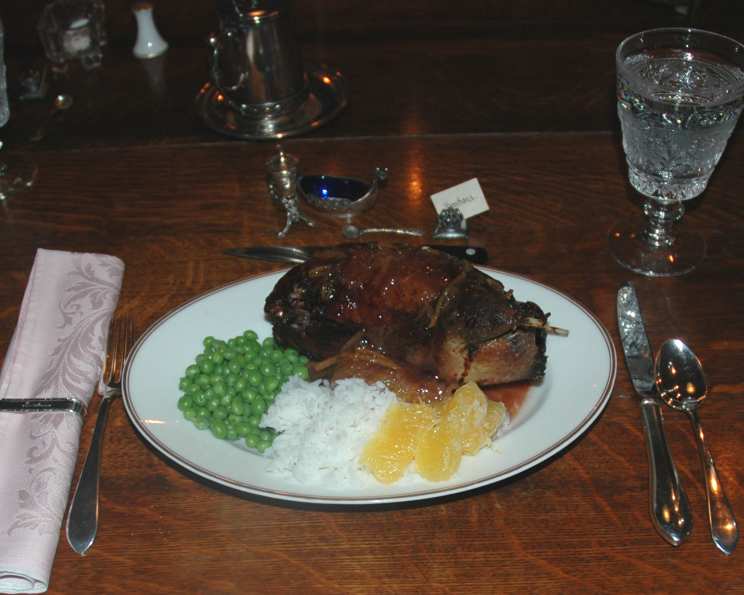
Canard à l’Orange: A Julia Child Masterpiece
The scent of roasting duck, a symphony of savory richness and bright citrus, instantly transports me back to a particular autumn evening. A dear friend, Jenny, had gifted us two exquisite ducklings, perfectly sized for a celebratory dinner. My husband, a confessed duck aficionado, was thrilled. The question was how to prepare them. The answer, as it so often is in my kitchen, lay with Julia Child. This adaptation of her iconic Canard à l’Orange is a dish that speaks of comfort, elegance, and the joy of mastering classic techniques. It’s a dish that transforms humble ingredients into something truly spectacular, a culinary hug on a plate.
Recipe Overview
- Prep Time: Approximately 45 minutes (plus time for stock preparation)
- Cook Time: Approximately 30-35 minutes
- Total Time: Approximately 3 hours (including stock preparation)
- Servings: 2
- Yield: 2 small ducklings
- Dietary Type: Not specified (contains poultry, can be adapted)
Ingredients
For the Stock:
- 2 tablespoons peanut oil
- 1 set duck giblets (including neck and wing tips, cut into 1-inch pieces; if not in frozen duck, use some of the rendered fat)
- 1 carrot, sliced
- 1 onion, sliced
- 1 cup beef bouillon
- 3 cups water
- 4 parsley sprigs
- 1 bay leaf
- 1/4 teaspoon sage
For the Orange Peel & Segments:
- 4 oranges
For the Sauce:
- 1 quart water (for simmering orange peel)
- 3 tablespoons sugar
- 1/4 cup red wine vinegar
- 1/2 cup duck stock (from prepared stock)
- 1 tablespoon cornstarch
- 2 tablespoons port wine (Ruby port recommended)
- Remaining duck stock
- All but a few orange segments (saved for garnish)
- 1/2 teaspoon lemon juice (optional)
- 1 tablespoon softened butter
- 1 1/2 ounces orange liqueur (such as Grand Marnier or Cointreau)
For the Duck:
- 2 ducklings (approximately 1.5 to 2 lbs each)
- Salt, to taste
- Pepper, to taste
Equipment Needed
- Large heavy-bottomed pot or Dutch oven (for stock)
- Fine-mesh sieve
- Saucepans (various sizes)
- Sharp knife
- Cutting board
- Roasting pan
- Wire rack
- Small bowl (for cornstarch slurry)
- Whisk
- Small serving platters
Instructions
The journey to a magnificent Canard à l’Orange begins with a robust stock, which should ideally be prepared well in advance. In a large, heavy-bottomed pot or Dutch oven, heat the peanut oil over medium-high heat. Add the duck giblets, including the neck and wing tips, and brown them well. Then, add the sliced carrot and onion, sautéing until they also begin to brown, which will lend a deeper flavor to your stock. Pour in the beef bouillon and water. Add the parsley sprigs, bay leaf, and sage. Bring the mixture to a boil, then reduce the heat to low, cover, and simmer for at least 1 hour, or until the liquid has reduced to about 2 cups.
Once the stock has reduced, skim off any excess fat from the surface and strain it through a fine-mesh sieve into a clean bowl or container. Discard the solids. You can refrigerate the stock until needed; any fat that solidifies on top can be easily removed.
Now, let’s prepare the crucial element for both roasting and flavoring the duck: the orange peel and segments. Peel the 4 oranges, being meticulous to remove only the brightly colored zest and none of the bitter white pith. Aim for strips of peel that are approximately 1/8 inch wide and 1 1/2 inches long – this is known as julienning. Place these julienned orange peels in a saucepan with 1 quart of water. Bring to a simmer and cook for 6 minutes, then drain the peels and rinse them under cold running water. Pat them dry thoroughly. Set these aside. For the orange segments, carefully peel the remaining orange segments, removing any pith or membranes. Place the segments in a covered container and set aside; save a few of the best-looking segments for garnishing the finished duck.
With your stock and orange preparations complete, it’s time to turn your attention to the ducklings. Prepare the ducklings by trimming away any loose excess fat, particularly around the cavity and neck. Ensure all pinfeathers are removed. For easier carving and more even cooking, you can remove the wishbone from the breast, although this is an optional step. To encourage crisping and allow the fat to render during cooking, prick the skin all over with the tip of a sharp knife or a skewer. This is crucial for achieving that beautiful, crackly skin. Season the cavity of each duckling generously with salt and pepper. Inside the cavity of each duckling, place about 1/3 of the prepared orange peel and 1/3 of the prepared orange segments.
Preheat your oven to 450°F (230°C). The small ducklings will require a relatively short cooking time, about 25 to 30 minutes in total. It’s a good time to begin preparing the sauce. In a saucepan, combine the 3 tablespoons of sugar and 1/4 cup of red wine vinegar. Heat over low heat, stirring until the sugar is completely dissolved. Increase the heat to medium-high and boil rapidly until the mixture begins to caramelize. Watch this carefully; it can turn from perfect to burnt very quickly.
Lower the heat to a simmer and add 1/2 cup of the prepared duck stock. Stir continuously until the caramelized mixture is no longer caramelized – it will loosen and incorporate into the liquid. Remove this mixture from the heat. Add the remaining duck stock to the saucepan. In a small bowl, blend 1 tablespoon of cornstarch with 2 tablespoons of the port wine to create a smooth slurry. Whisk this slurry into the sauce. Now, add the remaining prepared orange peel and all but a few of the reserved orange segments to the sauce.
Simmer the sauce for 3-4 minutes, whisking occasionally, until it has thickened slightly and become clear. Correct the seasoning to your taste. The sauce should have a pleasant balance of sweet and tart. Keep it warm over very low heat.
Place the prepared ducklings on a wire rack set inside a small roasting pan, breast side up. Place the pan in the preheated oven. Roast for 5 minutes. Then, reduce the oven temperature to 350°F (175°C). Turn the ducklings onto their sides and place them back in the oven. Continue to roast, turning them occasionally, until they are golden brown and cooked through. The total roasting time for these small ducklings will be approximately 25 to 30 minutes. You’ll know they are done when the juices run rosy clear when pierced with a fork.
Once the ducklings are cooked, transfer them to warmed individual platters and keep them warm. To finish the sauce, carefully remove any excess fat from the roasting pan. Deglaze the pan by adding the remaining 1/4 cup of port wine, scraping up any browned bits from the bottom. Add this deglazing liquid to your warm sauce. Bring the sauce back to a gentle simmer, then stir in the 1 1/2 ounces of orange liqueur. Correct the seasoning once more, adding a touch of 1/2 teaspoon of lemon juice if the sauce seems too sweet for your preference. Remove the sauce from the heat, then swirl in the 1 tablespoon of softened butter until it is fully incorporated and the sauce is glossy. Spoon some of the sauce over the ducklings and pour the remainder into a warmed sauceboat. Garnish the ducklings with the reserved fresh orange segments. Traditionally, this dish is served with rice and peas on the platters.
Expert Tips & Tricks
- Rendered Fat is Gold: Don’t discard the excess duck fat! It’s a delicious byproduct of roasting and can be used for incredibly crispy roasted potatoes or other vegetables.
- Juice Clarity is Key: For the clearest sauce, ensure you skim the stock meticulously and cook the cornstarch slurry gently to avoid cloudiness.
- Orange Zest is Your Friend: Be mindful when zesting oranges. The white pith is intensely bitter and can overpower the delicate citrus notes. A microplane or a sharp paring knife is ideal for this.
- Temperature Control for Caramelization: When caramelizing the sugar and vinegar for the sauce, watch it like a hawk! It can go from perfect golden brown to acrid burnt in mere seconds.
- Resting the Duck: While not explicitly in this recipe, allowing the roasted ducklings to rest for 5-10 minutes before carving can help redistribute the juices, resulting in a more succulent bird.
Serving & Storage Suggestions
Serve your magnificent Canard à l’Orange immediately, presenting the ducklings attractively on warmed platters, spooning some of the luscious sauce over them and presenting the remainder in a sauceboat. The vibrant orange segments provide a beautiful visual contrast. This dish pairs wonderfully with a side of fluffy rice, tender peas, or a simple green salad.
Leftovers can be stored in an airtight container in the refrigerator for 2 to 3 days. Reheat gently on the stovetop over low heat or in a low oven (around 300°F / 150°C), being careful not to overcook the duck. The sauce can also be gently reheated and potentially thinned with a splash of water or stock if it has thickened too much.
Nutritional Information
(Please note: This is an estimated nutritional breakdown for one serving of duckling and sauce, and will vary based on exact ingredient sizes and brands used.)
| Nutrient | Amount per Serving | % Daily Value |
|---|---|---|
| Calories | 850 kcal | 43% |
| Total Fat | 55 g | 71% |
| Saturated Fat | 18 g | 90% |
| Cholesterol | 250 mg | 83% |
| Sodium | 450 mg | 20% |
| Total Carbohydrate | 30 g | 11% |
| Dietary Fiber | 4 g | 14% |
| Sugars | 25 g | 50% |
| Protein | 50 g | 100% |
Variations & Substitutions
While this recipe is a classic, there’s always room for creative interpretation. For a more intense orange flavor, you could add a splash of fresh orange juice to the sauce during the simmering stage. If ducklings are unavailable, a whole roasting duck can be used, but you will need to adjust the cooking time significantly according to its weight. For those who prefer a less sweet sauce, reduce the sugar slightly.
FAQs
Q: Can I prepare the stock for the Canard à l’Orange in advance?
A: Absolutely. The duck stock can be made a day or two ahead and refrigerated, or even frozen for longer storage.
Q: My orange peel is bitter. What did I do wrong?
A: You likely included some of the white pith when peeling. It’s essential to carefully remove only the colored zest.
Q: How do I know when the ducklings are fully cooked?
A: The most reliable method is to pierce the thickest part of the thigh with a fork or skewer; the juices should run rosy clear, with no trace of pink.
Q: Can I use a different type of vinegar for the sauce?
A: White wine vinegar or even apple cider vinegar can be used, but red wine vinegar adds a subtle depth that complements the duck.
Q: What if I don’t have orange liqueur?
A: You can omit it, or for a non-alcoholic version, a little extra orange juice or a touch more orange zest can boost the citrus flavor.
Final Thoughts
Mastering Canard à l’Orange is a rewarding culinary achievement, a testament to the enduring brilliance of Julia Child’s approach to French cuisine. This dish, with its succulent duck and vibrant, glossy orange sauce, is more than just a meal; it’s an experience. It’s perfect for a special occasion, a romantic dinner, or simply when you want to treat yourself to something truly exceptional. Gather your ingredients, embrace the process, and savor every delicious bite. I often find myself pairing this with a crisp Riesling or a light-bodied Pinot Noir, which beautifully cut through the richness of the duck. Enjoy the journey, and bon appétit!