
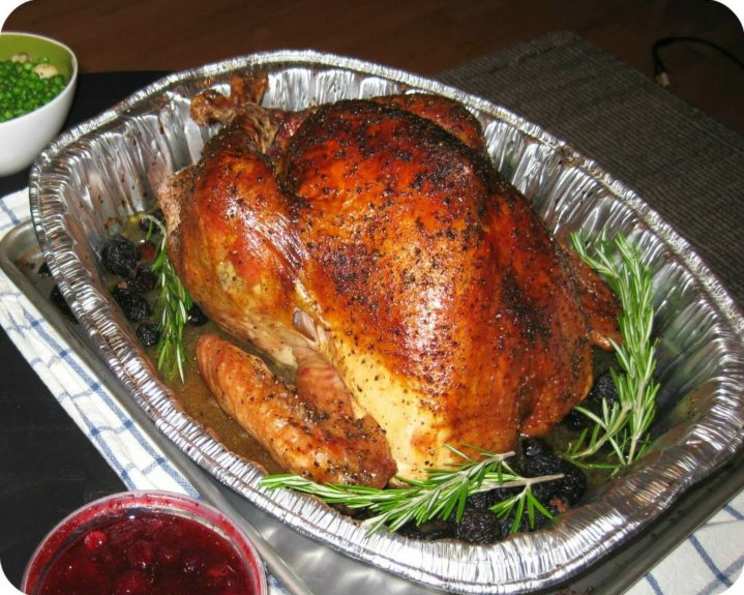
The Ultimate Roast Turkey: A Masterclass in Brining and Roasting
The aroma of a perfectly roasted turkey is, to me, the very essence of celebration. I remember one Thanksgiving, years ago, when a sudden power outage threatened to derail our entire feast. Amidst the panic, I remembered a trick I’d learned – a robust brine that not only kept the bird moist but also allowed for a shorter, more intense initial roast. It was a game-changer, and this recipe, a beautiful marriage of Alton Brown’s scientific approach and Giada De Laurentiis’s Italian flair for flavor, has become my go-to, a testament to how thoughtful preparation can rescue even the most daunting culinary moments.
Recipe Overview
- Prep Time: 30 minutes (plus 6 hours brining)
- Cook Time: 2 hours to 2.5 hours
- Total Time: 7 hours 15 minutes (including brining)
- Servings: 12
- Yield: 1 whole roasted turkey
- Dietary Type: Dairy-Free (if canola oil is used)
Ingredients
For the Brine
- 1 (14-16 lb) frozen young whole turkey
- 1 cup kosher salt
- 1/2 cup light brown sugar
- 1 gallon vegetable stock or 1 gallon water
- 1 tablespoon peppercorn
- 1/2 tablespoon allspice berry
- 1/2 tablespoon candied ginger
- 1 gallon ice-cold water (approximately 3 quarts water plus 2 lbs of ice will achieve this)
To Roast
- 1 red apple, cut in wedges
- 1 cinnamon stick
- 1 cup water
- 1 lemon, cut in 6-8 wedges
- 1 orange, cut in 8 wedges
- 1 medium onion, cut in 8 wedges
- 2 sprigs fresh rosemary
- 2 sprigs fresh sage
- 2 sprigs fresh oregano
- Canola oil (or other neutral oil)
For the Gravy
- 6 cups canned low-sodium chicken broth (approximate amount)
- 5 tablespoons butter
- 1/3 cup all-purpose flour
Equipment Needed
- Large stockpot or 5-gallon bucket for brining
- Roasting pan with a rack
- Microwave-safe dish
- Aluminum foil
- Probe thermometer
- Sieve
- 4-cup glass measuring cup
- Heavy large saucepan
Instructions
The journey to a magnificent roast turkey begins long before it hits the oven. It starts with a thoughtful brine, a process that infuses the bird with moisture and flavor, ensuring every bite is succulent.
-
Prepare the Brine: In a large stockpot, combine the kosher salt, light brown sugar, vegetable stock (or water), peppercorn, allspice berry, and candied ginger. Bring this mixture to a boil over medium-high heat, stirring occasionally until all the salt and sugar have completely dissolved. Once dissolved, remove the pot from the heat and allow it to cool completely to room temperature. Once cooled, refrigerate the brine until it is thoroughly chilled.
-
Chill the Brine for Soaking: Early on the day of cooking, or even the night before, you’ll prepare the brine for soaking the turkey. In a clean 5-gallon bucket or a large 20-quart stock pot, combine the chilled brine with 1 gallon of ice-cold water. If you’re making the brine on the same day you intend to use it, you can speed up the chilling process by using about 2 cups of cold water and a 7 lb bag of ice in place of the 1 gallon of ice-cold water.
-
Brine the Turkey: Once your brine is ready and cold, carefully place your thawed turkey into the brine mixture, ensuring it is fully submerged. Position the turkey breast-side down. Cover the container and refrigerate the turkey in the brine for a total of 6 hours. Midway through the brining period, turn the turkey over to ensure even brining. If you are not brining in a refrigerator and are using a cool area like a basement, it’s crucial to add a few pounds of extra ice halfway through the brining process to maintain a safe, cold temperature.
-
Prepare Aromatics for Roasting: A few minutes before you’re ready to roast the turkey, preheat your oven to a blazing 500 degrees F. In a microwave-safe dish, combine the red apple (cut into wedges), the onion (cut into 8 wedges), the cinnamon stick, and 1 cup of water. Microwave this mixture on high power for 5 minutes. This step gently steams the aromatics, intensifying their flavor.
-
Rinse and Dry the Turkey: Remove the turkey from the brine, allowing any excess brine to drain off. Thoroughly rinse the turkey, both inside and out, with cold water. Discard the used brine. Pat the turkey completely dry with paper towels; a dry surface is essential for achieving crispy skin.
-
Prepare for Roasting: Place the rinsed and dried turkey on a roasting rack inside a wide, low-sided roasting pan. Add the steeped aromatics from the microwave to the turkey’s cavity. Tuck in the lemon wedges, orange wedges, sprigs of fresh rosemary, fresh sage, and fresh oregano alongside the apple and onion. Tuck the wing tips underneath the breast to prevent them from burning. Generously coat the entire surface of the turkey with canola oil.
-
The Initial High-Heat Roast: Place the roasting pan on the lowest level of your oven. Roast the turkey at 500 degrees F for precisely 30 minutes. This initial blast of high heat is key to setting the skin and beginning the rendering of fat.
-
Continue Roasting at Lower Temperature: Carefully remove the turkey from the oven. Pour 3 cups of chicken broth into the bottom of the roasting pan, using a spatula or spoon to scrape up any browned bits (fond) that have adhered to the pan. This fond is pure flavor, essential for a delicious gravy. Cover the breast of the turkey tightly with a double layer of aluminum foil. Insert a probe thermometer into the thickest part of the turkey breast, ensuring it does not touch bone. Return the turkey to the oven and reduce the temperature to 350 degrees F.
-
Monitor Temperature and Add Broth: After 45 minutes of roasting at 350 degrees F, add 1 more cup of chicken broth to the roasting pan. Set your thermometer alarm, if you have one, to 161 degrees F. For a 14 to 16 pound bird, the total roasting time should be approximately 2 to 2.5 hours from the moment you reduced the oven temperature.
-
Rest the Turkey: Once the thermometer registers 161 degrees F, remove the turkey from the oven. Loosely cover it with foil and let it rest for 15 to 30 minutes before carving. This resting period is critical for the juices to redistribute throughout the meat, ensuring a moist and tender bird.
-
Make the Gravy: While the turkey rests, prepare the gravy. Strain the turkey pan juices from the roasting pan through a fine-mesh sieve into a 4-cup glass measuring cup. Discard the solids. Carefully spoon off the rendered fat from the surface of the pan juices. Add enough chicken broth to the pan juices to measure a total of 4 cups. In a heavy, large saucepan, melt the butter over medium-high heat. Add the all-purpose flour and whisk continuously for 1 minute, creating a roux. Gradually whisk in the combined pan juices and chicken broth mixture. Bring the gravy to a simmer and cook, whisking often, until it thickens slightly, which should take about 10 minutes. Season the gravy generously with salt and pepper to taste. Serve the turkey with the rich, flavorful gravy.
Expert Tips & Tricks
- Brine Timing is Key: While 6 hours is the recommended brining time, you can go up to 8 hours for a 16-pound bird, but avoid brining for much longer, as the turkey can become too salty.
- Turkey Temperature is Paramount: Always trust your thermometer! Oven temperatures can vary, and visual cues alone can be misleading. Aim for that 161°F in the breast.
- Don’t Skimp on the Rest: The resting period is non-negotiable. It allows the muscle fibers to relax and reabsorb moisture, preventing a dry turkey.
- Gravy Fond Extraction: For maximum flavor in your gravy, use a flat spatula to really get into all the nooks and crannies of the roasting pan when scraping up the fond.
Serving & Storage Suggestions
Carve the rested turkey into thick slices and arrange them attractively on a platter. Ladle the rich, homemade gravy generously over the turkey. This turkey is a spectacular centerpiece for any holiday meal, complemented beautifully by classic sides like mashed potatoes, stuffing (baked separately, of course!), cranberry sauce, and green bean casserole.
Leftover turkey can be stored in an airtight container in the refrigerator for up to 3-4 days. For longer storage, wrap it tightly and freeze for up to 2-3 months. Reheat leftovers gently, either by moistening with a bit of broth or gravy in a covered dish in the oven or microwave, to prevent drying out.
Nutritional Information
| Nutrient | Amount per Serving | % Daily Value |
|---|---|---|
| Calories | 748.7 kcal | |
| Calories from Fat | 330 kcal | |
| Total Fat | 36.7 g | 56% |
| Saturated Fat | 12 g | 60% |
| Cholesterol | 276.1 mg | 92% |
| Sodium | 9774.6 mg | 407% |
| Total Carbohydrate | 18.2 g | 6% |
| Dietary Fiber | 1.2 g | 4% |
| Sugars | 12.2 g | 48% |
| Protein | 82.3 g | 164% |
Note: Nutritional information is an estimate and will vary based on exact ingredients and portion sizes.
Variations & Substitutions
While this recipe is a triumph on its own, feel free to customize the aromatics. Consider adding sprigs of thyme to the cavity, or wedges of pear alongside the apple. For a slightly different brine profile, you could incorporate a few bay leaves or a strip of orange peel. If you prefer not to use vegetable stock, a good quality low-sodium chicken or turkey broth works equally well in the brine.
FAQs
Q: Why is brining so important for turkey?
A: Brining introduces moisture and seasoning deep into the turkey’s meat, ensuring it remains succulent and flavorful, even after roasting.
Q: Can I brine a fresh turkey?
A: Yes, you can brine a fresh turkey. However, ensure it hasn’t been pre-salted or treated with a solution, as this could make the final product too salty.
Q: How do I know if my turkey is fully cooked?
A: The most accurate way is to use a meat thermometer. The thickest part of the thigh should register 170-175°F and the breast should register 161°F.
Q: My oven runs hot, what should I do?
A: If you know your oven runs hot, consider reducing the temperature by 25 degrees F for the lower-temperature roasting phase. Always monitor with a thermometer.
Q: What can I do with the turkey carcass?
A: The carcass is perfect for making a rich, flavorful turkey stock or broth. Simmer it with mirepoix (celery, carrots, onions) and herbs for a delicious base for soups and sauces.
Final Thoughts
This meticulously crafted turkey recipe, born from the best of Alton Brown’s scientific approach and Giada De Laurentiis’s passion for flavor, is more than just a meal; it’s an experience. The journey from brining to the final, glorious roast is a rewarding one, yielding a turkey that is incredibly moist, flavorful, and boasts a beautifully crisp skin. I encourage you to embrace this method, savor the process, and share the incredible results with your loved ones. Pair this magnificent bird with a crisp Riesling or a robust Pinot Noir for an unforgettable dining experience.