
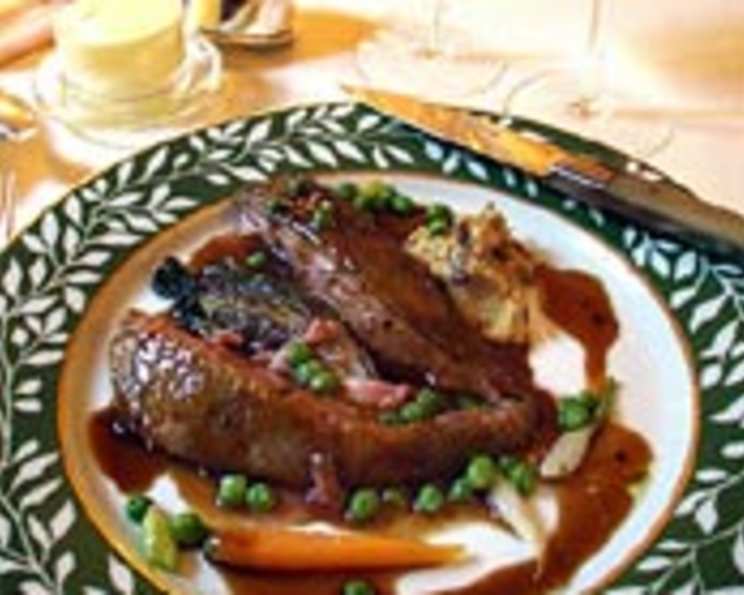
A Symphony of Savory and Sweet: Roast Wild Duck with Tangy Cranberry Sauce
There’s a particular magic that happens when the rich, gamey depth of wild duck meets the vibrant, assertive punch of cranberries. I remember one crisp autumn evening, years ago, after a rather successful (and chilly!) hunting trip with my uncle. The air in the kitchen was thick with anticipation as we prepared to roast the bounty. He’d always insisted on a simple yet elegant preparation, letting the duck’s natural character shine. The aroma that filled our home that night, a complex blend of roasting fowl and simmering berries, is etched into my memory – a testament to the power of well-loved, time-honored recipes. This dish evokes that feeling of rustic celebration, a true taste of the wild season.
Recipe Overview
- Prep Time: 90 minutes (includes thawing and initial preparation)
- Cook Time: 2 hours to 2 hours and 30 minutes
- Total Time: 3 hours to 3 hours and 30 minutes
- Servings: 2
- Yield: 1 whole roasted duck with sauce
- Dietary Type: Gluten-Free, Dairy-Free (if butter is substituted with oil)
Ingredients
- For the Duck:
- 1 whole wild duck, approximately 4-5 lbs
- 1/2 lemon
- Salt, to taste
- Fresh ground black pepper, to taste
- For the Cranberry Sauce:
- 1/4 cup port wine
- 2 tablespoons butter (or a dairy-free alternative like olive oil)
- 2 tablespoons all-purpose flour
- 1 cup chicken broth
- 1/4 cup orange juice
- 2-4 tablespoons brown sugar, to taste
- 1/2 cup fresh cranberries
- 1 dash cayenne pepper
Equipment Needed
- Roasting pan (preferably with a rack)
- Sharp knife or poultry shears
- Fork
- Saucepan
- Whisk
- Measuring cups and spoons
- Oven
Instructions
The journey to a perfectly roasted wild duck with its accompanying cranberry sauce begins with mindful preparation, ensuring that each element contributes to the final symphony of flavors.
- Prepare the Duck: Begin by rinsing the duck under cold water, both inside and out. Gently pat it dry thoroughly with paper towels. This step is crucial for achieving a crisp skin. Inspect the duck and remove any large lumps of fat from the skin, particularly around the cavity.
- Season the Duck: Take the half lemon and rub it generously all over the inside cavity and the skin of the duck. This imparts a subtle citrus brightness that cuts through the richness of the game. Next, season the cavity and the skin liberally with salt and fresh ground black pepper to taste. Don’t be shy with the seasoning; wild game benefits from a good amount.
- Truss and Initial Roast: Truss the bird by tying the legs together and tucking the wing tips under the body. This helps the duck cook more evenly. Place the trussed duck on a rack set inside a shallow roasting pan. Roast the duck in a preheated oven at 350°F (175°C) for 30 minutes. This initial roast begins to render the fat and set the skin.
- Render and Continue Roasting: After the initial 30 minutes, pierce the skin all over with a fork. Be sure to pierce through the skin and into the fat layer, but avoid piercing the meat itself. This allows the abundant fat to escape during cooking, leading to a crispier skin. Continue roasting the duck until it is completely cooked, which will typically take around 1.5 to 2 hours longer. The total roasting time will depend on the size of the duck and your oven.
- Manage the Fat and Crisp the Skin: Throughout the roasting process, once every hour, remove all but 1 cup of fat from the roasting pan. Save this rendered duck fat for other culinary adventures – it’s liquid gold! Leaving some fat in the pan helps prevent scorching. In the final 15 minutes of roasting, increase the oven temperature to 500°F (260°C). This high heat blast is essential for achieving a beautifully crisped skin.
- Rest and Prepare the Sauce Base: Once the duck is cooked to perfection, remove it from the oven and set it on a warm plate. Tent it loosely with foil to keep it warm while you prepare the sauce. Pour off and discard any remaining fat from the roasting pan.
- Build the Cranberry Sauce: Place the roasting pan directly on top of the stove over low heat. Add the port wine to the pan and heat gently, scrapping up any browned bits from the bottom of the pan with a wooden spoon or whisk. These browned bits are packed with flavor and will form the base of your sauce.
- Thicken the Sauce: Add the butter (or your chosen oil) to the pan and heat until it’s melted. Add the flour, stirring constantly until a smooth paste forms. Cook for about a minute to cook out the raw flour taste. Gradually whisk in the chicken broth, whisking constantly to ensure a smooth, lump-free sauce. Continue to whisk and cook until the sauce is smooth and thickened, which should take around 2 to 3 minutes.
- Flavor the Sauce: Stir in the orange juice and 2 tablespoons of brown sugar. Mix well to combine. Add the fresh cranberries and cook over high heat until the cranberries pop, which will take approximately 2 to 3 minutes. This releases their tart juices and softens them.
- Adjust Seasoning: Add the cayenne pepper. Season the sauce with more salt and pepper to taste. If you find the sauce is too tart for your liking, add more brown sugar, a tablespoon at a time, until the desired sweetness is achieved.
- Serve: To serve, use poultry shears to cut the duck in half lengthwise. Place each half on a serving dish. Pour half of the cranberry sauce over each serving. Serve immediately.
Expert Tips & Tricks
Wild duck, with its inherent richness, requires a slightly different approach than its domesticated cousin. The key is to manage the fat effectively to achieve that coveted crispy skin without drying out the meat. Don’t shy away from piercing the skin thoroughly; it’s not about damaging the duck, but about coaxing out its natural goodness. The port wine in the sauce isn’t just for flavor; its subtle sweetness and depth complement the duck beautifully, while the browned bits scraped from the pan are a treasure trove of umami. For an even more robust flavor, consider adding a sprig of fresh thyme or rosemary to the duck’s cavity during roasting.
Serving & Storage Suggestions
This roast wild duck with cranberry sauce is a star on its own, but it pairs wonderfully with earthy sides like roasted root vegetables, wild rice pilaf, or a simple green salad. If you have leftovers, store them in an airtight container in the refrigerator for up to 3 days. The duck meat can be gently reheated in a low oven (around 300°F/150°C) to preserve moisture, or it can be a fantastic addition to salads or sandwiches. The cranberry sauce can also be stored in the refrigerator and is excellent served cold or gently warmed.
Nutritional Information
| Nutrient | Amount per Serving | % Daily Value |
|---|---|---|
| Calories | 3947.6 kcal | |
| Calories from Fat | ||
| Total Fat | 369.6 g | 568% |
| Saturated Fat | 127.6 g | 637% |
| Cholesterol | 720.6 mg | 240% |
| Sodium | 1054.5 mg | 43% |
| Total Carbohydrate | 31.7 g | 10% |
| Dietary Fiber | 1.8 g | 7% |
| Sugars | 20.1 g | 80% |
| Protein | 108.3 g | 216% |
Note: Nutritional values are estimates and can vary based on exact ingredients and portion sizes.
Variations & Substitutions
While the classic combination is hard to beat, a few variations can elevate this dish further. If you’re not a fan of port wine, a good quality dry red wine can be substituted. For a brighter, more citrus-forward sauce, increase the orange juice and consider adding a tablespoon of lemon zest. If fresh cranberries are out of season, frozen cranberries work just as well. For a richer sauce, you could whisk in a tablespoon of cold butter at the very end, off the heat, for a glossy finish.
FAQs
Q: How do I know when the wild duck is fully cooked?
A: The most reliable way is to use an instant-read thermometer. Insert it into the thickest part of the thigh, avoiding the bone. The duck is cooked when it registers 165°F (74°C). The juices should also run clear when pierced.
Q: My duck skin isn’t crisping up, what should I do?
A: Ensure the duck is thoroughly patted dry before roasting. Piercing the skin all over is crucial for fat rendering. The final blast of high heat at 500°F (260°C) is also essential. If it’s still not crisp enough, you can place it under the broiler for a few minutes, watching very carefully to prevent burning.
Q: Can I use a domesticated duck instead of wild duck?
A: Absolutely! If you can’t find wild duck, a Pekin or Muscovy duck will work. Keep in mind that domesticated ducks are generally fattier, so you may need to adjust the amount of rendered fat you remove during cooking.
Q: What can I do with the rendered duck fat?
A: Rendered duck fat is incredibly versatile! It’s fantastic for roasting potatoes, making crispy fried chicken, or even sautéing vegetables. Store it in an airtight container in the refrigerator.
Q: Is it necessary to truss the duck?
A: Trussing helps the duck cook more evenly by keeping the legs and wings close to the body. It also creates a more aesthetically pleasing presentation. If you don’t truss, the legs might cook faster than the breast.
A Taste of Tradition
There’s a profound satisfaction in preparing a dish like roast wild duck with cranberry sauce. It’s more than just a meal; it’s an experience that connects us to seasons, to tradition, and to the primal pleasure of savoring nature’s bounty. I encourage you to embrace the nuances of cooking wild game and to let the rich flavors speak for themselves. Don’t hesitate to share your culinary triumphs and any adjustments you make along the way. This dish, with its perfect balance of savory depth and vibrant tartness, is a testament to the enduring appeal of well-crafted, heartfelt cooking.