
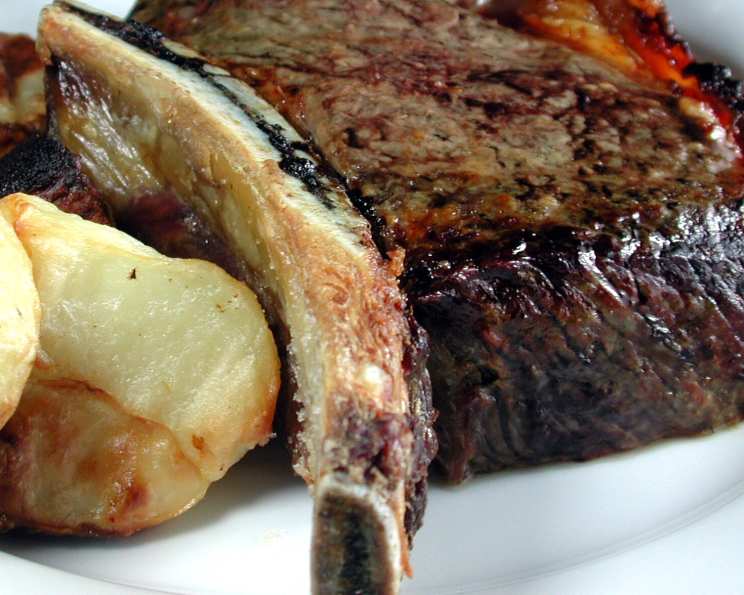
A Culinary Masterpiece: Roasted Beef Rib Eye with Hearty Root Vegetables
There’s something profoundly comforting about a perfectly roasted beef rib eye. I remember one blustery autumn evening, many years ago, when I was tasked with preparing a special dinner for my family. The air outside was crisp, carrying the scent of fallen leaves, and inside, my kitchen was a symphony of warm aromas. As the rib eye slowly transformed in the oven, filling the house with its rich, savory perfume, I felt a sense of anticipation building. And when it finally emerged, glistening and tender, surrounded by the earthy sweetness of roasted root vegetables, it was more than just a meal; it was a memory etched in flavor, a testament to the simple magic of good food shared. This dish, with its robust beef and grounding vegetables, has always been a symbol of warmth and togetherness for me.
Recipe Overview
- Prep Time: 30 minutes
- Cook Time: 1 hour 45 minutes to 2 hours
- Total Time: 2 hours 15 minutes to 2 hours 30 minutes
- Servings: 8
- Yield: 1 roast and vegetables
- Dietary Type: Gluten-Free, Dairy-Free
Ingredients
This recipe celebrates the unadorned beauty of quality beef and the natural sweetness of seasonal root vegetables.
For the Beef Rib Eye Roast:
- 1 (4 lb) well-trimmed beef rib eye roast, small end
For the Root Vegetables:
- 3 tablespoons vegetable oil
- 2 medium baking potatoes, quartered
- 2 large sweet potatoes, halved, quartered
- 4 small onions, halved
For the Seasoning:
- 2 tablespoons minced fresh rosemary (or 2 teaspoons dried rosemary)
- 4 garlic cloves, minced
- 1 teaspoon salt
- 1 teaspoon dry mustard
- 1 teaspoon freshly cracked black pepper
Equipment Needed
- Roasting pan with a rack
- Ovenproof meat thermometer
- Large mixing bowl
- Aluminum foil
Instructions
Crafting this impressive roast and its accompanying vegetables is a rewarding culinary journey. Follow these steps precisely to achieve a spectacular result.
- Begin by preheating your oven to 350°F (175°C). This consistent, moderate heat is crucial for tenderizing the roast while allowing the vegetables to caramelize beautifully.
- In a small bowl, combine all the seasoning ingredients: the minced rosemary, minced garlic, salt, dry mustard, and freshly cracked black pepper. Stir them together to create a fragrant, flavorful rub.
- Take about half of this seasoning mixture and press it evenly onto the entire surface of the beef rib eye roast. This initial rub will infuse the beef with aromatic depth.
- In a large mixing bowl, combine the remaining seasoning mixture with the vegetable oil. Whisk them together to create a dressing.
- Add the prepared vegetables – the quartered baking potatoes, halved and quartered sweet potatoes, and halved onions – to the bowl with the seasoned oil. Toss them gently to ensure they are well coated.
- Place the rib eye roast, fat side up, on the rack in your shallow roasting pan. The fat cap will baste the meat as it cooks, contributing to its succulence.
- Insert an ovenproof meat thermometer into the thickest part of the beef, ensuring the tip is centered and not resting in any fat. This is your most reliable tool for achieving the desired doneness.
- Do not add water or cover the roast. Allowing air to circulate freely around the beef promotes even cooking and a beautifully browned exterior.
- Place the roasting pan in the preheated oven and roast for 1 hour and 30 minutes for medium-rare, or 1 hour and 45 minutes for medium doneness.
- After the roast has been cooking for about 15 to 30 minutes, arrange the seasoned vegetables on the rack around the roast. They will roast alongside the beef, absorbing some of its delicious drippings.
- Continue to roast the vegetables for 1 hour and 15 minutes, or until they are tender and lightly caramelized.
- Once the meat thermometer registers 135°F (57°C) for medium-rare or 150°F (65°C) for medium, remove the roast from the oven.
- Tent the roast loosely with aluminum foil and allow it to stand for 15 to 20 minutes. This resting period is critical; it allows the juices to redistribute throughout the meat, resulting in a more tender and flavorful steak. During this time, the internal temperature will continue to rise by about 10°F, reaching 145°F (63°C) for medium-rare or 160°F (71°C) for medium.
- While the roast is resting, the vegetables should be perfectly tender.
- Carve the rested roast into thick, succulent slices. Serve immediately with the roasted root vegetables.
Expert Tips & Tricks
- Selecting the Rib Eye: For the best flavor and texture, choose a rib eye roast that has good marbling – those fine flecks of fat within the muscle. This marbling will melt during cooking, adding incredible richness and moisture. A “small end” cut generally has a more uniform shape, making it easier to cook evenly.
- The Power of Resting: I cannot stress enough the importance of letting the roast rest. Skipping this step is one of the most common mistakes that leads to dry, tough beef. The resting period is as much a part of the cooking process as the time spent in the oven.
- Vegetable Uniformity: When quartering the potatoes and sweet potatoes, try to make the pieces as uniform in size as possible. This ensures they all cook at the same rate, preventing some from becoming mushy while others remain undercooked.
- Herb Freshness: While dried rosemary can be used, fresh rosemary offers a more vibrant, potent aroma and flavor that truly elevates the dish. If using dried, remember that its flavor is more concentrated, so the 2-teaspoon amount is appropriate.
- Don’t Fear the Fat: The fat cap on the rib eye roast is there for a reason. It renders down during cooking, basting the meat and contributing significantly to its moistness and flavor. Keep it on during the initial roasting.
Serving & Storage Suggestions
This magnificent Roasted Beef Rib Eye with Root Vegetables is a showstopper on its own. For a complete meal, consider serving it with a simple green salad dressed with a light vinaigrette to provide a refreshing contrast. A robust red wine, such as a Cabernet Sauvignon or a Merlot, is a classic pairing that complements the richness of the beef beautifully.
Leftovers can be stored in an airtight container in the refrigerator for up to 3 to 4 days. The beef will retain its best quality when reheated gently. You can do this by slicing the beef and warming it in a little broth or gravy over low heat on the stovetop, or by placing the slices on a baking sheet with a touch of liquid and reheating in a moderate oven (around 300°F/150°C) until just warmed through. Avoid microwaving, as it can toughen the meat. The roasted vegetables can also be reheated similarly, though they may become softer.
Nutritional Information
| Nutrient | Amount per Serving | % Daily Value |
|---|---|---|
| Calories | 743.9 kcal | |
| Calories from Fat | ||
| Total Fat | 53.7 g | 82% |
| Saturated Fat | 20.9 g | 104% |
| Cholesterol | 154.2 mg | 51% |
| Sodium | 439.2 mg | 18% |
| Total Carbohydrate | 21.2 g | 7% |
| Dietary Fiber | 2.6 g | 10% |
| Sugars | 3.3 g | 13% |
| Protein | 41.7 g | 83% |
Note: Nutritional values are estimates and can vary based on specific ingredients and portion sizes.
Variations & Substitutions
While this recipe is spectacular as is, feel free to experiment with it!
- Other Root Vegetables: If you can’t find sweet potatoes, parsnips or carrots make excellent substitutes. Simply cut them into similar-sized pieces to ensure even cooking. You could also add chunks of celery root or turnips for a more complex earthy flavor.
- Herb Variations: If rosemary isn’t your favorite, thyme or a combination of sage and rosemary would be delightful. For a spicier kick, consider adding a pinch of red pepper flakes to the seasoning rub.
- Garlic Intensity: For a milder garlic flavor, you can roast whole, unpeeled garlic cloves alongside the vegetables. Squeeze the softened garlic out of its skin before serving; it will have a sweet, mellow taste.
FAQs
Q: Why is the beef rib eye roast fat side up?
A: Placing the roast fat side up allows the rendered fat to baste the meat as it cooks, keeping it moist and adding flavor.
Q: How do I know when the beef is cooked to my desired doneness?
A: The most accurate way is to use an ovenproof meat thermometer. Insert it into the thickest part of the roast, avoiding fat. For medium-rare, aim for 135°F (57°C) before resting, and for medium, aim for 150°F (65°C).
Q: Can I prepare the vegetables ahead of time?
A: You can wash and cut the vegetables a few hours in advance and store them in water in the refrigerator. Drain them thoroughly and pat them dry before tossing with the oil and seasoning to ensure they roast properly.
Q: What if my vegetables are not tender after 1 hour and 15 minutes?
A: Ovens can vary. If your vegetables are not yet tender, you can leave them in the oven for an additional 10-15 minutes, keeping an eye on them to prevent burning. You can also remove the roast once it’s rested and return the vegetables to the oven alone for a bit longer.
Q: Is it possible to sear the roast before putting it in the oven?
A: While this recipe does not require searing, you could sear the roast in a hot, oven-safe skillet with a little oil before placing it in the roasting pan for an even more developed crust. Be sure to use the same fat side up orientation in the roasting pan.
Final Thoughts
This Roasted Beef Rib Eye with Root Vegetables is a dish that speaks of comfort, tradition, and the sheer pleasure of a well-cooked meal. It’s a testament to how simple, high-quality ingredients, prepared with care, can create something truly extraordinary. I encourage you to gather your loved ones, fill your kitchen with these wonderful aromas, and savor every bite. Share your culinary triumphs and any delicious adaptations you discover in the comments below!