
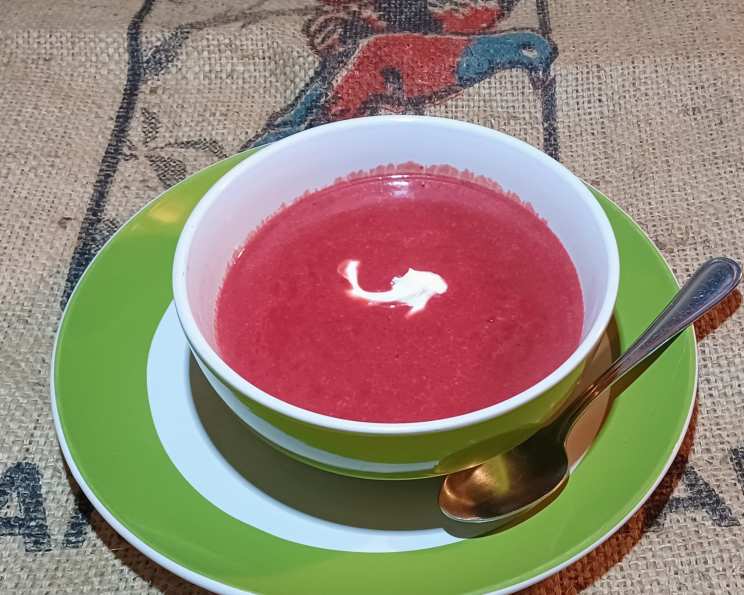
Avelvet Embrace: Roasted Beet and Potato Soup
There’s a unique magic that happens when humble root vegetables meet the transformative heat of the oven. I still vividly recall a particularly chilly evening, staring at a mountain of vibrant, earthy beets I’d roasted earlier that day, wondering how to best showcase their deep, jewel-toned beauty. Instead of simply adding them as a side, an impulse struck: a creamy, soul-warming soup. The resulting concoction was a revelation, a comforting hug in a bowl that tasted like autumn’s deepest secrets. This soup is more than just a meal; it’s a testament to how simple ingredients, treated with care, can create something truly extraordinary.
Recipe Overview
- Prep Time: 20 minutes
- Cook Time: 30 minutes
- Total Time: 50 minutes
- Servings: 4
- Yield: Approximately 6 cups
- Dietary Type: Vegetarian (can be made Vegan)
Ingredients
- 1 tablespoon butter
- 1 medium onion, chopped
- 1-2 garlic cloves, cut in half
- 2 cups diced potatoes, about 1 lb
- 2 cups diced roasted beets, about 1 lb (note: if using fresh beets, see introduction for roasting time adjustment)
- 1 tablespoon dried celery flakes
- 1/2 teaspoon dried thyme
- 1/2 teaspoon salt
- 1 bay leaf
- 2-3 black peppercorns
- 3-4 cups low sodium chicken broth (vegetable broth can be substituted for vegetarian/vegan option)
- 1 (12 ounce) can evaporated milk (full-fat or low-fat)
Equipment Needed
- Medium saucepan or Dutch oven
- Immersion blender (or a regular blender)
- Measuring cups and spoons
- Cutting board and knife
Instructions
- Begin by melting the butter in a medium saucepan or Dutch oven over medium heat.
- Add the chopped onion and the garlic cloves to the melted butter.
- Sauté the onions and garlic gently until the onions become translucent. It’s crucial to avoid browning them at this stage; we want their sweet essence, not a roasted flavor, to infuse the soup.
- Next, introduce all the remaining ingredients to the pot, with the exception of the evaporated milk. This includes the diced potatoes, diced roasted beets, dried celery flakes, dried thyme, salt, bay leaf, and black peppercorns.
- Pour in just enough low sodium chicken broth to cover the vegetables by about 1/2 inch. This ensures everything simmers evenly and begins to break down.
- Bring the mixture to a boil. Once boiling, reduce the heat to low, cover the saucepan, and simmer for approximately 25 minutes. The goal here is to cook until all the vegetables are quite tender. Stir occasionally to prevent anything from sticking to the bottom of the pot.
- After the vegetables have softened, remove the saucepan from the heat. Carefully fish out and discard the bay leaf.
- Now, it’s time to achieve that signature velvety texture. Puree the soup using an immersion blender directly in the pot. If you don’t have an immersion blender, carefully transfer the soup in batches to a regular blender and process until smooth. Be sure to vent the blender lid and cover it with a kitchen towel to avoid steam burns.
- Stir in the evaporated milk to add richness and a creamy finish. If the soup seems thicker than you prefer, add more broth (or water) until you reach your desired consistency.
- Return the soup to the stove over low heat. Gently heat the soup through, ensuring it does not boil after the milk has been added.
- Taste and adjust salt and pepper as needed.
Expert Tips & Tricks
The beauty of this soup lies in its simplicity, but a few touches can elevate it further. If you’re short on time and can’t roast beets fresh, high-quality canned or pre-cooked beets will work well, though they might lend a slightly different, less intense beet flavor. For an even silkier texture, you can strain the pureed soup through a fine-mesh sieve, though this is often an unnecessary step for a home cook seeking comfort food.
Serving & Storage Suggestions
This Roasted Beet and Potato Soup is wonderful served hot, perhaps with a dollop of plain yogurt or a swirl of sour cream as a garnish. A sprinkle of fresh chives or parsley can also add a bright, herbaceous contrast. Leftovers can be stored in an airtight container in the refrigerator for up to 3-4 days. When reheating, you will likely need to add a bit more broth or water, as the soup tends to thicken upon standing. Gently warm it on the stovetop over low heat, stirring frequently.
Nutritional Information
| Nutrient | Amount per Serving | % Daily Value |
|---|---|---|
| Calories | 276.1 kcal | |
| Calories from Fat | ||
| Total Fat | 10.7 g | 16% |
| Saturated Fat | 6.1 g | 30% |
| Cholesterol | 32.3 mg | 10% |
| Sodium | 531.5 mg | 22% |
| Total Carbohydrate | 35.2 g | 11% |
| Dietary Fiber | 3.9 g | 15% |
| Sugars | 8.8 g | 35% |
| Protein | 12.7 g | 25% |
Note: Nutritional values are estimates and can vary based on specific ingredients and portion sizes.
Variations & Substitutions
For a completely vegan and dairy-free version, simply substitute the butter with olive oil or vegan butter, and replace the evaporated milk with unsweetened full-fat coconut milk or a creamy cashew cream. If you prefer a lighter soup, you can certainly use half-and-half instead of evaporated milk, though it will alter the calorie and fat content. For those who enjoy a touch of spice, a pinch of cayenne pepper or a dash of hot sauce can be stirred in during the final heating stage. If you don’t have dried celery flakes, 1/2 cup of finely chopped fresh celery sautéed with the onions would be a delightful substitute. Similarly, 1/4 teaspoon of freshly ground black pepper can be used in place of the peppercorns if desired.
FAQs
Q: Can I use fresh beets instead of roasted beets for this soup?
A: Absolutely! If you choose to use fresh beets, you’ll need to add them to the pot along with the potatoes and simmer until both are tender. The total cooking time for the vegetables might increase by up to an hour, depending on the size of your beet pieces.
Q: What’s the best way to ensure a smooth soup texture?
A: Using an immersion blender directly in the pot is generally the easiest and most effective method for achieving a creamy, smooth soup. For an extra-velvety consistency, you can strain the pureed soup through a fine-mesh sieve, but this is typically not necessary.
Q: Why is evaporated milk recommended over regular milk?
A: Evaporated milk has a slightly richer, more concentrated flavor and a thicker consistency than regular milk, which contributes to a luxurious texture in soups. It also tends to hold its texture better when heated.
Q: Can this soup be made ahead of time?
A: Yes, this soup is an excellent candidate for make-ahead preparation. It can be fully cooked and stored in the refrigerator for up to 3-4 days. You may need to add a splash of broth or water when reheating to achieve the desired consistency.
Q: What kind of broth is best for this soup?
A: A low-sodium chicken broth is recommended for its subtle savory depth. For a vegetarian or vegan option, a good quality low-sodium vegetable broth works beautifully and ensures the beet flavor shines through.
Final Thoughts
This Roasted Beet and Potato Soup is a testament to the power of simplicity and seasonality. It’s a dish that nourishes the body and warms the soul, perfect for a blustery evening or a quiet Sunday lunch. I encourage you to embrace the vibrant color and earthy sweetness that roasted beets bring to the table, and I’m eager to hear about your own culinary adventures with this comforting creation. Perhaps you’ll pair it with a crusty artisanal bread for dipping or a light green salad to balance its richness. However you choose to enjoy it, may it bring as much joy to your table as it has to mine.