
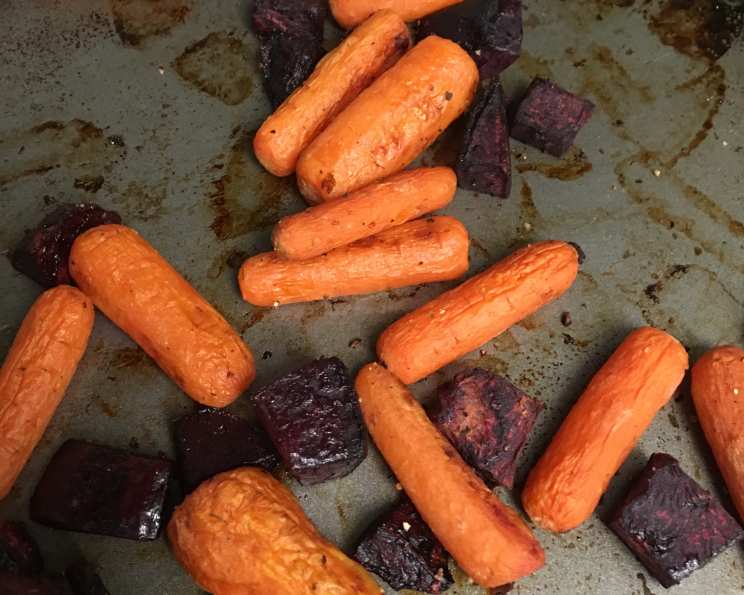
The Earthy Sweetness of Roasted Beets and Carrots: A Symphony of Root Vegetables
There are certain flavors that instantly transport me back to my grandmother’s kitchen, the air thick with the comforting aroma of slow-cooked goodness. For me, roasted root vegetables hold that power. I remember, vividly, a crisp autumn evening when I was no older than seven. My grandmother, her hands dusted with flour and a gentle smile on her face, presented a platter piled high with jewel-toned vegetables, glistening from the oven. The deep crimson of beets, the vibrant orange of carrots, all kissed with caramelization. It was a revelation – a simple dish, yet so profound in its earthy sweetness and tender chew. That memory, of vibrant colors and profound flavor, is what inspired me to perfect this recipe, a testament to the humble beauty of ingredients allowed to shine.
Recipe Overview
- Prep Time: 20 minutes
- Cook Time: 60 minutes
- Total Time: 1 hour 20 minutes
- Servings: 6
- Yield: Side Dish
- Dietary Type: Vegan, Gluten-Free, Dairy-Free
Ingredients
- 2-3 medium beets
- 4-5 carrots
- 1/2 cup olive oil, divided
- 1/2 cup balsamic vinegar, divided
- 2 teaspoons kosher salt, divided
- 2 tablespoons turbinado sugar (such as Sugar in the Raw), divided
Equipment Needed
- Large mixing bowl
- Baking pan (such as a rimmed baking sheet)
- Vegetable peeler
- Sharp knife
- Cutting board
Instructions
This dish is a beautiful illustration of how simple techniques can coax out the most incredible flavors from humble root vegetables. The slow roasting process transforms their natural sugars, creating a delightful caramelization that is both sweet and slightly savory.
- Begin by preparing your carrots. Peel them thoroughly, removing any dirt or tough outer layers. Then, cut them diagonally into wedges. Aim for pieces that are about 1 to 2 inches thick. If your carrots are particularly thick, you might want to make the wedges from the thicker end of the carrot about 1 inch thick, and from the thinner end about 2 inches thick, to ensure even cooking.
- Place these prepared carrot wedges into a large mixing bowl. Add 1/4 cup of olive oil, 1/4 cup of balsamic vinegar, 1 teaspoon of kosher salt, and 1 tablespoon of turbinado sugar. Toss everything together gently but thoroughly, ensuring each carrot piece is evenly coated. Set this bowl aside while you prepare the beets.
- Next, turn your attention to the beets. Peel them using a vegetable peeler. This might stain your hands, so consider wearing gloves if that’s a concern. Once peeled, slice the beets into cubes, aiming for a size of approximately 1 to 2 inches square. Much like the carrots, consistency in size will help with even cooking.
- Lightly spray your chosen baking pan with a nonstick cooking spray. This will help prevent the vegetables from sticking to the pan during the long roasting time.
- Give the carrots one final mix in their bowl. Then, gently empty them into half of the prepared baking pan, spreading them out in a single layer as much as possible.
- Now, bring the bowl you used for the carrots back into play for the beets. Add the cubed beets to this bowl. Then, toss them gently with the remaining 1/4 cup of olive oil, the remaining 1/4 cup of balsamic vinegar, the remaining 1 teaspoon of kosher salt, and the remaining 1 tablespoon of turbinado sugar. Ensure the beets are well coated.
- Let the beet mixture stand in the bowl for about 2 to 3 minutes. This brief resting period allows the vinegar to begin its work, tenderizing the beets slightly.
- After the short rest, toss the beets one more time to ensure everything is thoroughly mixed. Then, transfer the beet cubes to the other half of the baking pan, again, spreading them out in a single layer. You should now have your carrots on one side of the pan and your beets on the other.
- Bake in a preheated oven at 375-400°F (190-200°C) for one hour. Keep the pan uncovered throughout the baking process.
- During the hour of baking, toss each vegetable separately, once, about halfway through the cooking time. This ensures even caramelization and tenderness on all sides.
- Serve the roasted beets and carrots immediately. Their warmth and caramelized sweetness are best enjoyed fresh from the oven.
Expert Tips & Tricks
The beauty of this recipe lies in its simplicity, but a few nuances can elevate it even further. Using organic whole carrots is a wonderful suggestion, as it often results in a more concentrated and true “carrot” flavor that shines through the roasting process. I’ve also found that the choice of sugar can indeed make a subtle difference. Turbinado sugar, with its larger crystals, does tend to create a more pronounced and slightly slower caramelization, yielding a delightful crust. For an added visual appeal, especially when entertaining, consider the idea of arranging the roasted vegetables on a platter in a rainbow effect: golden beets, then carrots, followed by red beets. It’s a small detail, but one that adds a touch of elegance to this rustic dish.
Serving & Storage Suggestions
These roasted gems are incredibly versatile. They make a stunning side dish for a weeknight meal or can be a star player on a holiday table. For a beautiful presentation, arrange them slightly mounded on a serving platter, allowing the vibrant colors to mingle. If you happen to have leftovers, which is rare in my house, they store wonderfully. Allow them to cool completely before transferring them to an airtight container. They will keep well in the refrigerator for 3 to 4 days. To reheat, gently warm them in a low oven (around 300°F or 150°C) or in a skillet over medium-low heat until warmed through. While you can freeze them, the texture of roasted root vegetables can change upon thawing, becoming a bit softer.
Nutritional Information
| Nutrient | Amount per Serving | % Daily Value |
|---|---|---|
| Calories | 183.1 kcal | 9% |
| Calories from Fat | 163 kcal | |
| Total Fat | 18.1 g | 27% |
| Saturated Fat | 2.5 g | 12% |
| Cholesterol | 0 mg | 0% |
| Sodium | 622.6 mg | 25% |
| Total Carbohydrate | 5.6 g | 1% |
| Dietary Fiber | 1.5 g | 5% |
| Sugars | 3.2 g | 12% |
| Protein | 0.7 g | 1% |
(Note: Nutritional values are estimates and can vary based on ingredient size and specific product used.)
Variations & Substitutions
While this recipe is perfection as is, feel free to experiment! If you find golden beets readily available, using them in combination with red beets, as suggested, can create a visually stunning rainbow effect. For those who prefer a touch more acidity or a brighter note, you could experiment with substituting a portion of the balsamic vinegar with red wine vinegar or even a good quality apple cider vinegar. A sprinkle of fresh herbs like thyme or rosemary tossed in during the last 10 minutes of roasting can also add a lovely aromatic dimension.
FAQs
Q: Why are my roasted beets and carrots not as sweet as expected?
A: Ensure you are roasting them at the correct temperature and for the full hour. The caramelization process is key to unlocking their natural sweetness. Also, the sweetness of root vegetables can vary with seasonality; older vegetables might be less sweet.
Q: My beets stained my carrots red. How can I prevent this?
A: While some color bleed is inevitable, you can minimize it by ensuring the beets are well-drained before tossing and by placing them on their designated side of the pan from the start. Tossing them separately during cooking also helps.
Q: Can I use regular granulated sugar instead of turbinado sugar?
A: Yes, you can. However, turbinado sugar’s larger crystals provide a more distinct caramelized crust due to its slower dissolution. If using granulated sugar, be mindful not to overcook, as it can burn more quickly.
Q: How do I know when the beets and carrots are done?
A: They should be tender when pierced with a fork and have nicely caramelized edges. The carrots will be fork-tender, and the beets should be soft throughout.
Q: Can I roast these vegetables with other root vegetables?
A: Absolutely! Parsnips, sweet potatoes, and even chunks of butternut squash roast beautifully alongside beets and carrots. Adjust cooking times if necessary, as denser vegetables might require a little longer.
This humble yet spectacular dish is a testament to the power of simple, quality ingredients and a little patience. The way the turbinado sugar gently melts and crystallizes, forming a delicate crust on the tender flesh of the beets and carrots, is truly magical. It’s a dish that speaks of the earth, of sunshine captured and transformed by heat. It pairs beautifully with a hearty roast, a simple grilled chicken breast, or even as a vibrant component of a grain bowl. I encourage you to give this recipe a try, to experience the deep, satisfying flavors that emerge from your oven. And as you savor each bite, I hope you, too, find a moment of delicious connection to the simple joys of good food.