
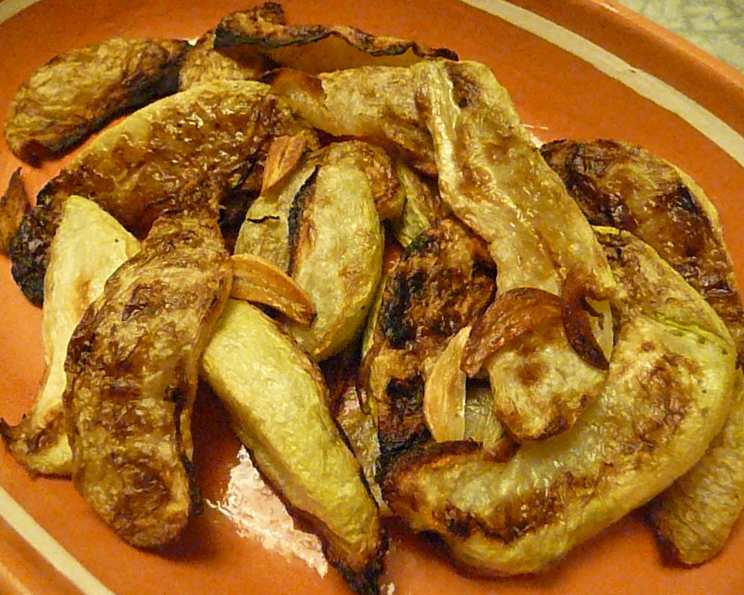
The Humble Chayote: Roasted to Golden Perfection
There’s a certain magic that happens when a less-celebrated ingredient is treated with respect and a touch of heat. For me, that ingredient is the chayote. I first encountered these fascinating gourds, also known as mirlitons, during a culinary exploration in the South, where they’re a bit more of a household name. I remember the first bite of these roasted chayotes: a revelation of subtle sweetness, a pleasingly tender yet firm texture, and an earthy, slightly nutty aroma that spoke of simple, honest cooking. They truly are a chameleon in the kitchen, capable of absorbing flavors and transforming into something delightfully unexpected.
Recipe Overview
- Prep Time: 20 minutes
- Cook Time: 55 to 60 minutes
- Total Time: 1 hour 15 minutes to 1 hour 20 minutes
- Servings: 8
- Yield: Roasted Chayotes
- Dietary Type: Vegan, Gluten-Free, Dairy-Free
Ingredients
To unlock the subtle elegance of roasted chayote, you’ll need just a few key players:
- 6 lbs chayotes (also known as mirlitons)
- 3 tablespoons olive oil
- 1/2 cup thinly sliced garlic (approximately 10 to 12 cloves)
- Salt, to taste
Equipment Needed
You won’t need a vast array of specialized tools for this straightforward preparation. Gather these essentials:
- Oven
- Baking sheets (two large, rimmed baking sheets are ideal)
- Sharp knife
- Cutting board
- Protective gloves (optional, but recommended for handling chayotes)
- Tongs or spatula (for turning)
Instructions
This method is all about coaxing out the best from the chayote through the transformative power of roasting. The key is a hot oven and a bit of patience.
-
Preheat your oven and prepare the pans. Begin by preheating your oven to 450°F (230°C). If you have them, position oven racks in both the upper and lower thirds of the oven. This ensures even circulation of heat.
-
Prepare the chayotes. This is the step where wearing protective gloves can be helpful, as chayote skins can sometimes be a bit leathery.
- Carefully halve the chayotes lengthwise. You’ll notice a small, hard seed in the center of each half; discard these seeds.
- Next, peel the chayotes. You can use a vegetable peeler or a paring knife. Once peeled, cut the chayote halves lengthwise into 1-inch thick wedges. Aim for pieces that are roughly uniform in size to ensure even cooking.
-
Season and arrange for roasting. In a large bowl, toss the chayote wedges with the olive oil. Ensure each piece is lightly coated.
- Add 1 to 1 1/2 teaspoons of salt to the bowl and toss again to distribute. You can adjust this amount slightly based on your preference, but remember you can always add more seasoning later.
- Divide the seasoned chayote wedges between two large, 4-sided sheet pans. Spread them out in a single layer as much as possible. Avoid overcrowding the pans, as this will steam the chayotes instead of allowing them to roast and caramelize.
-
The first roast. Place the two baking sheets in the preheated oven. Roast for 45 minutes.
-
Add the garlic and continue roasting. After 45 minutes, carefully remove the baking sheets from the oven.
- Divide the thinly sliced garlic between the two pans, scattering it amongst the chayote wedges.
- Using tongs or a spatula, turn the chayote wedges occasionally. This helps to ensure they brown evenly on all sides.
- Continue to roast for an additional 10 to 15 minutes, or until the edges of the chayotes are golden brown and slightly caramelized, and the flesh is tender when pierced with a fork.
-
Final seasoning. Once the chayotes are roasted to your liking, remove the pans from the oven. Season with additional salt to taste, if desired.
Expert Tips & Tricks
- Choosing Your Chayotes: Look for chayotes that are firm, free from blemishes, and a vibrant green color. Avoid any that feel soft or have yellowing.
- Peeling Power: If you find peeling the chayote difficult, a quick blanch in boiling water for 1-2 minutes can soften the skin, making it easier to remove with a peeler.
- Garlic Golden Rule: Keep an eye on the garlic during the second roasting phase. Sliced garlic can burn quickly. If it starts to look too dark before the chayotes are done, you can gently remove it from the pan and add it back during the last few minutes of reheating, or simply enjoy it as is.
- Uniformity is Key: While perfection isn’t required, try to cut your chayote wedges to a similar thickness. This will lead to more even cooking, ensuring no pieces are undercooked or overdone.
Serving & Storage Suggestions
Roasted chayotes are wonderfully versatile. They make an excellent side dish that can complement a wide range of main courses, from grilled fish and roasted chicken to hearty vegetarian stews. Their mild, slightly sweet flavor also means they can be incorporated into salads, pasta dishes, or even served as a light appetizer with a sprinkle of fresh herbs.
- Serving: Serve hot, straight from the oven. A final drizzle of good quality olive oil or a sprinkle of flaky sea salt can elevate the presentation. Freshly chopped parsley or cilantro also adds a burst of color and freshness.
- Storage: Chayotes can be roasted up to 5 hours ahead of time. Keep them loosely covered with foil at room temperature once they’ve cooled slightly.
- Reheating: To reheat, place the roasted chayotes in a preheated 350°F (175°C) oven for about 15 minutes, or until warmed through. This will help them regain some of their roasted texture. Leftovers can also be stored in an airtight container in the refrigerator for up to 3 days. Reheat gently as described above.
Nutritional Information
Here’s an estimated breakdown of the nutritional content per serving of roasted chayotes, based on typical values. Please note that exact figures can vary based on the specific chayotes and olive oil used.
| Nutrient | Amount per Serving | % Daily Value |
|---|---|---|
| Calories | 115.3 kcal | |
| Calories from Fat | ||
| Total Fat | 5.5 g | 8% |
| Saturated Fat | 0.8 g | 4% |
| Cholesterol | 0 mg | 0% |
| Sodium | 8.4 mg | 0% |
| Total Carbohydrate | 16.1 g | 5% |
| Dietary Fiber | 6 g | 23% |
| Sugars | 6.4 g | 25% |
| Protein | 3.3 g | 6% |
Note: Percent Daily Values are based on a 2,000 calorie diet. Your daily values may be higher or lower depending on your calorie needs.
Variations & Substitutions
While this recipe focuses on the pure, unadulterated flavor of roasted chayote, feel free to explore these variations:
- Spicy Kick: Add a pinch of red pepper flakes along with the salt during the initial seasoning.
- Herbaceous Notes: Toss in your favorite fresh herbs, such as rosemary or thyme, during the last 15 minutes of roasting.
- Citrus Brightness: Squeeze some fresh lemon or lime juice over the roasted chayotes just before serving.
- Umami Boost: A sprinkle of nutritional yeast can add a cheesy, umami flavor for a vegan twist.
FAQs
Q: Are chayotes difficult to find?
A: Chayotes are commonly found in Latin American, Asian, and Southern US markets. If you can’t find them locally, they are sometimes available through specialty online grocers.
Q: What does “mirliton” mean in relation to chayote?
A: Mirliton is another common name for the chayote squash, particularly prevalent in Creole and Cajun cuisines.
Q: Can I roast chayotes with the skin on?
A: While it’s possible, peeling the chayotes before roasting ensures a more tender texture and allows them to absorb seasonings better.
Q: My chayotes are still a bit firm after roasting. What did I do wrong?
A: Ensure your oven temperature is accurate, and that the chayotes are cut into roughly 1-inch wedges. Overcrowding the pan can also lead to less efficient roasting. If they are still firm, simply return them to the oven for an additional 10-15 minutes.
Q: How else can I use chayote besides roasting?
A: Chayote is quite versatile. It can be eaten raw in salads, added to soups and stews, pickled, or even used in sweet applications like pies and preserves due to its mild sweetness.
Final Thoughts
There’s a profound satisfaction in taking a humble ingredient like the chayote and transforming it into something truly special with just a few simple steps and the magic of roasting. This recipe is a testament to that, offering a delightful side dish that is both nourishing and incredibly delicious. I encourage you to embrace the chayote, experiment with this preparation, and discover its subtle charm for yourself. Serve it alongside your favorite grilled meats, seafood, or plant-based mains, and perhaps with a crisp white wine or a refreshing infused water. I’d love to hear about your own chayote adventures!