
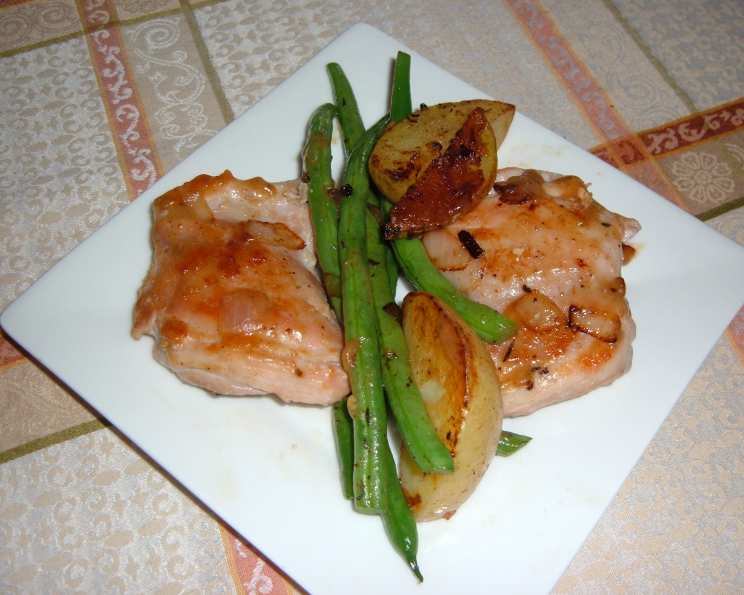
Roasted Chicken Thighs with Mustard-Thyme Sauce: A Symphony of Simplicity and Flavor
There are some dishes that, with just a few humble ingredients and a touch of culinary magic, transform into something truly extraordinary. Roasted Chicken Thighs with Mustard-Thyme Sauce is one such revelation. I remember the first time I encountered this recipe; it was a chilly autumn evening, the kind where the air bites just enough to make you crave warmth and comfort. I was leafing through a well-loved cookbook, and the simplicity of the ingredients, combined with the promise of rich, savory chicken and a bright, herbaceous sauce, called to me. The resulting meal was more than just dinner; it was a hug in a dish, a reminder that the most profound flavors often come from the most straightforward preparations. The tender chicken, kissed by the heat of the oven, coupled with the tangy, aromatic sauce, created a harmony that has since made this a cherished recipe in my repertoire.
Recipe Overview
- Prep Time: 15 minutes
- Cook Time: 45 minutes
- Total Time: 1 hour
- Servings: 4
- Yield: 4 servings
- Dietary Type: Contains Chicken, Dairy
Ingredients
For the Chicken and Sauce:
- 1 tablespoon olive oil
- 8 skinless chicken thighs (bone-in, about 2.5 pounds)
- 1/2 teaspoon sea salt, divided
- 1/2 teaspoon fresh ground black pepper, divided
- 1 tablespoon butter
- 1/2 cup onion, chopped
- 2 teaspoons fresh thyme, chopped
- 1 cup no-salt-added chicken stock, divided
- 4 teaspoons cornstarch
- 1 teaspoon Dijon mustard
For the Roasted Potatoes and Green Beans:
- 1 tablespoon olive oil
- 1/4 teaspoon sea salt
- 1/4 teaspoon fresh ground pepper
- 1 lb fingerling potato, halved lengthwise
- 10 ounces trimmed green beans
- 2 garlic cloves, thinly sliced
Equipment Needed
- Large nonstick skillet
- 11×7-inch glass or ceramic baking dish
- Small bowl
- Whisk
- Jelly-roll pan (or baking sheet)
Instructions
-
Prepare the Oven and Chicken: Begin by preheating your oven to 425 degrees F (220 degrees C). Heat a large nonstick skillet over medium-high heat. Add the 1 tablespoon of olive oil to the skillet. While the skillet heats, sprinkle the skinless chicken thighs with 1/4 teaspoon of sea salt and 1/4 teaspoon of fresh ground black pepper.
-
Sear the Chicken: Carefully add the seasoned chicken thighs to the hot skillet. Sear them for approximately 4 minutes on each side, or until they develop a beautiful, slightly browned exterior. This initial searing is crucial for building flavor and creating a lovely texture.
-
Transfer and Initial Bake: Remove the browned chicken from the skillet and place it into an 11×7-inch glass or ceramic baking dish. Reserve any drippings in the skillet. Place the baking dish with the chicken into the preheated oven. Bake at 425 degrees F (220 degrees C) for 16 minutes. The chicken is done when an instant-read thermometer registers 165 degrees F (74 degrees C).
-
Prepare the Sauce Base: While the chicken bakes, return the skillet to medium-high heat. Add the 1 tablespoon of butter to the skillet. Once melted, add the chopped onion and chopped fresh thyme. Sauté for 5 minutes, or until the onions have softened and become tender.
-
Thicken the Sauce: In a small bowl, combine 3 tablespoons of the no-salt-added chicken stock with the cornstarch. Whisk them together until the mixture is completely smooth, ensuring there are no lumps.
-
Assemble and Finish the Sauce: Add this cornstarch slurry to the skillet with the sautéed onions and thyme. Pour in the remaining chicken stock and the reserved drippings from the chicken baking dish. As you add these liquids, scrape the bottom of the pan with your whisk or a wooden spoon to loosen any flavorful browned bits – these are packed with deliciousness!
-
Simmer and Flavor: Bring the sauce to a boil, stirring constantly. Cook for 2 minutes, or until the sauce has slightly thickened to a lovely, coating consistency. Remove the skillet from the heat. Stir in the Dijon mustard, the remaining 1/4 teaspoon of sea salt, and the remaining 1/4 teaspoon of fresh ground black pepper. Whisk everything together until well combined.
-
Serve: Remove the chicken from the oven and the baking dish. Serve the roasted chicken thighs hot, generously spooning the warm mustard-thyme sauce over each piece.
-
Prepare Roasted Potatoes and Green Beans: While the chicken is in its initial baking phase, prepare the roasted vegetables. Preheat your oven to 425 degrees F (220 degrees C). On a jelly-roll pan or a baking sheet, combine the halved fingerling potatoes, trimmed green beans, and thinly sliced garlic cloves. Drizzle with the 1 tablespoon of olive oil, and sprinkle with the 1/4 teaspoon sea salt and 1/4 teaspoon fresh ground pepper. Toss all the ingredients to coat them evenly.
-
Roast Vegetables: Place the jelly-roll pan on the bottom rack of your preheated oven. Bake for 25 minutes, stirring once halfway through the cooking time to ensure even browning and cooking.
-
Combine and Serve: Once the potatoes and green beans are tender and nicely roasted, remove them from the oven. Serve the roasted chicken thighs with mustard-thyme sauce alongside the roasted potatoes and green beans.
Expert Tips & Tricks
- Don’t Skip the Sear: Searing the chicken thighs before baking is an essential step for developing a rich, complex flavor profile and a more appealing texture. The browning not only adds visual appeal but also contributes depth to the final dish.
- Mastering the Sauce Consistency: If your sauce seems too thick after simmering, you can always thin it out with a tablespoon or two of additional chicken stock or water. Conversely, if it’s too thin, you can create a slurry with a little more cornstarch and water and whisk it into the simmering sauce.
- Herb Freshness is Key: Using fresh thyme makes a significant difference in the final sauce. If you must use dried thyme, use about 1/3 of the amount specified, as dried herbs are more potent.
- Oven Variations: Ovens can vary in their heating accuracy. Keep an eye on the chicken during the initial baking to ensure it reaches the correct internal temperature without overcooking. The vegetables may also require slight adjustments in time depending on your oven.
Serving & Storage Suggestions
This dish is best served immediately, while the chicken is tender and the sauce is warm and fragrant. The vibrant green beans and golden roasted potatoes create a beautiful and complete plate. To serve, arrange the roasted chicken thighs on individual plates, generously spooning the mustard-thyme sauce over the top. Nestled alongside, place a portion of the roasted potatoes and green beans.
Leftovers can be stored in an airtight container in the refrigerator for up to 3 days. When reheating, it’s best to gently warm the chicken and sauce together in a skillet over low heat or in the microwave. For the roasted vegetables, reheating in a moderate oven (around 350 degrees F or 175 degrees C) will help them retain their texture better than microwaving.
Nutritional Information
| Nutrient | Amount per Serving | % Daily Value |
|---|---|---|
| Calories | 306 kcal | 15% |
| Total Fat | 13.2 g | 17% |
| Saturated Fat | 3.7 g | 18% |
| Cholesterol | 75.7 mg | 25% |
| Sodium | 570 mg | 25% |
| Total Carbohydrate | 28 g | 10% |
| Dietary Fiber | 5.2 g | 18% |
| Sugars | 4.5 g | 5% |
| Protein | 19.8 g | 40% |
Note: Nutritional values are estimates and can vary based on specific ingredients used.
Variations & Substitutions
- Herb Power: While thyme is a classic pairing, feel free to experiment with other herbs. Rosemary would offer a more robust, piney note, while parsley would add a fresh, clean finish. A combination of thyme and rosemary is also delightful.
- Mustard Magic: If you prefer a milder mustard flavor, you can use half Dijon and half whole-grain mustard. For a spicier kick, a touch of spicy brown mustard can be incorporated.
- Vegetable Rotation: The roasted vegetables can be swapped out for your favorites. Asparagus, broccoli florets, or Brussels sprouts would all be excellent choices, though cooking times may need to be adjusted.
- Poultry Choice: While chicken thighs are ideal for their rich flavor and ability to stay moist, you could adapt this recipe for bone-in, skin-on chicken pieces for extra crispy skin, though the cooking time would likely increase. Boneless, skinless thighs can also be used, but they may cook faster.
FAQs
Q: Can I make the sauce ahead of time?
A: Yes, you can prepare the sauce a few hours in advance and gently reheat it on the stovetop before serving. This can save you precious minutes when you’re ready to plate the meal.
Q: My chicken seems a bit dry. What went wrong?
A: Ensure you are not overcooking the chicken. The internal temperature should reach 165 degrees F (74 degrees C). Bone-in thighs are more forgiving and less likely to dry out than boneless, skinless cuts.
Q: Can I use dried thyme instead of fresh?
A: Yes, you can. However, you’ll need to use about one-third the amount of dried thyme compared to fresh thyme, as dried herbs are more concentrated in flavor.
Q: What kind of mustard is best for the sauce?
A: Dijon mustard provides a classic tangy and slightly sharp flavor that complements the chicken and thyme beautifully. Whole-grain mustard can also be used for a more rustic texture and flavor.
Q: Can I roast the chicken and vegetables together?
A: While this recipe calls for separate cooking stages to ensure optimal results for both the chicken and vegetables, you could try placing the vegetables on the rack below the chicken during the last 15-20 minutes of the chicken’s baking time. Monitor closely to prevent burning.
Final Thoughts
This Roasted Chicken Thighs with Mustard-Thyme Sauce is a testament to the beauty of simple, honest cooking. It’s a dish that feels both elegant enough for a dinner party and comforting enough for a weeknight meal. The way the bright mustard and aromatic thyme meld with the rich chicken drippings to create a sauce that coats every bite is nothing short of delightful. I encourage you to embrace the ease of this recipe and savor the wonderful flavors that emerge. Imagine serving this with a crisp, dry white wine, like a Sauvignon Blanc or an unoaked Chardonnay, to cut through the richness of the chicken and sauce. Pour yourself a glass, gather your loved ones, and enjoy a truly memorable meal.