
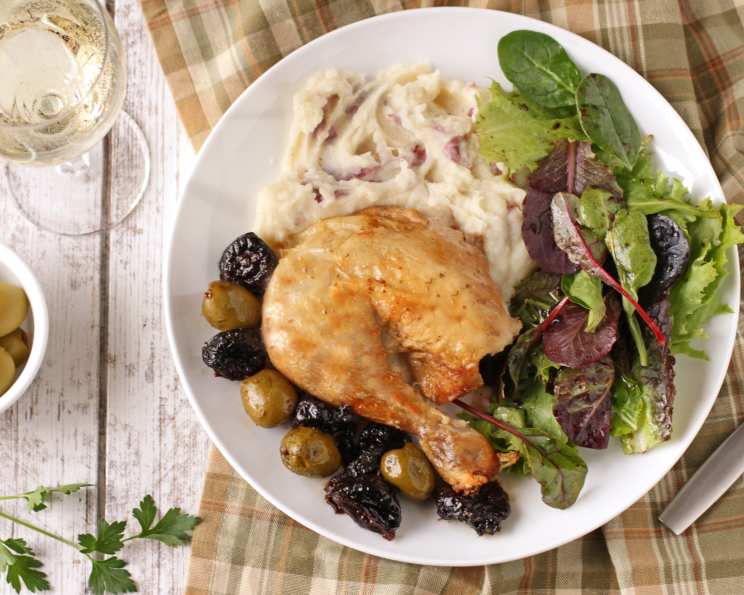
Roasted Chicken with Olives and Prunes: A Marbella Masterpiece
There are certain dishes that transport me back to a specific moment, a feeling, a memory so potent it’s almost as if I can taste it again. For me, that’s Chicken Marbella. I first encountered this dish during a bustling family gathering, the air thick with the scent of roasted meats and spirited conversation. My aunt, a formidable cook with a legendary kitchen, had prepared it. The golden chicken, glistening under a jewel-toned cascade of olives and prunes, was a revelation. It was sweet, savory, briny, and utterly comforting, a complex symphony of flavors that danced on the palate. That evening, under the warm glow of chandelier light, this dish cemented itself in my culinary consciousness as a testament to the magic of simple ingredients transformed by thoughtful preparation.
Recipe Overview
- Prep Time: 20 minutes (plus marinating time, if desired)
- Cook Time: 1 hour
- Total Time: 1 hour 20 minutes (plus marinating time)
- Servings: 4-6
- Yield: 1 whole roasted chicken entree
- Dietary Type: Gluten-Free, Dairy-Free
Ingredients
This recipe is a beautiful balance of sweet, savory, and a delightful hint of tang, all coming together to coat a succulent roasted chicken.
- 1 whole chicken (approximately 3 to 3.5 pounds)
- 1 teaspoon celtic sea salt
- 1 cup pitted green olives (Spanish Queen olives are a wonderful choice for their size and mild flavor)
- 1 cup pitted prunes (dried plums)
- 1 tablespoon dried oregano
- 1 tablespoon capers, drained
- 2 bay leaves
- 1 clove garlic, pressed or finely minced
- 1/4 cup olive oil
- 1/4 cup agave nectar (honey can be substituted if agave is unavailable)
- 1/4 cup apple cider vinegar
- 1/4 cup water
Equipment Needed
To bring this classic dish to life, you’ll want a few essential kitchen tools:
- A Pyrex baking dish or similar oven-safe casserole dish large enough to hold the chicken and the marinade.
- A large bowl for mixing the marinade ingredients.
- A measuring cup and measuring spoons for accurate ingredient proportions.
- A cutting board and knife for any necessary prep.
- An oven for roasting.
- A meat thermometer is highly recommended to ensure the chicken is cooked to the perfect internal temperature.
Instructions
The beauty of Chicken Marbella lies in its straightforward assembly and the incredible depth of flavor it develops during roasting.
- Prepare the Chicken: Begin by rinsing the whole chicken under cool running water. Once rinsed, pat the chicken thoroughly dry with paper towels, both inside and out. This step is crucial for achieving crispy skin.
- Season and Position: Place the chicken breast side up directly in your chosen Pyrex baking dish. Sprinkle the entire chicken generously with the 1 teaspoon of celtic sea salt, ensuring it’s distributed evenly over the skin.
- Assemble the Marinade: In a large bowl, combine all the remaining ingredients: the 1 cup of pitted green olives, the 1 cup of pitted prunes, the 1 tablespoon of dried oregano, the 1 tablespoon of capers, the 2 bay leaves, the 1 pressed clove of garlic, the 1/4 cup of olive oil, the 1/4 cup of agave nectar, the 1/4 cup of apple cider vinegar, and the 1/4 cup of water.
- Coat the Chicken: Gently spread the contents of the bowl – the delicious mixture of olives, prunes, and the liquid marinade – in the dish around the chicken. Try to distribute the olives and prunes evenly, allowing them to nestle around the bird.
- Initial Roast: Preheat your oven to 425°F (220°C). Once the oven is preheated, place the baking dish with the chicken into the oven and bake for 20 minutes. This initial high heat helps to start the browning process and render some of the chicken fat.
- Lower the Heat and Continue Roasting: After the initial 20 minutes, lower the oven temperature to 375°F (190°C). Continue to roast the chicken for approximately 40 minutes longer, or until the chicken is cooked through. A meat thermometer inserted into the thickest part of the thigh (without touching bone) should register 165°F (74°C). The juices should also run clear when the thigh is pierced with a fork.
- Rest and Serve: Once the chicken has reached the correct internal temperature, remove the baking dish from the oven. Allow the chicken to rest for at least 5-10 minutes before carving and serving. This resting period is essential for allowing the juices to redistribute throughout the meat, resulting in a more tender and moist chicken.
Expert Tips & Tricks
As a seasoned chef, I’ve found a few nuances that can elevate this already fantastic dish even further. Don’t be afraid to experiment with these little touches!
- Marinating Magic (Optional but Recommended): While the recipe as written is fantastic for a quicker meal, if time allows, I highly recommend marinating the chicken for at least an hour, or even overnight, in the olive, prune, and vinegar mixture. This allows the flavors to penetrate the chicken more deeply, creating an even more nuanced and delicious result. If you do marinate, be sure to bring the chicken to room temperature for about 30 minutes before roasting for even cooking.
- Prune Perfection: If you find your prunes to be particularly dry, you can rehydrate them slightly by soaking them in a little warm water for about 15-20 minutes before adding them to the marinade. This will help them soften and release their sweet juices more effectively during roasting.
- Olive Variety: While green olives are traditional, feel free to experiment with a mix of olives. A few Kalamata olives, for instance, can add a wonderful depth and brininess to the overall flavor profile. Just be mindful of their saltiness when seasoning.
- Garlic Intensity: For a more pronounced garlic flavor, you can add an extra clove or two, or even roast a few whole cloves of garlic alongside the chicken. They will become wonderfully sweet and creamy.
- Crispier Skin: To ensure truly crispy skin, make sure you pat the chicken exceptionally dry before seasoning. You can also leave it uncovered in the refrigerator for a few hours before roasting to help dry out the skin further.
Serving & Storage Suggestions
Chicken Marbella is a visually stunning dish that demands to be presented with pride. The glossy, fruit-studded sauce is as much a part of the experience as the chicken itself.
Serve this magnificent chicken carved or whole, spooning the flavorful olives, prunes, and pan juices generously over each portion. It pairs beautifully with simple sides that allow its complex flavors to shine – think fluffy white rice, couscous, or a simple green salad. For a more substantial meal, roasted potatoes or a creamy polenta would be excellent companions.
Leftovers are a true delight! Store any remaining chicken and sauce in an airtight container in the refrigerator for up to 3 days. To reheat, gently warm it in a covered dish in a low oven (around 300°F/150°C) or on the stovetop over low heat, being careful not to dry out the chicken. The flavors often meld and deepen overnight, making leftovers just as delicious, if not more so!
Nutritional Information
(Please note: Nutritional values are approximate and can vary based on specific ingredient brands and portion sizes.)
| Nutrient | Amount per Serving | % Daily Value |
|---|---|---|
| Calories | 917.6 kcal | N/A |
| Calories from Fat | 71.7 g | 110% |
| Saturated Fat | 17.7 g | 88% |
| Cholesterol | 243.8 mg | 81% |
| Sodium | 1399.2 mg | 58% |
| Total Carbohydrate | 7 g | 2% |
| Dietary Fiber | 1.8 g | 7% |
| Sugars | 0.4 g | 1% |
| Protein | 58.7 g | 117% |
Variations & Substitutions
While the classic Chicken Marbella is a treasure, there’s always room for a touch of personal flair.
- Herb Garden: Feel free to add a sprig or two of fresh rosemary or thyme to the marinade for an added aromatic dimension.
- Citrus Zest: A bit of lemon zest, finely grated, can add a bright, fresh counterpoint to the richness of the dish.
- Nutty Crunch: For added texture and flavor, consider adding a handful of toasted slivered almonds to the dish during the last 15-20 minutes of roasting.
- Spicy Kick: If you enjoy a touch of heat, a pinch of red pepper flakes or a finely diced jalapeño added to the marinade can offer a subtle warmth.
FAQs
Q: Can I use chicken pieces instead of a whole chicken?
A: Absolutely! You can use chicken thighs, drumsticks, or breasts. Adjust the roasting time accordingly; bone-in pieces will take longer than boneless.
Q: What kind of olives are best for Chicken Marbella?
A: Pitted green olives, such as Spanish Manzanilla or Queen olives, are traditional and offer a pleasant briny flavor without being overpowering.
Q: Can I make this dish ahead of time?
A: You can prepare the marinade and add it to the chicken up to a day in advance for deeper flavor. However, the chicken is best roasted just before serving.
Q: Is Chicken Marbella gluten-free?
A: Yes, the traditional recipe is naturally gluten-free as it contains no grains or gluten-containing ingredients.
Q: What can I serve with Chicken Marbella?
A: This dish is wonderfully versatile. Rice, couscous, quinoa, mashed potatoes, or a simple green salad are all excellent accompaniments.
Final Thoughts
Chicken Marbella is more than just a recipe; it’s an experience. It’s a testament to how simple, humble ingredients can be transformed into something truly spectacular with a little love and attention. It’s a dish that brings people together, sparking conversation and creating lasting memories around the dinner table. So, the next time you’re looking to impress, or simply craving a meal that’s both comforting and sophisticated, embrace the magic of Chicken Marbella. I encourage you to gather your ingredients, get a little messy with the marinade, and let the aromas fill your kitchen. I promise, the taste will be a delicious reward.