
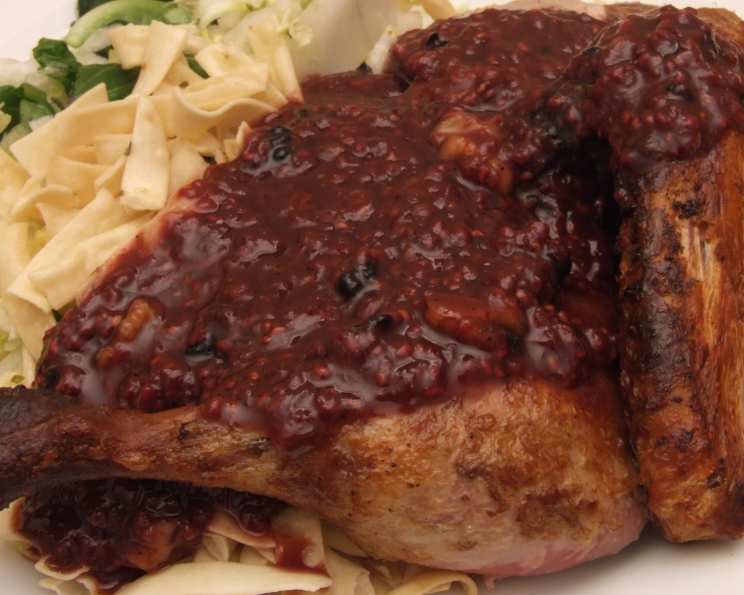
The Jewel-Toned Embrace: Roasted Duckling with a Tangy Raspberry Kiss
There are certain dishes that, when they grace the table, instantly transport me back to cherished moments. Roasted duck is one of them, a luxurious bird that always felt like a special occasion. My father, a man of simple pleasures but discerning taste, adored duck. For me, the magic truly happened when it was paired with a vibrant, slightly tart sauce that cut through the richness. Years ago, I discovered this particular recipe featuring raspberries, and it was an immediate revelation. The deep, almost earthy sweetness of the berries, kissed by a hint of brandy, was the perfect counterpoint to the succulent, crispy-skinned duckling. It’s a pairing that speaks of elegance without pretense, a culinary dance of sweet and savory that never fails to impress and delight.
Recipe Overview
- Prep Time: 20 minutes
- Cook Time: 1 hour 45 minutes to 2 hours 15 minutes
- Total Time: 2 hours 15 minutes to 2 hours 45 minutes
- Servings: 4
- Yield: 1 Duckling
- Dietary Type: Contains Alcohol
Ingredients
Here’s what you’ll need to create this delightful dish:
- 1 whole duckling (about 4-5 pounds)
- 1/3 cup orange juice
- 1/4 cup chicken broth
- 2 tablespoons brandy
- 1 cup fresh raspberries, divided
- 1 teaspoon sugar
- 1/3 cup seedless raspberry preserves
- 1/4 teaspoon ground ginger
- 1/8 teaspoon ground allspice
- 1 tablespoon butter
- 1/4 cup walnuts (toasted and coarsely chopped)
- 1 teaspoon fresh sage (snipped)
- Salt and freshly ground black pepper to taste
Equipment Needed
To bring this recipe to life, you’ll want to have on hand:
- A shallow roasting pan with a rack
- A fork
- Kitchen string (for tying the legs)
- A saucepan
- A whisk (optional, for sauce)
- A carving knife and fork
- An oven thermometer (recommended for accuracy)
Instructions
Let’s get cooking! Follow these steps carefully for a perfect roasted duckling.
- Preheat your oven to 350°F (175°C). This temperature is ideal for slow, even cooking, rendering the fat and crisping the skin beautifully.
- In a small bowl, gently sprinkle the fresh raspberries with the 1 teaspoon of sugar. Set aside. This will help them release some of their juices and soften slightly.
- Take your duckling and rinse it well, both inside and out, under cool running water.
- Thoroughly pat the duckling dry with paper towels. This is a crucial step for achieving crispy skin. Moisture is the enemy of crispiness!
- Tie the duckling’s legs together with kitchen string. This helps the duck maintain a neat shape during roasting and ensures more even cooking.
- Season the duckling generously with salt and freshly ground black pepper, both inside the cavity and all over the exterior. Don’t be shy with the seasoning – duck has a robust flavor that can handle it.
- Place the duckling, breast side up, on the rack of your shallow roasting pan. Tuck the wing tips under the back. This prevents them from burning during the long cooking time.
- Using a fork, prick the skin all over, generously. Be sure to prick it deeply enough to penetrate the skin but not into the meat itself. This allows the fat to render out, contributing to that coveted crispy skin.
- Roast the duckling for 1 ½ to 2 hours, or until the legs move easily in their sockets. A more precise way to check for doneness is to use a meat thermometer; the internal temperature should reach 180°F (82°C) in the thickest part of the thigh, avoiding the bone. For a larger duck, you might need to extend the roasting time.
- Once cooked, cover the duckling loosely with aluminum foil and let it stand for 15 minutes before carving. This resting period allows the juices to redistribute throughout the meat, resulting in a more tender and moist duck.
- While the duck is resting, prepare the sauce. In a saucepan, combine the orange juice, chicken broth, and brandy.
- Bring the mixture to a boil over medium-high heat.
- Cook uncovered over medium-high heat for 8 to 9 minutes, allowing the liquid to reduce and concentrate its flavors.
- Stir in 1/4 cup of the fresh raspberries (the ones not pre-sweetened), the seedless raspberry preserves, ground ginger, ground allspice, and a dash of salt.
- Simmer the sauce for 5 minutes, stirring occasionally, until it thickens slightly and the preserves have melted into the liquid.
- Remove the saucepan from the heat. Stir in the butter until it is completely melted and incorporated into the sauce. The butter will add a lovely sheen and richness.
- Finally, stir in the remaining fresh raspberries, the toasted and coarsely chopped walnuts, and the snipped fresh sage.
- Heat the sauce gently for 2 minutes to warm the added ingredients. Be careful not to overcook, as you want the fresh raspberries to retain some of their shape and burst.
- Carve the duckling into serving portions and serve immediately with the warm raspberry sauce.
Expert Tips & Tricks
- Rendering Fat: If your duck is particularly fatty, you can prick the skin more aggressively. Some chefs even recommend scoring the skin in a crosshatch pattern before pricking. You can also periodically spoon off excess rendered fat from the roasting pan during cooking.
- Crispier Skin: For an exceptionally crispy skin, consider letting the duckling air-dry in the refrigerator, uncovered, for a few hours or even overnight before roasting. This further dries out the skin.
- Sauce Consistency: If you prefer a smoother sauce, you can gently mash the fresh raspberries with a fork before adding them to the saucepan, or even briefly blitz the sauce with an immersion blender after it’s finished cooking (though this will diminish the fresh berry texture).
- Make-Ahead Sauce: The raspberry sauce can be made a day ahead of time, minus the fresh raspberries, walnuts, and sage. Reheat gently and then stir in these final additions just before serving.
Serving & Storage Suggestions
This Roasted Duckling with Raspberry Sauce is a magnificent centerpiece for any meal. Serve it carved into generous portions, spooning the warm, jewel-toned sauce generously over the top. It pairs beautifully with a side of wild rice pilaf, roasted root vegetables, or a simple green salad.
Leftover roasted duck can be stored in an airtight container in the refrigerator for up to 3 days. The raspberry sauce can also be refrigerated separately for up to 3 days. Reheat the duck gently in a low oven (around 300°F/150°C) or in a covered skillet with a splash of broth or water to prevent it from drying out. Reheat the sauce gently on the stovetop.
Nutritional Information
(Please note: Nutritional information is an estimate and can vary based on exact ingredient amounts and specific products used.)
| Nutrient | Amount per Serving | % Daily Value |
|---|---|---|
| Calories | 550 kcal | 28% |
| Total Fat | 35 g | 45% |
| Saturated Fat | 10 g | 50% |
| Cholesterol | 150 mg | 50% |
| Sodium | 150 mg | 7% |
| Total Carbohydrate | 25 g | 9% |
| Dietary Fiber | 3 g | 11% |
| Sugars | 18 g | 36% |
| Protein | 30 g | 60% |
Variations & Substitutions
- Berry Swap: While raspberries are classic here, blackberries or a mix of berries could also be delightful. Adjust sugar as needed for tartness.
- Herbaceous Notes: Thyme or rosemary could be used in place of or in addition to sage for a different aromatic profile.
- Alcohol-Free: For an alcohol-free version, you can substitute the brandy with an equal amount of orange juice or a splash of balsamic vinegar for depth.
- Nut-Free: Omit the walnuts if there are any nut allergies. Toasted pecans would also be a lovely substitute if nuts are permitted.
FAQs
Q: How do I know if my duckling is fully cooked?
A: The legs should move easily in their sockets, and an instant-read thermometer inserted into the thickest part of the thigh (without touching bone) should register 180°F (82°C).
Q: Can I make the raspberry sauce ahead of time?
A: Yes, you can prepare the sauce up to the point of adding the fresh raspberries, walnuts, and sage a day in advance. Gently reheat and add those components before serving.
Q: My duck skin isn’t crispy, what went wrong?
A: Ensure the duckling was thoroughly patted dry before roasting. Pricking the skin generously also helps fat render out, leading to crispier skin. Oven temperature and roasting time can also play a role.
Q: What can I do with the rendered duck fat?
A: Rendered duck fat is liquid gold in the kitchen! Strain it, store it in the refrigerator, and use it for roasting potatoes, vegetables, or even as a base for gravies.
Q: Can I use a regular chicken instead of a duckling?
A: While the flavors would be different, you could adapt this recipe for a whole chicken. Adjust cooking times and temperatures as a chicken cooks faster and has less fat than a duckling.
Final Thoughts
This Roasted Duckling with Raspberry Sauce is more than just a recipe; it’s an invitation to create a memorable dining experience. The luxurious depth of the duck, elevated by the bright, tangy embrace of the raspberry sauce, is a pairing that truly sings. Don’t hesitate to experiment with the accompanying herbs or berries to make it your own. I often serve this with a crisp Prosecco or a light-bodied Pinot Noir, which complement both the richness of the duck and the fruitiness of the sauce beautifully. I hope this dish brings as much joy and deliciousness to your table as it does to mine. Enjoy every succulent bite!