
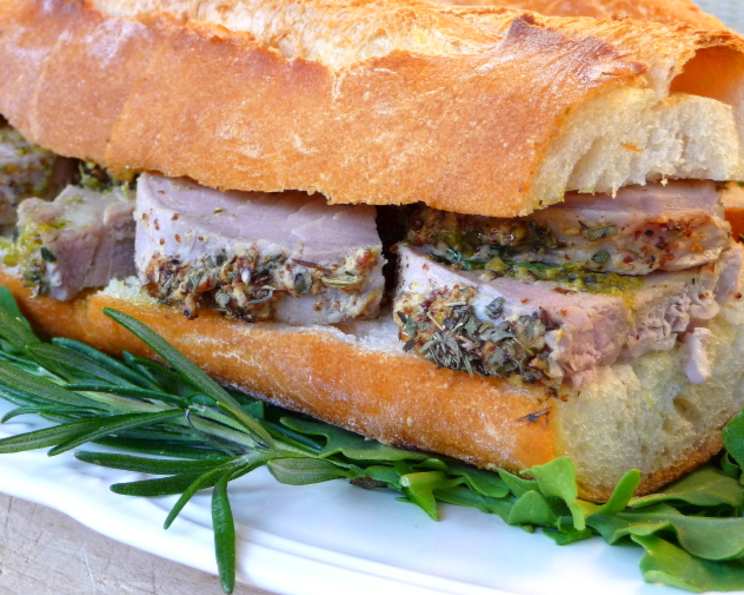
Roasted Pork Loin with Mustard, Garlic, and Herbs
There’s a particular aroma that fills my kitchen when a beautiful pork loin is roasting, an olfactory symphony of savory meat mingling with pungent garlic and fragrant herbs. It transports me back to Sunday dinners at my grandmother’s, where this very dish was a centerpiece, its golden-brown crust promising tender, succulent meat within. Even now, the mere thought of slicing into that perfectly roasted loin, the juices glistening, brings a smile to my face and a pang of fond remembrance.
Recipe Overview
- Prep Time: 15 minutes
- Cook Time: 1 hour
- Total Time: 1 hour 15 minutes
- Servings: 4
- Yield: 1 roasted pork loin
- Dietary Type: Gluten-Free
Ingredients
- 1 (2 lb) boneless pork loin
- 2 garlic cloves, thinly sliced
- 3/4 cup coarse grain Dijon mustard
- 2 tablespoons Herbes de Provence (or Herbes De Napa)
- 1 1/2 teaspoons salt
- 3/4 teaspoon fresh ground black pepper
Equipment Needed
- Roasting rack
- Roasting pan
- Meat thermometer
Instructions
- Preheat your oven to 350°F (175°C). This moderate temperature is crucial for even cooking, allowing the pork loin to become tender without drying out.
- Prepare the pork loin for the aromatics. Using a small, sharp knife, slice small slits all over the surface of the pork. These slits will be the perfect little pockets for the garlic slivers.
- Carefully insert the garlic slivers into the holes you’ve made. Distribute them evenly throughout the loin. This infusion of garlic will permeate the meat as it roasts, creating a wonderful depth of flavor.
- Now, for the flavorful coating. Spread the coarse grain Dijon mustard evenly over the entire surface of the pork loin. You can use your hands for this, which is often the most effective way to ensure complete coverage, or a spatula. The mustard will form a delicious crust as it bakes.
- Next, generously sprinkle the loin with the Herbes de Provence, the salt, and the fresh ground black pepper. Make sure to coat all sides. The herbs will toast beautifully, and the salt and pepper will enhance the natural flavors of the pork.
- Place the prepared pork loin on a roasting rack set inside a roasting pan. The rack allows air to circulate around the roast, ensuring a more even cook and a crisper exterior. The roasting pan will catch any drippings, which can be used later for a sauce if desired.
- Bake for approximately 1 hour, or until a meat thermometer reaches 155°F (68°C) when inserted into the thickest part of the loin. The cooking time can vary depending on the exact size and thickness of your pork loin and your oven’s calibration, so the meat thermometer is your most reliable guide.
- Once the pork loin has reached the target internal temperature, remove it from the oven.
- Allow the pork loin to rest for 5-10 minutes before slicing. This resting period is non-negotiable; it allows the juices to redistribute throughout the meat, ensuring a moist and tender result. Cutting too soon will cause those precious juices to run out onto the cutting board.
Expert Tips & Tricks
When it comes to roasting a pork loin, precision and patience are key. For that beautiful, even crust, ensure your mustard coating is thorough, covering every nook and cranny. If you find your garlic slivers are too large to insert easily, a gentle press with the side of your knife can help flatten them slightly. For the Herbes de Provence, if you can’t find a pre-mixed blend, you can create your own by combining equal parts dried rosemary, thyme, oregano, and savory. This dish is also an excellent candidate for a make-ahead preparation; you can fully prepare the loin (slits, garlic, mustard, and seasonings) up to 24 hours in advance and refrigerate it, covered tightly. Just bring it to room temperature for about 30 minutes before roasting.
Serving & Storage Suggestions
This Roasted Pork Loin with Mustard, Garlic, and Herbs is a true showstopper and pairs wonderfully with a variety of sides. For a classic meal, consider serving it with creamy mashed potatoes, roasted root vegetables, or a fresh green salad. The mustard and herb crust provides a wonderful tangy and aromatic counterpoint to the rich pork. Leftovers are a treasure! Store any remaining pork loin, tightly wrapped in plastic wrap or in an airtight container, in the refrigerator for up to 3-4 days. It reheats beautifully in a moderate oven (325°F / 160°C) or thinly sliced in a skillet over medium heat.
Nutritional Information
| Nutrient | Amount per Serving | % Daily Value |
|---|---|---|
| Calories | 483.2 kcal | |
| Calories from Fat | 56 % | |
| Total Fat | 30 g | 46 % |
| Saturated Fat | 10 g | 49 % |
| Cholesterol | 142.9 mg | 47 % |
| Sodium | 1510.9 mg | 62 % |
| Total Carbohydrate | 4.4 g | 1 % |
| Dietary Fiber | 1.6 g | 6 % |
| Sugars | 1.4 g | 5 % |
| Protein | 46.8 g | 93 % |
Note: Nutritional information is an estimate and may vary based on specific ingredients and preparation methods.
Variations & Substitutions
While this recipe is fantastic as is, there’s always room for personalization. If you’re not a fan of Dijon mustard, a good quality whole-grain mustard can offer a slightly different texture and milder tang. For a more pronounced herbal flavor, consider adding a sprig of fresh rosemary or thyme to the roasting pan during the last 30 minutes of cooking. If you don’t have Herbes de Provence, a mix of dried thyme, rosemary, and oregano will work beautifully. For those looking to amp up the garlic flavor, you could roast whole garlic cloves alongside the pork loin, then mash them into a paste to serve with the sliced meat.
FAQs (Frequently Asked Questions)
Q: Why is it important to let the pork loin rest after cooking?
A: Resting allows the juices, which are pushed to the center during cooking, to redistribute throughout the meat. This ensures a more tender and moist final product.
Q: How can I tell if the pork loin is fully cooked without a thermometer?
A: While a thermometer is the most accurate method, you can also check the juices. Pierce the thickest part of the loin with a fork; the juices should run clear, with no pinkness. However, using a thermometer to reach 155°F is highly recommended for optimal safety and quality.
Q: My pork loin seems a bit dry. What could have gone wrong?
A: The most common reasons for dry pork are overcooking or not letting it rest. Ensure you are using a meat thermometer and removing the roast at the correct internal temperature, and always allow it to rest.
Q: Can I use a pork tenderloin instead of a pork loin?
A: Yes, you can, but tenderloin cooks much faster. You would need to significantly reduce the cooking time and monitor the internal temperature closely, as tenderloins are much leaner and prone to drying out.
Q: What can I do with the pan drippings?
A: The pan drippings are full of flavor! You can deglaze the pan with a splash of white wine or chicken broth, scraping up any browned bits, and then simmer to create a simple, delicious pan sauce to spoon over the sliced pork.
This Roasted Pork Loin with Mustard, Garlic, and Herbs is more than just a recipe; it’s an invitation to create a memorable meal. The simple elegance of its preparation belies the incredible flavor and satisfying aroma it produces. I encourage you to try this dish, perhaps for a family gathering or even a weeknight treat, and to savor the comforting essence of perfectly roasted pork. Don’t hesitate to share your creations and any delightful variations you discover; happy cooking!