
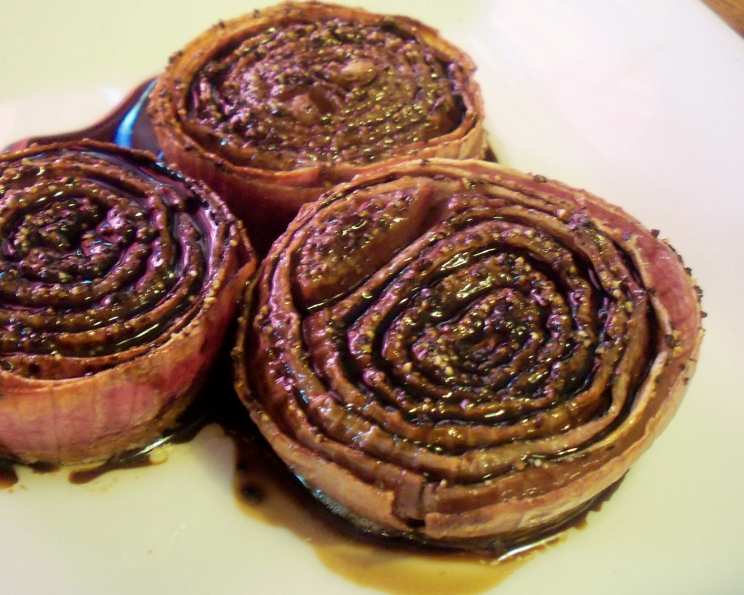
Roasted Red Onions with Balsamic Vinegar: A Sweet & Savory Symphony
There are certain dishes that, with just a few humble ingredients, transport me back in time. This roasted red onion recipe is one of them. I remember my grandmother, a woman whose kitchen was always filled with the comforting aromas of slow-cooked stews and freshly baked bread, preparing this exact dish. She’d meticulously peel the crimson skins, a hint of her gentle smile playing on her lips as she spoke of the magic that happened in the oven. The way the onions softened, their sharp bite transforming into a profound sweetness, was a culinary revelation to my young self, a testament to how simple ingredients, treated with care, can create something truly extraordinary. It’s a side dish that whispers tales of autumn harvests and cozy evenings, a dish I return to whenever I crave that authentic, soul-warming comfort.
Recipe Overview
- Prep Time: 15 minutes
- Cook Time: 1 hour 30 minutes
- Total Time: 1 hour 45 minutes
- Servings: 6
- Yield: 6 roasted red onion halves
- Dietary Type: Vegan, Gluten-Free, Dairy-Free
Ingredients
- 6 medium red onions, about 3 inches in diameter
- Olive oil, for rubbing
- Salt and pepper, to taste
- 1/3 cup water
- 1/3 cup balsamic vinegar
- 1 teaspoon brown sugar (optional, especially if using a well-aged, expensive balsamic vinegar)
Equipment Needed
- Oven
- Small baking pan (large enough to hold the onions)
- Small saucepan
- Whisk or spoon
Instructions
- Preheat your oven to 375°F (190°C).
- Begin by preparing the red onions. Carefully remove the papery outer skin from each onion. You want to get down to the firm, unblemished layers.
- Once peeled, rub the entire surface of each onion with a generous amount of olive oil. This not only helps them roast beautifully but also prevents them from drying out.
- Sprinkle the oiled onions liberally with salt and freshly ground black pepper. Ensure an even coating for maximum flavor.
- Place the prepared onions into a small baking pan. It’s important that the pan is small enough so the onions are somewhat nestled together, but not so crowded that they steam rather than roast.
- Roast the onions, uncovered, in the preheated oven for 1 hour and 30 minutes, or until they are deeply tender. You should be able to easily pierce them with a fork.
- Once the onions are tender and roasted to perfection, remove them from the oven. Keep them warm while you prepare the glaze.
- In a small saucepan, combine the 1/3 cup of water and the 1/3 cup of balsamic vinegar.
- Place the saucepan over medium-high heat and bring the mixture to a boil.
- Allow the liquid to boil for 4 to 5 minutes. The goal is to reduce the mixture significantly. It should reduce in volume to about 1/4 cup. This process concentrates the flavors of the balsamic vinegar.
- Remove the saucepan from the heat.
- If you are using it, add the 1 teaspoon of brown sugar to the reduced vinegar mixture. Stir well until the sugar is completely dissolved. The brown sugar adds a touch more sweetness and helps to create a syrupy consistency, though it’s often unnecessary with a high-quality, mature balsamic.
- To serve, cut each roasted red onion in half, from root to stem.
- Drizzle the warm balsamic glaze generously over the cut surfaces of the halved onions.
Expert Tips & Tricks
The quality of your balsamic vinegar truly shines here. If you have a well-aged, thick, syrupy balsamic, you might find the brown sugar completely redundant, and the natural sweetness of the onion combined with the vinegar will be exquisite. For a quicker glaze, you can simmer the balsamic and water for a slightly shorter period, but be mindful not to rush it too much, as the reduction is key to developing that rich flavor. If your onions are particularly large or small, adjust the roasting time accordingly. A skewer or a thin knife is your best friend for testing tenderness – it should slide in with minimal resistance.
Serving & Storage Suggestions
These roasted red onions are a magnificent accompaniment to a wide array of dishes. They pair beautifully with grilled or roasted meats, poultry, and even hearty vegetarian mains. Their sweet and tangy profile also makes them a surprisingly delightful addition to a cheese board or as a flavorful component in a salad.
Leftovers can be stored in an airtight container in the refrigerator for up to 3-4 days. To reheat, gently warm them in a low oven or a covered pan over low heat. Avoid microwaving if you want to maintain their delicate texture.
Nutritional Information
| Nutrient | Amount per Serving | % Daily Value |
|---|---|---|
| Calories | 59.4 kcal | |
| Calories from Fat | 2% | |
| Total Fat | 0.1 g | 0% |
| Saturated Fat | 0.1 g | 0% |
| Cholesterol | 0 mg | 0% |
| Sodium | 8.3 mg | 0% |
| Total Carbohydrate | 13.4 g | 4% |
| Dietary Fiber | 1.9 g | 7% |
| Sugars | 7.5 g | 30% |
| Protein | 1.3 g | 2% |
Note: Nutritional values are estimates and can vary based on ingredient quality and specific preparation methods.
Variations & Substitutions
While red onions offer a beautiful color and a particular sweetness when roasted, you could certainly experiment with other onion varieties. Yellow onions will yield a similar result but with a slightly more pungent undertone. Sweet onions like Vidalia or Walla Walla would amplify the sweetness even further. For an added layer of complexity in the glaze, consider adding a sprig of fresh rosemary or thyme to the balsamic reduction as it simmers. A pinch of red pepper flakes could also introduce a subtle warmth.
FAQs
Q: Why are my roasted onions not as tender as expected?
A: Ensure your oven is accurately calibrated to 375°F (190°C) and that you’ve allowed the full roasting time of 1 hour and 30 minutes. Smaller onions may cook faster, while larger ones might need a little longer.
Q: Can I use a different type of vinegar?
A: While balsamic vinegar is ideal for its sweetness and depth, red wine vinegar or apple cider vinegar could be used, but they will offer a tangier, less sweet profile. You might need to adjust the sugar accordingly.
Q: Is the brown sugar essential?
A: The brown sugar is optional. If you are using a high-quality, naturally sweet balsamic vinegar, you may not need it at all. Taste the glaze before adding sugar to decide.
Q: How do I know if my balsamic glaze has reduced enough?
A: The glaze should thicken slightly and coat the back of a spoon. It will continue to thicken as it cools. Aim for a syrupy consistency, not overly thin or cloying.
Q: Can I roast the onions at a higher temperature for a shorter time?
A: Roasting at 375°F (190°C) for 1 hour and 30 minutes allows the onions to soften slowly and caramelize beautifully without burning. A higher temperature might cause the outside to char before the inside is tender.
Final Thoughts
This dish is a testament to the power of simplicity and patience in the kitchen. It’s a reminder that the most profound flavors often come from the most unassuming ingredients. I encourage you to make these roasted red onions a regular on your table. Share them with loved ones, or savor them yourself as a comforting side. They are particularly delightful served alongside a slow-cooked pork shoulder or a tender roasted chicken. Enjoy this little taste of culinary heritage!