
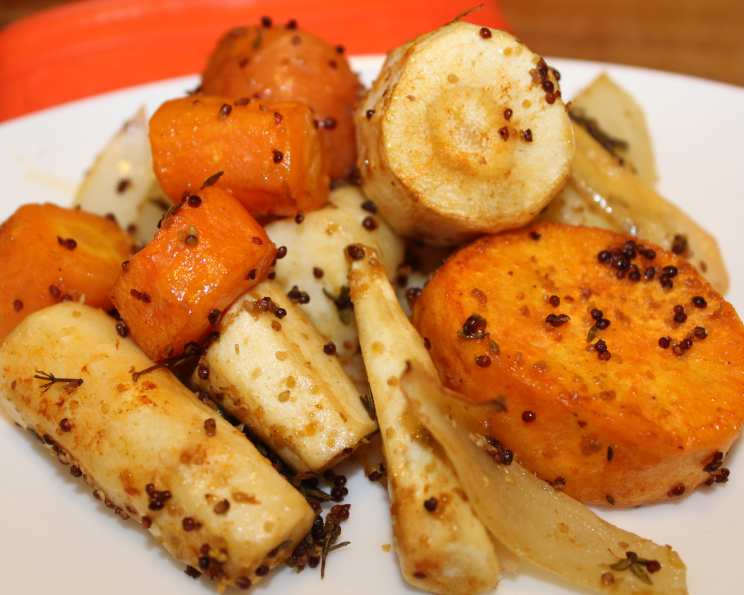
Roasted Root Vegetables with Mustard: A Symphony of Earthy Sweetness and Zesty Punch
There’s something profoundly comforting about root vegetables, their earthy sweetness a testament to the soil they’ve grown in. I remember one particularly crisp autumn evening, the kind where the air bites just enough to make you crave warmth and substance. I had a bounty of gorgeous, unblemished carrots, parsnips, and potatoes from the local farmer’s market, their vibrant colors a stark contrast to the deepening twilight outside. I wanted to prepare them in a way that celebrated their natural flavors, but with a little something to make them truly sing. That’s when I thought of the humble mustard seed, and the potent, aromatic magic it can impart. The combination of caramelized sweetness from the roasted roots and the sharp, invigorating zest of Dijon, enhanced by a whisper of potent mustard oil, transformed a simple side dish into an unforgettable experience.
Recipe Overview
- Prep Time: 15 minutes
- Cook Time: 45-50 minutes
- Total Time: 1 hour – 1 hour 5 minutes
- Servings: 4-6
- Yield: As prepared
- Dietary Type: Vegan, Gluten-Free, Dairy-Free
Ingredients
Here’s what you’ll need to create this delightful dish:
- 3 tablespoons Dijon mustard, coarse
- 2-3 tablespoons olive oil
- 1 tablespoon mustard oil (optional, use sparingly as it’s potent)
- 6 sprigs thyme, chopped
- ¼ teaspoon paprika
- ¼ teaspoon cayenne pepper
- ½ teaspoon sea salt
- ¼ teaspoon black pepper, freshly ground
- 2 medium carrots, sliced into 1-inch lengths
- 4 medium parsnips, sliced into 1-inch lengths
- 4 medium potatoes, 1-inch cubes (Yukon Gold recommended for their creamy texture)
- 1 large sweet potato, 1-inch cubes
- 1 large sweet onion, cut into ½-inch wedges
Equipment Needed
- Large mixing bowl
- Whisk
- Large baking dish (or two medium ones to ensure a single layer)
- Oven
Instructions
Let’s get these beautiful roots into the oven!
-
Preheat your oven to 375°F (190°C). This moderate temperature is perfect for coaxing out the sweetness of the vegetables while ensuring they cook through evenly.
-
In a large mixing bowl, combine the Dijon mustard, olive oil, and the optional mustard oil. If you are using mustard oil, remember its intensity; a little goes a long way to add a unique, peppery depth.
-
Add the chopped thyme, paprika, cayenne pepper, sea salt, and freshly ground black pepper to the bowl with the oils and mustard.
-
Whisk all these dressing ingredients together thoroughly. You want a well-emulsified mixture that will evenly coat the vegetables.
-
Now, it’s time to add the stars of the show. Add the prepared carrots, parsnips, potatoes, sweet potato, and sweet onion to the bowl.
-
Gently toss the vegetables until they are completely and uniformly coated with the mustard mixture. Ensure every piece has a nice sheen.
-
Let the coated vegetables stand in the bowl for 10 minutes. This resting period allows the flavors of the marinade to begin to penetrate the root vegetables, setting the stage for a more intense taste experience.
-
Spread the vegetables in a single layer in your large baking dish. It’s crucial to avoid overcrowding the dish; this ensures that the vegetables roast rather than steam, leading to beautifully caramelized edges and tender interiors. If necessary, use two dishes.
-
Roast in the preheated 375°F (190°C) oven for 45-50 minutes.
-
During the roasting process, gently turn the vegetables every 15 minutes. This is an important step for even cooking and caramelization. Try not to break the vegetables as you turn them; we want them to retain their appealing shapes. The vegetables are done when they are fork-tender and have lovely golden-brown, slightly crisped edges.
Expert Tips & Tricks
- Uniformity is Key: When chopping your root vegetables, aim for consistent sizes. This ensures that everything cooks at the same rate. If you have very large pieces and very small pieces, the smaller ones will likely burn before the larger ones are tender.
- Don’t Skip the Rest: Letting the vegetables marinate for 10 minutes before roasting isn’t just a step; it’s a flavor builder. It gives the mustard and spices a head start in permeating the produce.
- Mustard Oil Caution: If you’re new to mustard oil, start with the smaller quantity (1 tablespoon) or even less. It has a very strong aroma and a pungent, hot flavor that can be overwhelming if overused. It’s often used in combination with a milder oil like olive oil for this very reason.
- Oven Variations: Ovens can be notoriously different. Keep an eye on your vegetables, especially during the last 15-20 minutes of cooking. If they seem to be browning too quickly, you can loosely tent the baking dish with foil. Conversely, if they aren’t browning enough, you can increase the oven temperature by 25°F (about 15°C) for the final 10 minutes.
Serving & Storage Suggestions
These roasted root vegetables are wonderfully versatile. They make an exceptional side dish for roasted meats, poultry, or fish. For a plant-based meal, they pair beautifully with lentils, quinoa, or a hearty grain salad. Garnish with a few fresh thyme sprigs just before serving for an extra pop of color and aroma.
Leftovers can be stored in an airtight container in the refrigerator for up to 3-4 days. To reheat, gently warm them in a skillet over medium heat with a splash of olive oil, or spread them on a baking sheet and reheat in a 350°F (175°C) oven until warmed through. This helps to revive some of their crispness.
Nutritional Information
Here’s an approximate nutritional breakdown per serving (assuming 6 servings):
| Nutrient | Amount per Serving | % Daily Value |
|---|---|---|
| Calories | 287.8 kcal | – |
| Calories from Fat | 7.6 g | 11% |
| Total Fat | 7.6 g | 11% |
| Saturated Fat | 1.1 g | 5% |
| Cholesterol | 0 mg | 0% |
| Sodium | 471.9 mg | 19% |
| Total Carbohydrate | 51 g | 17% |
| Dietary Fiber | 7.6 g | 30% |
| Sugars | 6.2 g | 24% |
| Protein | 6 g | 12% |
Note: Nutritional values are estimates and can vary based on specific ingredients and portion sizes.
Variations & Substitutions
- Other Root Vegetables: Feel free to experiment with other root vegetables like rutabaga, celery root (celeriac), or even sweet onions. Just ensure they are cut into similar-sized pieces for even cooking.
- Spice Level: Adjust the amount of cayenne pepper to suit your preference for heat. For a milder dish, omit it entirely. For more punch, a pinch more cayenne or a dash of red pepper flakes can be added.
- Herb Variations: While thyme is classic, rosemary or sage would also be delightful additions or substitutions in this dish.
- Mustard Variety: If you don’t have coarse Dijon, regular Dijon mustard will work. The texture might be slightly smoother. Whole grain mustard could also be an interesting variation, adding a delightful pop of texture.
FAQs
Q: What is mustard oil and why is it optional?
A: Mustard oil is a cooking oil pressed from mustard seeds. It has a very strong aroma and a distinctively pungent, hot flavor. It’s optional because its intensity can be overpowering for some palates, and it’s readily available in Indian and South Asian cuisines, but less common in Western kitchens.
Q: Can I make this dish ahead of time?
A: While best served fresh, you can prepare the vegetables and the dressing separately a day in advance. Store them in the refrigerator and toss and roast just before serving. Reheating roasted vegetables can sometimes reduce their crispness.
Q: My vegetables are sticking to the baking dish. What can I do?
A: Ensure your baking dish is adequately greased with olive oil, and importantly, that the vegetables are spread in a single layer without overcrowding. Overcrowding causes steaming, which can lead to sticking. Using a good quality non-stick baking dish or parchment paper can also help.
Q: How do I know if the vegetables are cooked through?
A: The best way is to pierce them with a fork or a sharp knife. They should be easily pierced with little resistance, indicating they are tender all the way through.
Q: Can I use a different type of oil if I don’t have olive oil?
A: Yes, you can substitute with another neutral cooking oil like avocado oil or grapeseed oil. If using mustard oil, remember to still use it sparingly alongside your chosen alternative.
Final Thoughts
This simple yet sophisticated preparation of roasted root vegetables with mustard is a testament to how humble ingredients, treated with a little care and a touch of inspired flavor, can create something truly special. It’s a dish that brings the comforting essence of the earth to your table, elevated by a zesty, invigorating finish. I hope you enjoy the delightful interplay of sweet, savory, and subtly spicy notes as much as I do. Serve it alongside your favorite Sunday roast or as a vibrant star of a vegetarian feast, and savor the warmth and flavor it brings. Don’t hesitate to share your culinary creations and any delightful variations you discover!