
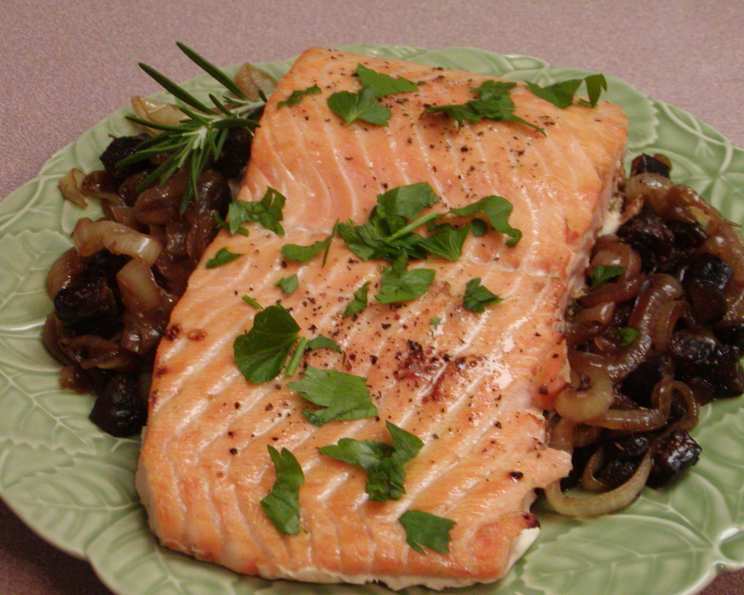
Roasted Salmon with Caramelized Onions and Figs: A Symphony of Sweet and Savory
The aroma of slowly caramelizing onions is one of life’s simple, profound pleasures. It’s a scent that promises depth, sweetness, and a comforting warmth that can transform any dish. I recall one blustery autumn evening, when the wind rattled the windows and a chill permeated the air, I found myself drawn to the kitchen. I had some beautiful salmon fillets and a basket of plump figs that were begging to be used. The idea of pairing the rich, buttery salmon with the intense sweetness of slow-cooked onions and the jammy delight of figs bloomed in my mind. It was a moment of pure culinary inspiration, and the resulting dish was nothing short of spectacular – a harmonious balance of earthy sweetness and oceanic richness that warmed us from the inside out.
Recipe Overview
This dish is a testament to how simple ingredients, treated with patience and care, can yield extraordinary results.
- Prep Time: 10 minutes
- Cook Time: 30 minutes
- Total Time: 40 minutes
- Servings: 4
- Yield: 4 portions
- Dietary Type: Dairy-Free, Gluten-Free
Ingredients
The magic of this dish lies in its ability to elevate humble ingredients into something truly special.
- 2 tablespoons olive oil
- 1 lb yellow onion, halved and thinly sliced to measure 4 cups
- ½ teaspoon salt
- 6 ounces figs, stemmed and halved
- ½ cup red wine (or ½ cup white wine)
- ½ cup chicken broth (or ½ cup vegetable broth)
- 1 tablespoon balsamic vinegar
- 1 tablespoon chopped fresh rosemary (or 1 teaspoon dried rosemary)
- Fresh ground black pepper
- 1 – 1⅓ lb salmon fillet, skinned and cut into 4 portions
- Chopped parsley, for garnish
Equipment Needed
You won’t need a whole arsenal of fancy gadgets for this recipe. The key is a good skillet and a reliable oven.
- Medium nonstick skillet
- Baking sheet
- Oven
Instructions
Patience is your secret ingredient here, especially for those beautifully caramelized onions.
- Begin by swirling the olive oil in the bottom of a medium nonstick skillet.
- Add the thinly sliced yellow onion to the skillet. Sprinkle them generously with ½ teaspoon of salt. This helps to draw out moisture and encourages even cooking.
- Cover the skillet and cook over medium-low heat, stirring occasionally, until the onions are visibly soft. This initial stage should take about 10 minutes.
- Once the onions are softened, remove the cover. Continue to cook, stirring often, until the onions achieve a beautiful golden-brown color. This caramelization process is crucial for developing their sweet, rich flavor and can take anywhere from 15 to 20 minutes. Keep a close eye on them to prevent burning; a gentle stir is all that’s needed.
- Now, it’s time to introduce the other star players. Stir in the halved figs, red wine (or white wine), chicken broth (or vegetable broth), balsamic vinegar, and chopped fresh rosemary (or dried rosemary).
- Increase the heat to high and bring the mixture to a simmer. Let it simmer, stirring occasionally, until the sauce thickens to your desired consistency. This should take approximately 5 minutes.
- Taste the fig sauce and adjust the seasoning with salt and pepper as needed. Keep this warm while you prepare the salmon.
- Preheat your oven to 450 degrees Fahrenheit. This high heat is perfect for achieving a beautifully cooked salmon with a slightly crisped exterior.
- While the oven heats, sprinkle the salmon portions on all sides with salt and pepper to taste. Seasoning the fish just before cooking ensures it’s flavorful throughout.
- Place the seasoned salmon portions on a lightly oiled heavy baking sheet. Ensure there’s a little space between each piece for even roasting.
- Roast the salmon for 7 to 10 minutes, or until the fish is cooked through and flakes easily with a fork. The exact time will depend on the thickness of your salmon fillets. You want the salmon to be moist and tender, not dry.
- Once the salmon is ready, carefully remove the baking sheet from the oven.
- Sprinkle the roasted salmon with freshly chopped parsley for a burst of color and freshness.
- To serve, spoon the warm fig sauce onto your plates and place a portion of the roasted salmon directly over the sauce.
This recipe can easily be doubled or tripled to accommodate a larger gathering. Simply adjust the pan sizes and cooking times accordingly.
Expert Tips & Tricks
As a chef, I always look for ways to enhance flavor and presentation. Here are a few pointers to make this dish truly shine:
- Onion Prep is Key: When slicing your onions, aim for uniform thickness. This ensures they caramelize evenly. A mandoline can be your best friend here if you have one, but a sharp knife and a steady hand will do just as well.
- Don’t Rush the Caramelization: This is arguably the most important step for the sauce. Low and slow is the mantra. Resist the urge to crank up the heat too high too soon; this can lead to burnt, bitter onions rather than sweet, deeply flavored ones. Patience will be rewarded with a richer, more complex sauce.
- Fig Freshness Matters: While dried figs can be used in a pinch, fresh figs bring a unique sweetness and texture. If using dried, rehydrate them in a little warm water or wine for about 15 minutes before adding them to the sauce.
- Salmon Doneness: The “flake test” is your best indicator for salmon. Insert a fork into the thickest part of the fillet and gently twist. If it separates easily into opaque flakes, it’s done. If it’s still translucent or overly firm, give it another minute or two.
- Sauce Consistency: If your sauce seems too thin after simmering, you can let it reduce for a few more minutes or, as a last resort, thicken it slightly with a cornstarch slurry (1 teaspoon cornstarch mixed with 2 teaspoons cold water), though with the wine and broth, it should naturally thicken.
Serving & Storage Suggestions
This dish is best served immediately, allowing the warm, sweet sauce to complement the perfectly roasted salmon. It makes a stunning centerpiece for a weeknight dinner or a special occasion.
For serving, a bed of fluffy quinoa, creamy polenta, or even simple steamed rice would be excellent companions to soak up the luscious fig sauce. A crisp green salad dressed with a light vinaigrette would also provide a refreshing contrast.
Leftovers can be stored in an airtight container in the refrigerator for up to 2 days. The flavors will meld further, though the salmon may not be quite as tender as when freshly cooked. To reheat, gently warm the salmon and sauce separately over low heat on the stovetop or in a low oven. Avoid microwaving, as this can make the salmon tough.
Nutritional Information
| Nutrient | Amount per Serving | % Daily Value |
|---|---|---|
| Calories | 315 kcal | |
| Calories from Fat | ||
| Total Fat | 12.2 g | 18% |
| Saturated Fat | 2 g | 9% |
| Cholesterol | 52.3 mg | 17% |
| Sodium | 185.9 mg | 7% |
| Total Carbohydrate | 20.4 g | 6% |
| Dietary Fiber | 3.2 g | 12% |
| Sugars | 12.6 g | 50% |
| Protein | 25.5 g | 51% |
Note: Nutritional information is an estimate and can vary based on specific ingredients and portion sizes used.
Variations & Substitutions
While this recipe is wonderfully balanced as is, feel free to experiment!
- Fruit Swap: If figs aren’t in season or readily available, you could try this with halved prunes or even quartered plums. Adjust the sweetness of the sauce as needed.
- Herbacious Notes: While rosemary is divine, thyme or even a touch of sage would also complement the flavors beautifully.
- Wine Alternatives: If you prefer not to use wine, you can substitute with an equal amount of extra broth and an additional splash of balsamic vinegar to replicate the acidity and depth.
- Shallot Sweetness: For a more delicate sweetness, you could use shallots instead of yellow onions, though you might need a larger quantity as they are smaller.
FAQs
Q: Can I make the fig sauce ahead of time?
A: Yes, the fig sauce can be made a day in advance and gently reheated on the stovetop before serving.
Q: What kind of wine is best for the sauce?
A: A dry red wine like Pinot Noir or Merlot works wonderfully, but a dry white wine like Sauvignon Blanc or Pinot Grigio is also a great choice.
Q: My figs are very firm. How can I ensure they soften?
A: Ensure they are cut in half to expose more surface area to the simmering sauce. If they remain firm after the sauce has thickened, you can simmer them a little longer, covered.
Q: Can I use dried figs instead of fresh?
A: Absolutely. If using dried figs, it’s best to rehydrate them in a little warm liquid (like water or wine) for about 15-20 minutes before adding them to the sauce to ensure they soften nicely.
Q: How do I know if my salmon is overcooked?
A: Overcooked salmon will be dry, flaky, and chalky in appearance. It will also lose its rich, buttery texture. The 7-10 minute window at 450°F is a general guideline; always check for doneness.
Final Thoughts
This Roasted Salmon with Caramelized Onions and Figs is a dish that truly sings. It’s a perfect example of how simple techniques and quality ingredients can create something utterly memorable. The sweet, savory depth of the fig and onion sauce, paired with the rich, flaky salmon, is a combination that has become a treasured favorite in my repertoire. I encourage you to try it, to savor each bite, and perhaps to discover your own delightful memories in the making. For a delightful accompaniment, consider a glass of crisp, dry white wine or a light-bodied Pinot Noir. Enjoy the process, and most importantly, enjoy the meal.