
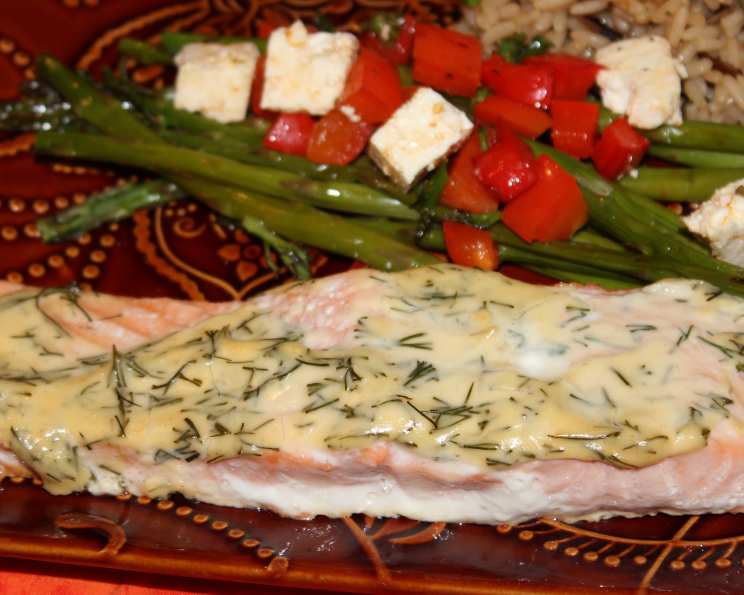
Roasted Salmon with Mustard-Dill Glaze: A Symphony of Flavors
I remember the first time I truly understood the magic of simple, elegant cooking. It was a drizzly Tuesday evening, the kind that makes you want to curl up with a good book and a warm mug. I was feeling particularly uninspired, staring into a nearly empty refrigerator, when a few beautiful salmon fillets caught my eye. I rummaged through the pantry, a mix of desperation and culinary curiosity driving me. What emerged from that impromptu effort was this Roasted Salmon with Mustard-Dill Glaze – a dish so surprisingly delicious, it became an instant weeknight savior. The tangy mustard, the bright dill, and the subtle sweetness of brown sugar clinging to the flaky, perfectly cooked salmon was a revelation, proving that sometimes, the most profound flavors come from the most unassuming combinations.
Recipe Overview
- Prep Time: 15 minutes
- Cook Time: 12 to 15 minutes
- Total Time: 27 to 30 minutes
- Servings: 4
- Yield: 4 salmon fillets
- Dietary Type: Gluten-Free, Dairy-Free (if using compliant mayonnaise)
Ingredients
- 3 tablespoons mayonnaise
- 1 tablespoon grainy mustard
- 1 tablespoon fresh dill, chopped
- 1 ½ teaspoons dark brown sugar
- 1 teaspoon lemon juice
- 4 center-cut salmon fillets (approximately 4 ounces each)
- ½ teaspoon salt
- ⅛ teaspoon black pepper
Equipment Needed
- Small mixing bowl
- Whisk or fork
- Baking sheet
- Aluminum foil
- Spatula
Instructions
- Preheat the Oven: Begin by preheating your oven to 400 degrees Fahrenheit (200 degrees Celsius). This ensures the oven is at the optimal temperature for achieving perfectly cooked, flaky salmon.
- Prepare the Glaze: In a small dish, combine the mayonnaise, grainy mustard, chopped dill, dark brown sugar, and lemon juice. Whisk these ingredients together until they are well blended and form a smooth, cohesive glaze. The mayonnaise acts as a binder and provides a creamy base, while the grainy mustard adds a delightful textural contrast and a pungent kick. The fresh dill brings its signature aromatic freshness, and the dark brown sugar offers a hint of sweetness to balance the acidity of the mustard and lemon.
- Prepare the Salmon: Line a baking sheet with aluminum foil. This not only makes for easier cleanup but also helps prevent the salmon from sticking. Place the four 4-ounce, center-cut salmon fillets onto the prepared baking sheet. Ensure they are spaced a few inches apart to allow for even cooking. Center-cut fillets are ideal as they tend to be of uniform thickness, leading to consistent cooking times.
- Season the Salmon: Season the salmon fillets evenly with ½ teaspoon of salt and ⅛ teaspoon of black pepper. These simple seasonings are crucial for enhancing the natural flavors of the fish without overpowering the delicate glaze.
- Apply the Glaze: Generously spread the prepared mayonnaise mixture over the top of each salmon fillet. Ensure an even coating, pressing it gently so it adheres well to the fish. This glaze will caramelize slightly as it bakes, creating a beautiful, flavorful crust.
- Roast the Salmon: Place the baking sheet in the preheated oven. Roast the salmon until it is just cooked through, which typically takes 12 to 15 minutes. The exact cooking time will depend on the thickness of your fillets and the nuances of your oven. You’ll know the salmon is ready when it flakes easily with a fork and the flesh is opaque throughout. Avoid overcooking, as this can lead to dry, tough fish.
Expert Tips & Tricks
- Salmon Selection: For the best results, opt for high-quality, fresh salmon. Look for fillets that are firm to the touch, have a vibrant color, and smell clean and oceanic, not fishy. Center-cut portions are generally preferred for their even thickness.
- Glaze Consistency: If your mayonnaise is particularly thick, you can add a tiny splash of water or milk to achieve a more spreadable consistency for the glaze. However, be cautious not to make it too thin, or it might run off the salmon during baking.
- Doneness Test: The most reliable way to check for doneness is by gently inserting a fork into the thickest part of the fillet. If it flakes easily and the flesh is opaque, it’s ready. You can also use an instant-read thermometer; the salmon should register an internal temperature of 145°F (63°C).
- Oven Variations: Ovens can vary significantly in their heating capabilities. If you find your salmon is cooking too quickly or too slowly, adjust the cooking time accordingly. It’s always better to check for doneness a few minutes early than to overcook.
- Broiler Boost (Optional): For an extra touch of color and slight crispiness on the glaze, you can switch the oven to the broiler setting for the last 1-2 minutes of cooking. Keep a very close eye on it, as broilers can burn food quickly.
Serving & Storage Suggestions
This Roasted Salmon with Mustard-Dill Glaze is wonderfully versatile and pairs beautifully with a wide array of side dishes. Serve it immediately after it comes out of the oven for the best texture and flavor. It’s excellent alongside a fresh green salad, roasted asparagus, steamed broccoli, or fluffy quinoa. A dollop of plain Greek yogurt or a wedge of lemon on the side can also be delightful additions.
Leftover salmon can be stored in an airtight container in the refrigerator for up to 2 days. While it’s best enjoyed fresh, it can be reheated gently. To reheat, place the salmon in a single layer on a baking sheet and warm it in a preheated oven at 300°F (150°C) for about 5-10 minutes, or until just heated through. Avoid microwaving, as it can make the salmon rubbery. This dish is not ideally suited for freezing due to the texture of the fish.
Nutritional Information
| Nutrient | Amount per Serving (approx.) | % Daily Value (approx.) |
|---|---|---|
| Calories | 290 kcal | 14% |
| Total Fat | 16 g | 21% |
| Saturated Fat | 3.5 g | 18% |
| Cholesterol | 80 mg | 27% |
| Sodium | 350 mg | 15% |
| Total Carbohydrate | 3 g | 1% |
| Dietary Fiber | 0.5 g | 2% |
| Sugars | 2 g | 4% |
| Protein | 35 g | 70% |
Note: Nutritional values are estimates and can vary based on specific ingredients used and portion sizes.
Variations & Substitutions
- Herb Swap: While dill is classic, feel free to experiment with other fresh herbs like parsley, chives, or even a touch of tarragon in the glaze.
- Mustard Variety: If you prefer a smoother texture, Dijon mustard can be used in place of grainy mustard, though you’ll lose some of that delightful textural element.
- Sweetener Alternative: For a slightly different sweet profile, you could use honey or maple syrup instead of dark brown sugar, though adjust the quantity as they can be sweeter.
- Lemon Zest: For an extra burst of citrusy aroma, finely grate the zest of half a lemon and add it to the glaze along with the juice.
FAQs (Frequently Asked Questions)
Q: Can I use frozen salmon for this recipe?
A: Yes, you can use frozen salmon. Ensure it is fully thawed and patted completely dry before proceeding with the recipe.
Q: What if I don’t have a foil-lined baking sheet?
A: You can use parchment paper to line your baking sheet, or if neither is available, lightly grease the baking sheet with oil to prevent sticking.
Q: How do I know if the salmon is cooked through but not overcooked?
A: The salmon should flake easily with a fork, and the center should be opaque pink. An instant-read thermometer inserted into the thickest part should read 145°F (63°C).
Q: Can I add vegetables to the baking sheet with the salmon?
A: Absolutely! You can add quick-cooking vegetables like asparagus spears or broccoli florets around the salmon. Toss them with a little olive oil, salt, and pepper before placing them on the baking sheet.
Q: Is this recipe suitable for a dinner party?
A: Yes, this recipe is elegant enough for a dinner party and can be prepared relatively quickly, allowing you more time to spend with your guests.
Final Thoughts
This Roasted Salmon with Mustard-Dill Glaze is a testament to the power of simple, quality ingredients and straightforward preparation. It’s the kind of dish that brings a sense of calm to a busy evening and a touch of sophistication to a casual meal. I encourage you to give it a try, to experience the delightful dance of flavors and textures that this recipe offers. Serve it with a crisp white wine like a Sauvignon Blanc or a light-bodied Pinot Noir, and savor every delicious bite. Don’t hesitate to share your creations and any personal twists you discover – happy cooking!