
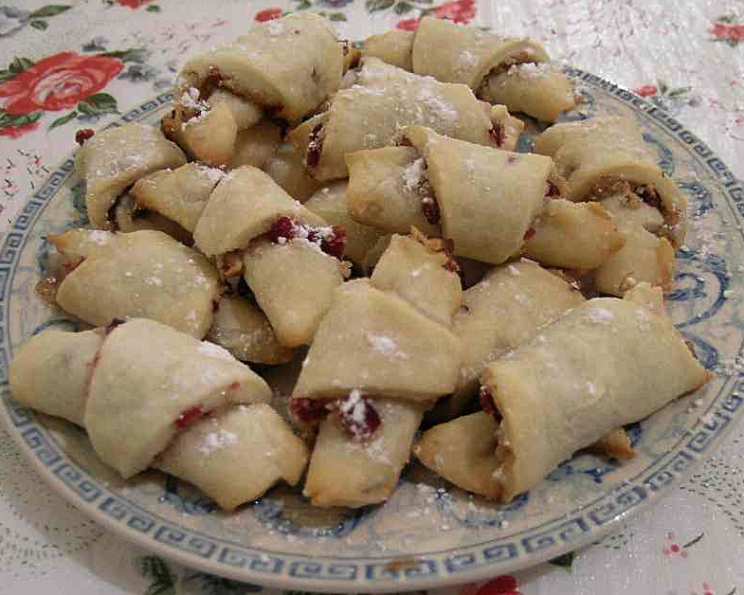
Rogaliki: A Taste of Polish Nostalgia in Every Bite
There’s something profoundly comforting about a cookie that evokes childhood memories, a small taste of home that can transport you back to simpler times. For me, that cookie is rogaliki. I can still picture my grandmother’s hands, dusted with flour, expertly shaping these delicate crescent pastries. The air in her kitchen would be thick with the sweet scent of baking dough and the subtle fruitiness of the jam peeking from within. Each rogalik was a tiny parcel of love, a testament to her patience and the joy she found in feeding her family. These aren’t just cookies; they are edible stories, whispered tales of Polish traditions passed down through generations, each bite a warm embrace from the past.
Recipe Overview
- Prep Time: 15 minutes
- Cook Time: 10-12 minutes per batch
- Total Time: Approximately 40 minutes (plus freezing time)
- Servings: 60 cookies
- Yield: About 60 cookies (3 batches of 20)
- Dietary Type: Contains Dairy, Eggs
Ingredients
To craft these delightful rogaliiki, you’ll need a few simple yet essential ingredients:
- 1 cup butter, softened
- 3 egg yolks
- 1 (8-ounce) package Philadelphia Cream Cheese, softened
- 1 teaspoon baking powder
- 3 cups all-purpose flour
- Jam (your favorite kind) or preserves (your favorite kind) for filling
- Powdered sugar, for dusting
Equipment Needed
- Medium bowl
- Electric mixer (handheld or stand mixer)
- Measuring cups and spoons
- Plastic wrap
- Freezer
- Rolling pin
- Sharp knife or pizza cutter
- Baking sheets
- Spatula
- Cooling rack
- Sieve or fine-mesh strainer, for dusting
Instructions
Crafting rogaliiki is a rewarding process that yields a truly special treat. Follow these steps carefully for the best results:
- In a medium bowl, begin by combining the egg yolks, Philadelphia Cream Cheese, and baking powder. Use an electric mixer to blend these ingredients until they are well incorporated and smooth.
- Gradually add the flour to the cream cheese mixture. Continue mixing with the electric mixer until the dough starts to come together but is still a bit crumbly.
- When the mixture becomes too stiff for the mixer and begins to resemble wood chips, put away the electric mixer. It’s time to get your hands involved. Knead the dough directly in the bowl until it forms a cohesive ball. The dough should be firm but pliable.
- Shape the dough into a roll, about 1.5 inches in diameter. Wrap the roll tightly in plastic wrap and freeze it for 15 minutes. This chilling step is crucial for making the dough easier to handle and cut.
- While the dough is chilling, preheat your oven to 375°F (190°C). Ensure your oven racks are positioned in the middle.
- Once the dough has chilled, remove it from the freezer and unwrap it. Separate the dough into two equal portions.
- On a lightly floured surface, roll out one portion of the dough into a circle, approximately 1/8 to 1/4 inch thick.
- Cut the rolled dough into triangles. Aim for triangles that are about 3 inches wide at the base. You want to make as many of these triangles as possible from each rolled-out portion.
- Place a small spoonful of your chosen jam or preserves onto the center of the wide end of each triangle. Be careful not to overfill, as the jam can ooze out during baking.
- Starting from the wide end, roll up each triangle towards the point, forming a crescent shape, much like a miniature croissant.
- Arrange the rolled rogaliiki onto a greased cookie sheet. Leave a little space between each cookie to allow for slight expansion during baking.
- Bake for 10-12 minutes, or until the cookies are lightly golden brown around the edges and on the bottom. Keep a close eye on them, as they can brown quickly.
- Repeat the rolling, filling, and baking process with the remaining portion of the dough.
- As soon as you remove the baked rogaliiki from the oven, carefully transfer them to a cooling rack to cool completely.
- Once the cookies have cooled entirely, lightly dust them with powdered sugar using a sieve or fine-mesh strainer for a beautiful, snowy finish.
Expert Tips & Tricks
To elevate your rogaliki experience, consider these professional insights:
- Cream Cheese Consistency is Key: Ensure your cream cheese and butter are truly softened to room temperature. This will make them blend seamlessly and create a dough that’s both tender and manageable. If they’re too cold, the dough can become tough.
- Don’t Overwork the Dough: While kneading is necessary to bring the dough together, avoid overworking it. Overworking can develop the gluten too much, resulting in tough cookies. Once it forms a cohesive ball, stop.
- Jam Choice Matters: Thicker jams or preserves work best as they are less likely to leak during baking. If your jam is very runny, you can strain it or even cook it down slightly to thicken it before using. Consider fruit preserves with whole fruit pieces for a delightful textural contrast.
- Freezing for Ease: The brief freezing period is a game-changer. It firms up the dough, making it incredibly easy to roll and cut precisely, leading to uniform cookies and a more professional appearance.
- Golden Perfection: The baking time is a guideline. Ovens vary, so watch for that lovely golden hue. A slightly deeper golden edge indicates they are perfectly baked through.
- Dusting with Flair: For a professional finish, wait until the rogaliiki are completely cool before dusting with powdered sugar. This prevents the sugar from melting into the cookie. You can also dust them just before serving for maximum visual impact.
Serving & Storage Suggestions
Rogaliki are best served at room temperature, allowing their delicate flavors to shine. They are perfect with a cup of coffee or tea for an afternoon treat, or alongside a glass of milk for a delightful breakfast or dessert.
To store: Once completely cooled and dusted with powdered sugar, place the rogaliiki in an airtight container. They will keep well at room temperature for up to 3-4 days. Avoid refrigerating them, as this can make the dough lose its tender texture. If you wish to freeze them for longer storage, do so before dusting with powdered sugar. Wrap them tightly in plastic wrap and then in foil, and freeze for up to 1 month. Thaw at room temperature, and then dust with powdered sugar before serving.
Nutritional Information
Here’s an estimated nutritional breakdown per cookie:
| Nutrient | Amount per Serving | % Daily Value |
|---|---|---|
| Calories | 65.6 kcal | |
| Calories from Fat | 33.7 kcal | |
| Total Fat | 4.7 g | 7% |
| Saturated Fat | 2.9 g | 14% |
| Cholesterol | 21.7 mg | 7% |
| Sodium | 39.5 mg | 1% |
| Total Carbohydrate | 4.9 g | 1% |
| Dietary Fiber | 0.2 g | 0% |
| Sugars | 0 g | 0% |
| Protein | 1.1 g | 2% |
Note: Nutritional values are estimates and can vary based on the specific jam or preserves used.
Variations & Substitutions
While the classic rogaliki are divine as is, feel free to explore these creative variations:
- Chocolate Drizzle: For a touch of decadence, melt some good quality chocolate and drizzle it over the cooled rogaliiki. Dark, milk, or white chocolate all work beautifully.
- Nutty Crunch: Mix finely chopped nuts (like walnuts or almonds) into the dough for added texture and flavor.
- Citrus Zest: Add the zest of one lemon or orange to the cream cheese mixture for a bright, aromatic twist.
- Savory Twist: While less traditional, a small dollop of a savory filling like a mild cheese spread or even a tiny bit of seasoned ground meat could be an adventurous experiment.
- Gluten-Free Adaptation: This would require a significant recipe reformulation with gluten-free flour blends and possibly a binder like xanthan gum. It would likely alter the texture considerably.
- Dairy-Free Adaptation: Replacing the butter and cream cheese with dairy-free alternatives would be challenging to achieve the same texture. It would require extensive testing with vegan butter and cream cheese substitutes.
FAQs
Q: Can I use regular cream cheese instead of Philadelphia Cream Cheese?
A: Yes, any full-fat block-style cream cheese should work as a substitute, ensuring it’s softened to room temperature.
Q: My jam oozed out during baking. What did I do wrong?
A: You might have used too much jam, or the jam was too runny. Try using a thicker preserve or less jam per cookie. Also, ensure the wide base of the triangle is well-sealed around the jam before rolling.
Q: How do I prevent my rogaliiki from spreading too much?
A: Chilling the dough sufficiently is key. Also, avoid overmixing the dough once the flour is added. Ensure your oven is at the correct temperature.
Q: Can I make the dough ahead of time?
A: Yes, you can prepare the dough, form it into rolls, wrap it well, and refrigerate it for up to 2 days. You may need to let it sit at room temperature for a few minutes before rolling if it becomes too firm.
Q: What kind of jam is traditional for Rogaliki?
A: While any jam works, traditional Polish versions often use fruit preserves like plum, cherry, or rosehip jam.
Final Thoughts
Rogaliki are more than just a recipe; they are an invitation to a moment of sweet reflection and delightful indulgence. The simplicity of their preparation belies the depth of flavor and the comfort they bring. Whether you’re recreating a taste of your own heritage or discovering this Polish gem for the first time, I encourage you to embrace the process and savor each delicately sweet, jam-filled crescent. They pair wonderfully with a robust black tea or a creamy coffee, transforming an ordinary moment into something truly special. Bake them with joy, share them with love, and let the simple magic of these Polish croissant cookies fill your kitchen and your heart.