
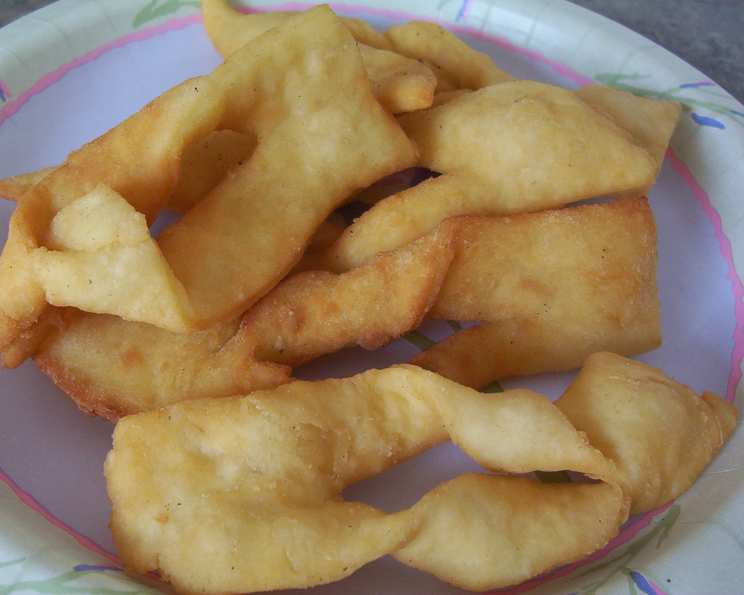
Roll Kuchen: A Taste of Mennonite Summer Tradition
There are some dishes that, with a single bite, transport you back in time. For me, Roll Kuchen is one of those culinary anchors. I can vividly recall sweltering summer afternoons at my grandparents’ farm, the air thick with the scent of freshly cut hay and the promise of something delicious baking. My grandmother, a woman of quiet strength and immense culinary talent, would often make this recipe. The rhythmic clatter of her wooden spoon against the ceramic bowl, the sizzle of dough hitting hot oil, and the sheer joy on everyone’s faces as we gathered around the table, often with a giant watermelon, are etched in my memory. The idea of fried dough with watermelon might sound peculiar to some, but for those of us who grew up with this tradition, it’s the quintessential taste of summer – a perfect balance of sweet and savory, light and satisfying.
Recipe Overview
- Prep Time: Approximately 20 minutes
- Cook Time: 15-20 minutes per batch
- Total Time: Approximately 35-40 minutes
- Servings: 4-6
- Yield: 1 batch (approx. 12-16 pieces)
- Dietary Type: Vegetarian
Ingredients
The beauty of Roll Kuchen lies in its simplicity, utilizing everyday pantry staples to create something truly special.
- 2 large eggs
- 3/4 cup milk (whole milk is recommended for richness, but 2% or even skim will work)
- 6 tablespoons butter, melted and slightly cooled
- 3 cups all-purpose flour
- 2 teaspoons salt
- 1 teaspoon baking powder
- Vegetable oil or other neutral frying oil, for deep frying (enough to fill your pot about 2-3 inches deep)
Equipment Needed
To achieve perfectly golden and puffed Roll Kuchen, you’ll want to have these items on hand:
- Large mixing bowl
- Whisk
- Measuring cups and spoons
- Rolling pin
- Sharp knife or pizza cutter
- Slotted spoon or spider strainer
- Large, heavy-bottomed pot or Dutch oven for frying
- Wire cooling rack set over a baking sheet
- Paper towels
Instructions
Crafting this traditional treat is a straightforward process that yields wonderfully rewarding results.
- In a large mixing bowl, beat the eggs until they are well combined and slightly frothy.
- Measure out 3/4 cup of milk. Then, carefully add the melted butter to the milk in a separate container. Combine these with the beaten eggs.
- In the same large mixing bowl, add the flour, salt, and baking powder. Whisk these dry ingredients together to ensure the baking powder and salt are evenly distributed.
- Create a well in the center of the dry ingredients and pour in the wet ingredients (the egg, milk, and butter mixture).
- Using a spoon or your hands, mix the ingredients until a soft, shaggy dough forms. Do not overmix; you want to avoid developing the gluten too much at this stage.
- Turn the dough out onto a lightly floured surface. Knead the dough gently for just a minute or two until it comes together into a cohesive ball. It should be slightly sticky but manageable.
- Cover the dough with a clean kitchen towel and let it rest for about 10 minutes. This brief rest allows the gluten to relax, making the dough easier to roll.
- While the dough rests, prepare your frying station. Pour your chosen frying oil into a large, heavy-bottomed pot or Dutch oven, ensuring it’s about 2-3 inches deep. Place the pot over medium-high heat and bring the oil temperature to 350-375°F (175-190°C). If you don’t have a thermometer, a small piece of dough dropped into the oil should sizzle vigorously and float to the surface immediately.
- Once the dough has rested, roll it out very thin on a lightly floured surface. Aim for a thickness of about 1/16 to 1/8 inch. You want it almost translucent.
- Using a sharp knife or pizza cutter, cut the dough into strips. These strips should be approximately 1 inch wide and 3 inches long. Don’t worry about perfect uniformity; rustic is part of its charm.
- For each strip, make a slit in the middle, about 1 inch long. Then, pull one end of the dough strip through the slit and gently pull it back out to create a simple knot. This knotting is characteristic of Roll Kuchen and helps create those lovely craggy edges when fried.
- Carefully add 4 to 6 shaped Roll Kuchen to the hot oil, being careful not to overcrowd the pot. Overcrowding will lower the oil temperature and result in greasy, soggy pieces.
- Fry for about 1 to 2 minutes per side, or until they are a beautiful golden brown and puffed up.
- Using a slotted spoon or spider strainer, remove the fried Roll Kuchen from the oil and transfer them to the prepared wire rack set over a baking sheet to drain any excess oil.
- Repeat the frying process with the remaining dough, ensuring the oil temperature is maintained between 350-375°F (175-190°C) for each batch.
- Serve the Roll Kuchen warm, and as tradition dictates, with Watermelon! The refreshing sweetness of the watermelon cuts through the slightly savory, crispiness of the fried dough beautifully.
Expert Tips & Tricks
- The “Milk and Egg” Measurement: The recipe mentions that the amount of milk might be more or less than 3/4 cup depending on how much space the eggs take up in the measuring cup. This is a classic “old-fashioned” measurement method. The key is to have enough liquid to create a soft, manageable dough when combined with the flour. If your dough seems too dry after adding the initial liquid mixture, add milk a tablespoon at a time until it reaches the desired consistency. Conversely, if it’s too wet, a little extra flour on your rolling surface can help.
- Achieving Thinness: Rolling the dough as thinly as possible is crucial. This ensures the Roll Kuchen cooks quickly and becomes delightfully crisp rather than dense and chewy. A pasta machine can be a game-changer for achieving consistent thinness if you have one.
- The Fry Temperature is Key: Maintaining the correct oil temperature is paramount. Too cool, and they’ll absorb too much oil. Too hot, and they’ll burn before cooking through. Use a thermometer if you have one, or test with a scrap piece of dough. Adjust your heat accordingly.
- Draining is Essential: Don’t skip the wire rack step! Allowing the Roll Kuchen to drain on a rack, rather than directly on paper towels, helps prevent them from becoming soggy from trapped steam.
Serving & Storage Suggestions
Roll Kuchen are best enjoyed fresh and warm, straight from the fryer. They are a delightful accompaniment to summer meals, especially barbeques and picnics.
- Serving: The most traditional and beloved way to serve Roll Kuchen is alongside chilled, ripe watermelon. The contrast in textures and temperatures is delightful. They also pair wonderfully with other summer fruits like berries or melon slices. For a more savory approach, they can be served as a light accompaniment to cold cuts or a fresh salad.
- Storage: Roll Kuchen are at their absolute best within a few hours of being fried. If you have leftovers, store them in an airtight container at room temperature for up to 1-2 days. They will lose their crispiness over time. To reheat, you can briefly place them in a single layer on a baking sheet in a preheated oven at 300°F (150°C) for a few minutes until warmed through. Avoid microwaving, as this will make them soft and unappetizing. Freezing is not recommended as the texture will suffer significantly.
Nutritional Information
(Please note: Nutritional information is an estimate and can vary based on ingredients and preparation methods.)
| Nutrient | Amount per Serving | % Daily Value |
|---|---|---|
| Calories | ~250 | |
| Total Fat | ~14g | 18% |
| Saturated Fat | ~4g | 20% |
| Cholesterol | ~45mg | 15% |
| Sodium | ~350mg | 15% |
| Total Carbohydrate | ~28g | 10% |
| Dietary Fiber | ~1g | 4% |
| Sugars | ~1g | 2% |
| Protein | ~5g | 10% |
Variations & Substitutions
While the classic recipe is perfection, here are a few ideas for a little culinary exploration:
- Sweet Glaze: For a sweeter treat, consider a light dusting of powdered sugar or a simple glaze made from powdered sugar and a touch of milk or lemon juice, drizzled over the warm Roll Kuchen.
- Herb Infusion: For a more savory twist, you could incorporate finely chopped fresh herbs like chives or parsley into the dough before rolling.
- Whole Wheat Flour: To add a bit more fiber, you could substitute up to half of the all-purpose flour with whole wheat flour. Be aware that this might slightly alter the texture, making it a bit denser.
FAQs
Q: Why is the milk measurement flexible?
A: The flexible milk measurement accounts for variations in egg sizes, ensuring you achieve the correct dough consistency for easy rolling and frying.
Q: Can I bake Roll Kuchen instead of frying?
A: While frying is traditional and yields the characteristic crispness, you could bake them at 375°F (190°C) until golden brown, though the texture will be different – more akin to a fried dough biscuit.
Q: How do I prevent my Roll Kuchen from puffing up too much or not at all?
A: Ensuring your dough is rolled thinly and your oil is at the correct temperature (350-375°F) are key. The baking powder also plays a role in leavening.
Q: Is it really traditional to eat Roll Kuchen with watermelon?
A: Yes, for many Mennonite families, this is a beloved summer tradition. The sweet, juicy watermelon is a perfect counterpoint to the slightly savory, crisp fried dough.
Q: Can I make the dough ahead of time?
A: You can prepare the dough a few hours in advance and store it, covered, in the refrigerator. Let it sit at room temperature for about 30 minutes before rolling.
Final Thoughts
Roll Kuchen are more than just a fried pastry; they are a delicious testament to simple ingredients and cherished traditions. They embody the warmth of community gatherings and the joy of sharing homemade goodness. So, gather your ingredients, embrace the process, and prepare to create a delightful experience for yourself and your loved ones. I encourage you to try this recipe, perhaps with your own family, and see if it doesn’t conjure up its own special memories. And most importantly, don’t shy away from that classic pairing – slice a juicy watermelon, fry up a batch of these golden delights, and savor a taste of authentic Mennonite summer.