
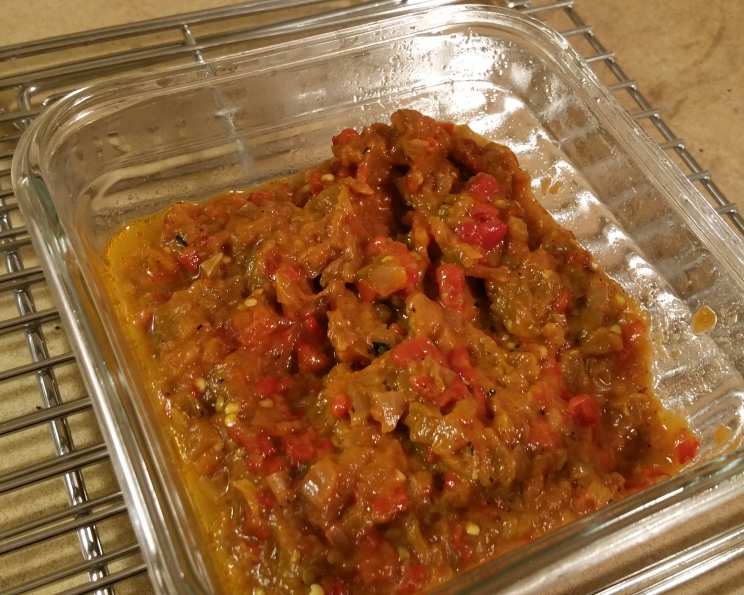
Zacusca: A Taste of Romanian Summer Preserved
My fondest memories of visiting my grandmother in Romania are inextricably linked to the scent of roasting vegetables wafting from her kitchen. It was a symphony of sweet peppers, smoky eggplant, and earthy onions, all culminating in the creation of zacusca. This vibrant, savory spread wasn’t just food; it was a taste of sunshine, bottled and preserved for the lean months ahead, a testament to Romanian resourcefulness and culinary tradition. I remember watching her, with practiced hands, meticulously peeling and mashing, her small kitchen filled with a comforting warmth that had nothing to do with the stove and everything to do with love.
Recipe Overview
- Prep Time: Approximately 1 hour (for vegetable roasting and peeling)
- Cook Time: Approximately 1.5 – 2 hours (for simmering the spread)
- Total Time: Approximately 2.5 – 3 hours
- Servings: Varies depending on jar size
- Yield: 10-12 standard jars (approx. 10-12 cups total)
- Dietary Type: Vegan, Dairy-Free
Ingredients
- 8 lbs fresh eggplants
- 6 lbs red bell peppers
- 2 lbs onions
- 2 teaspoons salt (or to taste)
- 1/2 teaspoon black pepper
- 2 cups tomato paste
- 2 cups olive oil
Equipment Needed
- Gas stove, grill, or oven with broiler function (for roasting vegetables)
- Large bowls (for holding peeled vegetables)
- Food processor
- Large, heavy-bottomed pot or Dutch oven
- Sterilized jars with lids and rings (for canning)
- Large pot or water bath canner (for processing jars)
- Tongs and a ladle
Instructions
The magic of zacusca lies in the preparation of its core ingredients: the vegetables. This process, while requiring a bit of effort, imparts a depth of flavor that is simply unparalleled.
-
Roast the Vegetables: Begin by roasting the eggplants and bell peppers. The most traditional and effective method is over an open flame, whether on a gas stove burner or a grill. The goal is to completely blacken the skins of both the eggplants and peppers. This charring is crucial for developing the smoky, rich flavor that defines zacusca. If an open flame isn’t an option, you can use your oven’s broiler. Place the vegetables on a baking sheet and broil, turning frequently, until the skins are thoroughly blackened and blistered on all sides. This process can take anywhere from 20-40 minutes, depending on the heat source and the size of the vegetables.
-
Peel the Vegetables: While the vegetables are still warm – this is key for easy peeling – carefully remove the blackened skins. The skins should slip off relatively easily. For any stubborn bits, the easiest way to get the last remnants off is to do so under a slow-running faucet. Rinse away any remaining charred pieces, being careful not to lose too much of the tender flesh underneath. Discard the skins and any seeds from the peppers.
-
Process the Vegetables: Now, it’s time to process each of the three vegetables separately. In a food processor, puree the peeled eggplants, puree the peeled bell peppers, and finely chop or puree the peeled onions. It’s important to keep them separate at this stage to allow each vegetable’s flavor and moisture content to be managed individually. Place each pureed or chopped vegetable into a separate bowl.
-
Sauté the Onions: In a large, heavy-bottomed pot or Dutch oven, add the olive oil and the chopped/pureed onions. Place the pot over medium-low heat. Sauté the onions gently for about 4 minutes, stirring occasionally, until they become translucent and softened. Be careful not to brown them too much at this stage.
-
Combine and Cook: Add the pureed eggplant, the pureed bell peppers, the salt, and the black pepper to the pot with the sautéed onions. Stir everything together well.
-
Simmer and Reduce: This is where the transformation happens. Bring the mixture to a gentle simmer over medium-low heat. Cook the zacusca, stirring frequently to prevent sticking, until a noticeable change occurs in its consistency. The spread should thicken significantly, and a thin layer of oil should remain on the top. A good indicator of doneness is when you remove a spoonful of zacusca, and only the oil should run off the spoon, not the vegetable mixture. This process can take anywhere from 1.5 to 2 hours. The slow simmering allows the flavors to meld and intensify, and the excess moisture to evaporate.
-
Taste and Adjust: Once the zacusca has reached the desired consistency, taste it and adjust the salt and pepper to meet your personal preferences. Remember that the flavors will continue to develop as it cools.
-
Can the Zacusca: Prepare your sterilized jars and lids. It is easiest if they are all the same size. Carefully spoon the hot zacusca into the sterilized jars, leaving about a 1/2-inch headspace. Wipe the rims clean with a damp cloth to ensure a good seal. Place the clean lids and rings on the jars, tightening them just until they are snug.
-
Water Bath Canning: Place the filled jars in a single layer into a large pot or a dedicated water bath canner. Fill the pot with water to the level of the jar necks. Bring the water to a rolling boil. Once boiling, process the jars for 20 minutes.
-
Cool and Store: After 20 minutes of boiling, remove the pot from the heat and allow the jars to cool completely in the water bath. Once cool, carefully remove the jars from the water and check that the lids have sealed properly (the center of the lid should be concave and not move when pressed). Store the sealed jars in a cool, dark place.
Expert Tips & Tricks
- The Smoky Char is Non-Negotiable: Don’t be shy with the charring. It’s the soul of zacusca. A slightly more burnt skin will yield a deeper, more complex flavor.
- Patience in Simmering: The long, slow simmer is crucial for developing the rich texture and concentrated flavor. Resist the urge to rush this step. Stirring is your friend here to prevent scorching.
- Jar Sterilization is Key: For safe canning, ensure your jars, lids, and rings are meticulously sterilized. This can be done by washing them thoroughly in hot, soapy water and then either running them through a hot dishwasher cycle or boiling them in water for at least 10 minutes.
- Headspace Matters: The recommended headspace ensures a proper vacuum seal during processing.
- Oil Separation: It’s perfectly normal for a bit of oil to separate from the zacusca during storage. Simply mix it back in with a spoon when you’re ready to serve.
Serving & Storage Suggestions
Zacusca is incredibly versatile. It’s a cornerstone of Romanian pantries, enjoyed in countless ways.
- The Classic: Serve generously spread on slices of crusty bread, toasted or fresh. This is the simplest and arguably the most delicious way to enjoy it.
- A Quick Meal: Use it as a flavorful topping for rice, a quick vegetarian meal, or a delightful sandwich spread.
- With Grilled Meats or Fish: Its savory depth complements grilled chicken, pork, or even hearty fish.
- As an Appetizer: Serve it in small bowls with good quality olive oil drizzled on top, accompanied by breadsticks or crackers.
Storage: Properly canned zacusca can last for 1-2 years in a cool, dark pantry. Once opened, store the jars in the refrigerator and consume within 2-3 weeks. If you’re not canning and just making a small batch for immediate consumption, store it in an airtight container in the refrigerator for up to a week.
Nutritional Information
Disclaimer: Nutritional information is an estimate and can vary based on specific ingredients and portion sizes.
| Nutrient | Amount per Serving (approx. 1/4 cup) | % Daily Value |
|---|---|---|
| Calories | 633 kcal | – |
| Calories from Fat | 405 kcal | – |
| Total Fat | 45 g | 69 % |
| Saturated Fat | 6.2 g | 31 % |
| Cholesterol | 0 mg | 0 % |
| Sodium | 901.7 mg | 37 % |
| Total Carbohydrate | 55.6 g | 18 % |
| Dietary Fiber | 21.8 g | 87 % |
| Sugars | 30.2 g | 120 % |
| Protein | 9.6 g | 19 % |
Variations & Substitutions
While the classic recipe is king, there’s always room for a little creativity.
- Spicy Zacusca: Add a finely chopped hot pepper (like a cayenne or a small habanero) during the sautéing stage with the onions for a subtle kick.
- Carrot Addition: Some recipes include grated carrots, sautéed along with the onions, adding a touch of sweetness and extra bulk.
- Garlic Infusion: For those who love garlic, a few cloves, minced and sautéed with the onions, can elevate the flavor profile.
- Herbaceous Notes: A sprig of fresh thyme or a bay leaf simmered in the spread (removed before jarring) can add another layer of complexity.
FAQs
Q: Why do the vegetables need to be charred?
A: Charring the skins of the eggplant and peppers over an open flame or under a broiler is essential for developing the signature smoky, deep flavor of zacusca.
Q: How long does it take to cook down the vegetables?
A: The simmering process can take anywhere from 1.5 to 2 hours, or even longer, until a substantial amount of moisture has evaporated and the spread has thickened considerably.
Q: What is the purpose of the olive oil in zacusca?
A: The olive oil not only contributes to the flavor but also acts as a preservative, especially when the zacusca is canned. It helps create a barrier that prevents spoilage.
Q: Can I use other types of oil?
A: While olive oil is traditional and recommended for its flavor, a neutral vegetable oil like sunflower oil can be used if preferred, though the flavor profile will be different.
Q: My zacusca looks a bit watery. What did I do wrong?
A: The most common reason for watery zacusca is insufficient simmering. Ensure you cook it down until the oil separates and runs freely from the vegetable mixture when a spoonful is lifted.
Final Thoughts
Zacusca is more than just a vegetable spread; it’s a labor of love, a connection to heritage, and a celebration of the bounty of summer. The process of making it, from the smoky aroma of roasting vegetables to the satisfying pop of a sealed jar, is a rewarding culinary journey. I encourage you to gather your ingredients, embrace the process, and bottle up a taste of Romania to savor throughout the year. Share it with loved ones, spread it on your favorite bread, and let each bite transport you to a sun-drenched kitchen filled with warmth and tradition.